

Thinking about a new mattress can feel like a bit of a minefield, but finding the right foam mattress in NZ is easier than you might think. Let's start by ditching those old ideas of hot, sinking foam. Today's mattress technology has completely changed the game, offering incredible support and pressure relief that moulds perfectly to your body.
Your Guide to Modern Foam Mattresses in New Zealand
Consider this your no-nonsense roadmap to understanding the foam mattresses available to Kiwis right now. We'll guide you through everything from the different types of foam to finding the right firmness, so you can feel confident you're choosing a mattress that will genuinely improve your sleep. It's all about making a smart investment in your health and wellbeing.
The first step to a better night's sleep is getting to know what a modern foam mattress can actually do for you. The days of one-size-fits-all are long gone. Today's designs are engineered to solve specific sleep problems, giving you a level of personalised comfort that just wasn't possible ten years ago.
What to Expect From This Guide
We reckon an informed choice is always the best choice. This guide cuts through the marketing fluff to give you clear, practical advice. Here’s a quick look at what we'll cover to help you find your perfect foam mattress:
- Decoding Foam Types: We'll break down the real differences between memory foam, gel-infused foam, and high-density polyfoam in a way that actually makes sense.
- Benefits vs. Drawbacks: You'll get an honest look at the pros, like amazing pressure relief and zero partner disturbance, and see how new designs have fixed the old cons.
- Matching You to a Mattress: We'll help you figure out how your sleeping position—whether you're a side, back, or stomach sleeper—points to the ideal mattress for your body.
- Practical Buying Advice: Get tips on choosing the right firmness, size, and price, including how to navigate payment options here in NZ.
A great mattress isn't just a place to crash at night; it's the foundation for a healthier, more energetic life. When you understand what goes into a quality foam mattress, you're setting yourself up to invest wisely in your own rest and recovery.
Our goal is simple: to give you all the information you need to walk into a store or browse online with confidence. From the nitty-gritty of construction to making the final purchase, you'll have a solid grasp of what makes a foam mattress such a great choice for thousands of New Zealanders. Right, let's get into it.
Decoding the Different Types of Mattress Foam
At the heart of any great foam mattress, you'll find layers of specialised materials all working in harmony. To find the best foam mattress NZ has on offer for you, it really helps to understand what's going on under the cover. Think of it like a perfectly layered cake—each ingredient has a specific job to do, and the final result depends on how well they work together.
The main players you’ll come across are memory foam, gel-infused foam, and high-density polyfoam. Each one brings something unique to the table, and the way they're combined is what ultimately defines the mattress's feel, support, and how long it'll last. Getting to know these materials is the first real step in figuring out which mattress will feel just right.
This visual guide is a great way to see how comfort, support, and your own personal preferences come together to create the perfect sleep setup.
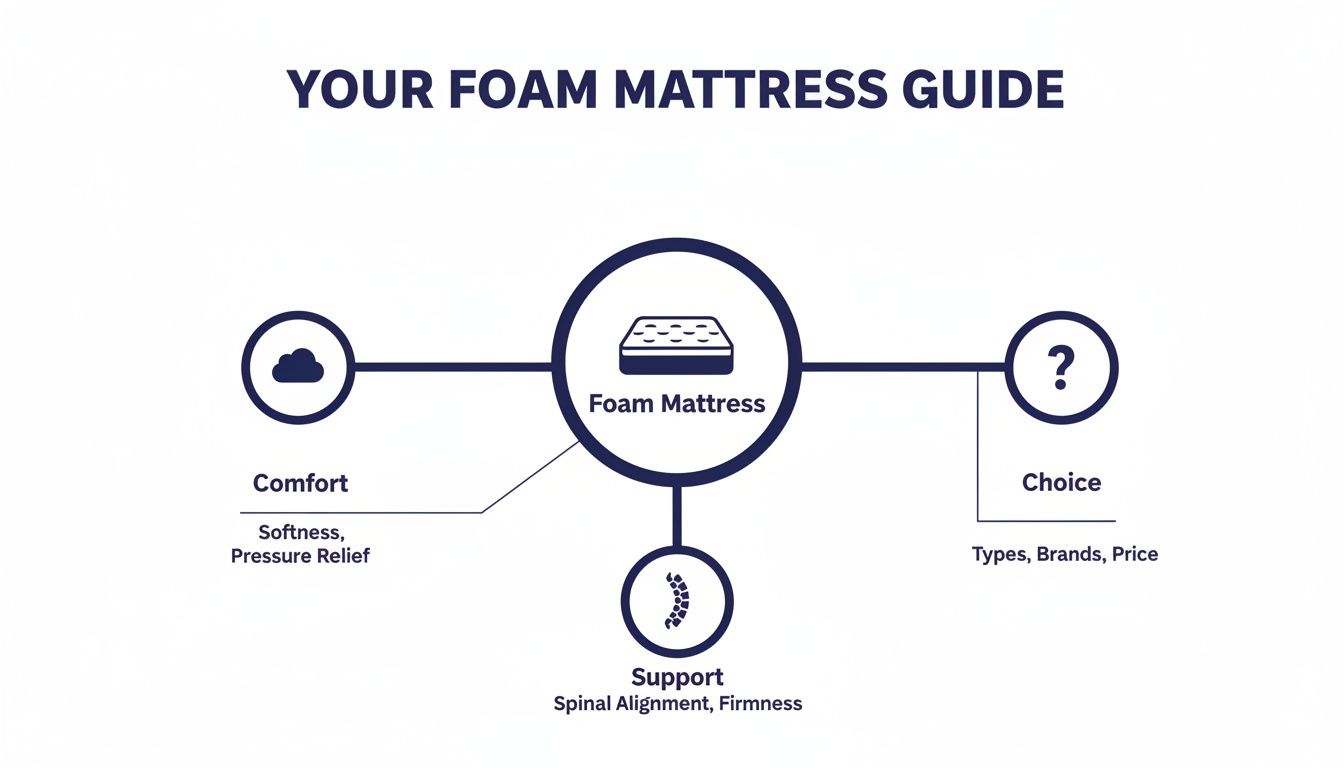
As you can see, the sweet spot is finding a mattress that balances all three of these areas to match how you sleep.
A Quick Look at Common Foam Types
To help you compare, here's a simple breakdown of the most common foams. Use this comparison to understand the key differences between foam materials and find the one that best suits your sleep preferences.
| Foam Type | Key Characteristic | Best For | Consideration |
|---|---|---|---|
| Viscoelastic Memory Foam | Responds to heat and pressure, creating a unique "hugging" or contouring sensation. | Side sleepers and anyone needing exceptional pressure relief on joints. | Can sometimes retain heat in its more traditional forms. |
| Gel-Infused Foam | Memory foam enhanced with cooling gel beads or swirls to regulate temperature. | People who tend to sleep hot but still want that memory foam comfort. | Often comes at a slightly higher price point. |
| High-Density Polyfoam | Firm, durable, and resilient foam that provides foundational stability. | The supportive base for almost all foam mattresses and for heavier sleepers. | Not a comfort layer, so it feels very firm on its own. |
Ultimately, knowing these basics makes it much easier to read a mattress description and know exactly what you're looking at.
Viscoelastic Memory Foam: The Contouring Hug
This is the one most people have heard of. Viscoelastic foam, better known as memory foam, is famous for its unique feel. If you’ve ever pressed your hand into a piece of dough and watched the impression linger for a moment, you've seen something similar. Memory foam reacts to your body’s heat and weight, slowly moulding to create a personalised cradle.
This remarkable property is what makes it a superstar for pressure relief. It spreads your weight out evenly, taking the strain off sensitive spots like your shoulders, hips, and lower back. That contouring "hug" is why so many Kiwis find it unbelievably comfortable. For a deeper dive, feel free to check out our full guide on memory foam mattresses in NZ.
The real magic of memory foam is in how it adapts. It doesn't just push back with equal force; it yields and contours, giving you support exactly where your body needs it. This often leads to less tossing and turning and a much deeper, more restorative sleep.
It's so good at what it does that you'll even find it in other comfort items, like a plush memory foam bath mat, which just shows how versatile this material really is.
Gel-Infused Foam: The Cooling Innovator
One of the few grumbles about traditional memory foam was its tendency to trap heat. That's where gel-infused foam came in. It was engineered specifically to solve that problem, taking all the pressure-relieving goodness of memory foam and mixing in tiny gel beads or swirls.
These little gel particles act like cooling agents, absorbing excess body heat and pulling it away from you while you sleep. The result is a much more temperature-neutral surface, which is an absolute game-changer for anyone in New Zealand who finds themselves throwing the duvet off in the middle of the night.
- Heat Dissipation: The gel actively draws warmth away from your body.
- Enhanced Breathability: It's often paired with an open-cell structure to boost airflow even further.
- Responsive Comfort: You still get that signature contouring feel, just without the overheating.
This clever innovation means you no longer have to pick between a mattress that soothes your joints and one that keeps you cool.
High-Density Polyfoam: The Supportive Foundation
Finally, let’s talk about the unsung hero of the foam mattress world: high-density polyurethane foam, or polyfoam. While the soft, comfy layers on top get all the attention, it’s this base layer that provides the structure and durability your mattress needs to perform for years.
Think of it as the foundation of a house. This firm, resilient foam sits at the bottom, stopping you from sinking in too far and preventing the mattress from sagging over time. Without a solid polyfoam core, even the most luxurious memory foam would lack the foundational support needed for proper spinal alignment and a long lifespan. It's the strength down below that makes your investment worthwhile.
What Are the Real Benefits of a Foam Mattress?
So, why are so many Kiwis swapping out their old mattresses for a modern foam mattress nz? It’s not just a trend; it comes down to some very real, sleep-changing benefits that traditional innerspring mattresses often struggle to deliver. The biggest advantages are all about how foam works with your body, creating a personalised feel that encourages a deeper, more restorative night's sleep.
These benefits are so noticeable that they’re changing the way we think about sleep here in New Zealand. As we all become more aware of how crucial good sleep is for our health, foam has carved out a major space in the market. This shift is backed by great feedback, with some studies showing memory foam hitting an 81% customer satisfaction rate—a number that definitely reflects what we're seeing locally.
At the very top of the list is foam's incredible ability to relieve pressure.
Superior Pressure Relief and Support
Picture this: you lie down, and the mattress surface maps itself perfectly to every curve of your body, supporting you completely without pushing back too hard anywhere. That’s the magic of a quality foam mattress. It contours to your unique shape, spreading your body weight evenly from head to toe.
What this means in practice is less stress on your heaviest pressure points, like your shoulders and hips. If you're a side sleeper, this can be a total game-changer, preventing the sore joints and tingly arms that a mattress that’s too firm can cause.
The real genius of this contouring support is how it promotes proper spinal alignment. By letting your shoulders and hips sink in just enough, it helps keep your spine in a neutral, straight line—which is absolutely vital for preventing and easing back pain.
If you often wake up with aches and pains, this feature alone can make a world of difference. We've actually put together a guide on finding the best mattress for back pain in NZ that digs deeper into this.
Undisturbed Sleep Thanks to Motion Isolation
Another game-changing feature is motion isolation. Anyone who shares a bed knows the drill: every time your partner tosses, turns, or gets up for a glass of water, your side of the bed shakes. These little disturbances can pull you out of deep sleep, leaving you feeling groggy even after a full night in bed.
Foam mattresses are brilliant at absorbing that movement. The dense, layered structure stops the energy right where it starts, so it doesn't ripple across to your side of the bed.
- Got a restless partner? Their fidgeting is dampened, letting you sleep soundly through the night.
- On different schedules? One person can get up for an early start without waking the other.
- Pets jumping on the bed? You won't feel every little pounce and readjustment.
It all adds up to a stable, calm sleep surface, making sure both of you get the uninterrupted rest you need.
Tackling Old Myths with Modern Tech
Of course, some people still hesitate, often because of outdated ideas about foam. The two most common worries we hear are about sleeping too hot and funny smells. The good news is that modern mattress technology has pretty much solved both of these problems.
Sleeping Hot:
Early versions of memory foam definitely had a reputation for trapping heat. Today, top manufacturers have engineered this problem away with clever cooling technologies. You’ll find mattresses with gel-infused foam that actively pulls heat away from you, or with "open-cell" structures that allow air to flow freely, keeping you at a comfortable temperature all night.
That "New Mattress" Smell:
The initial scent you sometimes get with a new mattress is called off-gassing, but it's far less of an issue now. Reputable brands use certified, low-VOC (Volatile Organic Compound) foams, which are safe and have very little odour. Any slight smell that is present typically airs out within a day or two in a well-ventilated room.
Choosing a modern foam mattress means you get all the incredible benefits without any of the old drawbacks. Remember, a great mattress is just one part of the puzzle; for a more holistic look at rest, check out this personal guide on how to improve sleep quality naturally.
Finding the Perfect Foam Mattress for Your Sleep Style
Let’s get one thing straight: the best mattress isn't the most expensive one. It's the one that feels like it was made just for you. When you’re looking at foam mattresses here in NZ, your personal sleep style is the single most important thing to consider. Nailing this choice is the difference between a good night's sleep and a truly great one.
Think of it this way: a mattress should work with your body, not against it. It needs to provide support where you need it most and a bit of cushioning where you don't. This keeps your spine in a healthy, neutral line all night long, which is the secret to waking up feeling refreshed and free from aches.
So, let's break down the common sleeping positions and figure out what features will actually make a difference for you.
For the Side Sleepers
If you spend most of the night on your side, pressure relief is your top priority. Your shoulders and hips are the main points that press into the mattress, and if the surface is too firm, you'll feel it. This can lead to pain and throw your spine out of alignment.
You’ll want to look for a mattress with a softer comfort layer, typically made from memory foam or a gel-infused foam. This lets your shoulders and hips sink in just the right amount, cradling them comfortably while the support core beneath keeps your spine straight. The goal is a surface that contours perfectly to your body's curves.
For Back and Stomach Sleepers
Back and stomach sleepers face the opposite challenge. The main issue is stopping your midsection from sinking too far into the bed, which can cause your spine to sag into an unnatural curve. That’s a recipe for that all-too-familiar lower back ache in the morning.
For you, a medium-firm to firm foam mattress is almost always the right call. It offers the sturdy support needed to keep your hips and torso properly elevated, ensuring your spine stays in its natural alignment. A high-density foam base is key here, providing that crucial foundational stability.
The right mattress doesn’t force your body into a position; it responds to it. For back and stomach sleepers, this means a feeling of being held on top of the mattress, not sinking deep into it.
Solutions for Couples and Those with Pain
A good foam mattress can be a real problem-solver, making it a fantastic choice for many Kiwi households.
-
Couples and Motion Isolation: Sharing a bed with a restless partner? Foam is a game-changer. Its knack for absorbing movement means you won't feel every toss and turn from the other side of the bed. This leads to far fewer disturbances and a deeper sleep for both of you.
-
Chronic Pain and Contouring Support: For anyone dealing with chronic pain like arthritis or fibromyalgia, the contouring nature of foam can provide amazing relief. By moulding to your body and spreading your weight evenly, it takes the pressure off sensitive joints and sore muscles.
Finding your perfect fit is a personal journey, but understanding these fundamentals is a brilliant start. For a deeper dive, you can explore our complete guide on how to choose a mattress that's right for you. At the end of the day, matching the mattress's features to your body's unique needs is the surest way to invest in better sleep.
Getting the Details Right: Firmness, Size, and Price
You're now up to speed on what makes a foam mattress tick and whether it's the right fit for you. Let's get into the nitty-gritty: choosing the right firmness, picking the perfect size, and figuring out the budget. Nail these three things, and you're on your way to years of fantastic sleep.
First on the list is firmness. This isn't just about what feels good for a few minutes in a showroom; it's about what will support your body correctly all night long.
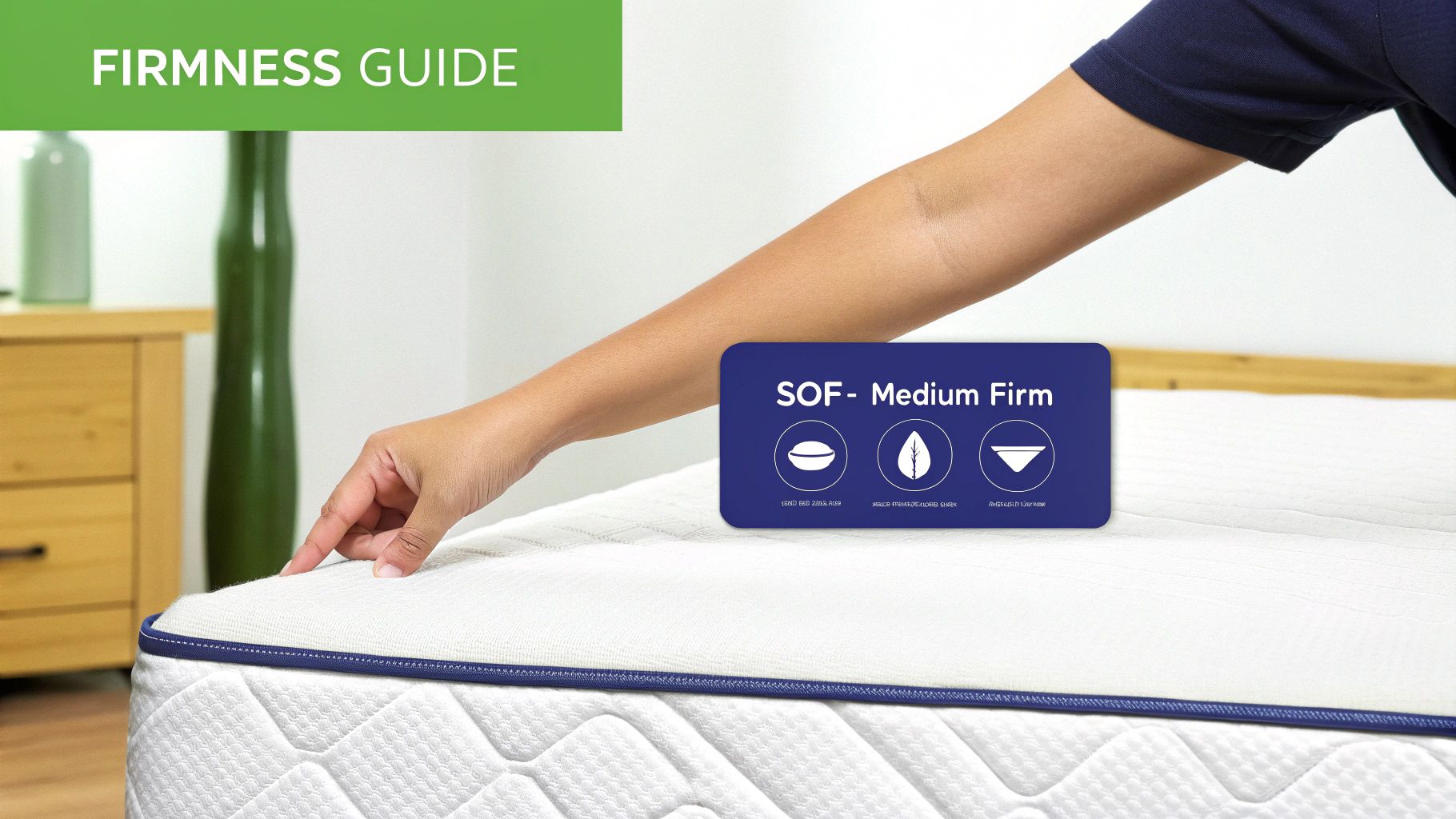
Finding Your Ideal Firmness Level
Think of firmness on a simple scale. A soft mattress gives you a deep, sinking hug, while a firm one feels like you're sleeping on it, not in it. For most of us Kiwis, the best solution is usually somewhere in between.
- Soft (Plush Feel): This is for you if you're a lighter person or a dedicated side sleeper. It gives your shoulders and hips that extra cushioning they need to sink in just enough, preventing pressure points from building up.
- Medium (Balanced Feel): There's a reason this is the most popular choice. It hits that sweet spot between comfort and support, making it a fantastic all-rounder for back sleepers, those who toss and turn (combination sleepers), and most couples.
- Firm (Supportive Feel): If you're a stomach sleeper or have a heavier build, a firm mattress is often your best bet. It provides the solid support needed to keep your spine aligned and stops your hips from dipping too low.
Choosing the right firmness is all about keeping your spine in a straight, neutral line. Too soft, and you'll sag. Too firm, and you'll create uncomfortable pressure points. The right mattress cradles you perfectly.
This is arguably the most crucial decision you'll make. To really dive deep, our guide explains in full detail why mattress firmness matters for your long-term sleep health.
Selecting the Right NZ Mattress Size
Next up, let's make sure your new mattress fits your room and your life. Standard New Zealand bed sizes have you covered, from the kids' room right up to a sprawling master bedroom.
Here’s a quick rundown of the common options:
- Single (91cm x 188cm): Ideal for children's rooms, bunk beds, or a compact guest room.
- King Single (107cm x 203cm): That extra length and width makes it a winner for lanky teenagers or single adults who need more room to move.
- Double (137cm x 188cm): A cosy option for a single person who loves to spread out, or a good fit for smaller master bedrooms.
- Queen (153cm x 203cm): The go-to size for most Kiwi couples. It offers plenty of space without taking over the entire bedroom.
- King (167cm x 203cm): Just that little bit wider than a Queen, giving couples some valuable extra elbow room.
- Super King (183cm x 203cm): The ultimate in spacious luxury. Perfect for large bedrooms or for families who love a weekend morning cuddle in bed.
Making Sense of Pricing and Payment Options
Finally, let's talk money. The price of a quality foam mattress nz generally comes down to the quality of the materials and the complexity of its construction. A mattress with premium features like gel-infused cooling foams, zoned support systems, or multiple comfort layers will naturally cost more. But remember, a bigger price tag doesn't automatically mean it's the right bed for you.
The demand for better sleep is growing, and with forecasts showing a compound annual growth rate exceeding 7.60% into 2025, more health-conscious Kiwis are making the switch to foam. This growth is bringing more choice and better value to the market, especially for popular sizes like Queen.
To make things easier on the wallet, always look for flexible payment options. Here at New Zealand Bed Company, we offer interest-free finance and accept WINZ quotes because we believe everyone deserves a great night's sleep, no matter the budget. Our Best Price Guarantee is also there to give you complete peace of mind, so you know you're getting exceptional value for your investment.
Making Your Purchase with Confidence in NZ
Right, you've done the hard yards with the research and you're on the home stretch to buying your new foam mattress. This final part is all about making sure the purchase itself is as comfortable as your future sleeps will be. It's about getting that complete peace of mind, so let’s walk through the last few steps to get you over the line.
The final decision often hinges on one simple thing: how you actually like to shop. Some of us just need to see and feel a mattress in person, while others are all about the sheer convenience of getting it delivered right to the front door. There's no right or wrong way—both have their perks.
In-Store vs Online Shopping
Popping into a store means you can physically test out different firmness levels and chat with an expert right then and there. You can actually lie down, feel the different foams, and compare a few models side-by-side. For many people, that hands-on experience is what seals the deal.
On the flip side, buying online is incredibly easy. The whole mattress-in-a-box revolution has changed the game, making delivery a breeze even if you’re in a third-floor apartment with a tight stairwell. If you want to dive deeper into how this works, have a read of our guide on the mattress in a box in New Zealand.
Understanding Warranties and Trial Periods
This is your safety net. No matter where you decide to buy, the warranty and the trial period are what protect your investment and make sure you end up genuinely happy with your choice.
Here’s what you should be looking for:
- Warranty Length: A solid 10-year warranty is a pretty good sign that the manufacturer backs their product. It's there to cover you for things like major sagging or any faults that might pop up in the foam.
- Trial Period: A sleep trial, usually somewhere between 30 to 100 nights, is your chance to properly test-drive the mattress at home. Your body needs time to adjust to a new surface, so this period is absolutely vital to know if it's the one.
- Return Policy: Get clear on how the return or exchange process works. Are there any hidden fees? How do they handle collection if it doesn't work out? A little clarity here goes a long way.
A transparent and fair trial period is the ultimate confidence booster. It takes the risk out of the equation, letting you focus on what really matters: finding a mattress that gives you a fantastic night's sleep.
The move towards quality foam mattresses is part of a bigger picture here in NZ. Kiwis are increasingly looking for durable, more eco-friendly bedding, and the sustainable mattress market is set to grow between 2025-2031. Across the ditch, Australia and New Zealand are leading the charge in a regional market worth over $5 billion, with stable growth and high demand per person.
Your Final Purchase Checklist
Okay, before you hit "buy" or hand over your card, just run through this quick mental checklist.
- Confirm the Size: One last check—have you got the right NZ mattress size for your bed frame and your room?
- Clarify Delivery Details: Make sure you know the delivery timeframe, any costs, and what to expect on the day.
- Read the Care Instructions: Find out how to look after your mattress from day one. A little bit of care will make it last for years.
- Review the Fine Print: Give the warranty and return policy one final scan so you’re 100% clear on what’s covered.
Ticking these boxes means no nasty surprises down the track—just the excitement of waiting for your brand-new bed to arrive.
Your Top Questions About Foam Mattresses, Answered
Got a few lingering questions before you commit? That's completely normal. Here are some of the most common queries we hear from Kiwis about foam mattresses, with honest, no-nonsense answers to help clear things up.
How Long Does a Foam Mattress Last in NZ?
You can expect a well-made foam mattress to give you a great night's sleep for a solid 7 to 10 years. Of course, this isn't set in stone. The mattress's lifespan really depends on the quality of the foam, who's sleeping on it, and how it's looked after.
A mattress built with denser foam in its core layers will always go the distance, resisting those dreaded dips and sags for much longer. To make sure you get every last year out of it, pop a good mattress protector on from day one and give it a regular rotation (if the brand says so) to even out the wear.
Aren't Foam Mattresses Hot to Sleep On?
That’s an old myth that’s tough to shake! The original memory foams from decades ago definitely had a reputation for trapping heat, but mattress technology has come a very long way since then. Modern foam mattresses are a whole different story.
Today’s designs are all about breathability. If you’re a hot sleeper, just keep an eye out for these game-changing features:
- Gel-Infused Foam: Think of these as tiny cooling beads mixed into the foam that actively pull heat away from your body.
- Open-Cell Foams: This type of foam has a more 'airy' structure, creating channels for heat to escape instead of getting trapped around you.
- Breathable Covers: High-tech fabrics are designed to wick moisture and promote airflow right at the surface.
With these innovations, you can get all the body-hugging comfort of foam without the worry of waking up in a sweat on a warm Kiwi night.
Can I Put a Foam Mattress on My Adjustable Bed?
Yes, you absolutely can! In fact, foam mattresses are one of the best partners for an adjustable base. Because they're so flexible, they have no problem bending and contouring as you raise your head for a late-night read or lift your feet to take the pressure off.
This natural compatibility means they’re an ideal pick if you're building a truly customised sleep system. It's always a good idea to quickly check the manufacturer's warranty, but the vast majority of modern foam mattresses are designed for it.
What's the Real Difference Between a Bed-in-a-Box and a Traditional Mattress?
Honestly, the biggest difference isn't in the mattress itself, but in how it gets to your bedroom. A "bed in a box" is simply a foam mattress that’s been cleverley compressed, sealed, and rolled up to fit into a box. You get it delivered to your door, unroll it, and watch it expand back to full size.
A traditional mattress arrives flat, full-size, and ready to sleep on immediately. The quality inside can be exactly the same—it’s just a trade-off of convenience. A boxed mattress is a lifesaver for navigating tight stairs and hallways, whereas a traditional delivery means you don't have to wait for it to decompress.
Ready to feel the difference a great foam mattress can make? At New Zealand Bed Company, we're passionate about matching Kiwis with their perfect sleep. Browse our range online or pop into a showroom to have a chat.
Find your perfect sleep today at https://nzbeds.co.nz.