

Welcome to your ultimate guide for finding the perfect memory foam bed NZ locals love. If you're tired of restless nights and waking up with aches and pains, you're in the right place. Think of this as your roadmap to understanding everything about memory foam, so you can choose a mattress that perfectly fits your sleep style, your home, and your budget.
Why Kiwis Are Choosing Memory Foam Beds
For years, New Zealanders have been swapping their old mattresses for a better night's sleep, and more often than not, they're turning to memory foam. These beds have become a staple in homes from Northland to Southland for one simple reason: they offer a unique blend of comfort and support that traditional mattresses just can't match.
This isn't just a fleeting trend. The popularity of memory foam is backed by some pretty solid satisfaction rates. Way back in 2015, research showed that memory foam mattresses hit an 81% customer satisfaction rate in New Zealand, comfortably beating out other types like innerspring or latex. This shows just how much Kiwis appreciate the way these beds contour to the body, providing incredible pressure relief and keeping the spine properly aligned. You can read the full market research about NZ mattress trends if you want to dive into the data.
A Solution for Common Sleep Problems
Many of us in New Zealand deal with sleep issues that a good mattress can genuinely help with. It might be the nagging ache after a long day on the farm or in the office, or the frustration of being woken up every time your partner rolls over. Whatever it is, a decent night's rest is non-negotiable.
A memory foam bed tackles these problems head-on. It works by:
- Absorbing movement, so you can sleep right through your partner's tossing and turning.
- Cradling your joints, which is a game-changer for sore hips, shoulders, and backs.
- Promoting healthy posture by keeping your spine in a neutral line all night long.
This guide is all about giving you clear, practical advice. We’ll break down everything you need to know about choosing a memory foam bed in NZ, so you can feel confident you're making the right call for your wellbeing.
At the end of the day, investing in the right mattress is an investment in your health. By understanding what to look for, you can make a huge difference to how you feel every single day. To get started, you might find it helpful to learn more about enhancing sleep quality in New Zealand in our dedicated article.
How Memory Foam Actually Works

So, what makes a memory foam bed feel so different from the old spring mattress you grew up with? The secret lies in a clever material that responds to you in a way springs never could.
Imagine pressing your hand into a lump of bread dough. It holds the shape for a moment before slowly returning to normal. Memory foam does something similar, but with far more sophisticated science behind it.
The technical name for the material is viscoelastic polyurethane foam. It sounds complicated, but it perfectly explains its two key behaviours. 'Visco' describes its ability to slowly change shape under pressure, while 'elastic' covers its ability to spring back to its original form once you get up.
When you lie down, your body heat and weight soften the foam, allowing it to mould perfectly to your unique shape. It’s this intelligent response that creates that signature 'cradling' feeling, giving you support exactly where you need it.
The Science of Contouring and Support
At its core, memory foam is designed to distribute your body weight evenly across the entire mattress surface. On a traditional spring mattress, your weight tends to concentrate on the heaviest parts of your body, creating pressure points at your shoulders, hips, and lower back.
This pressure is often the culprit behind a restless night of tossing and turning and can even lead to aches and pains come morning. A memory foam bed tackles this by creating a custom cradle for your body, which dramatically reduces the stress on these sensitive areas.
Think of it like this: lying on a spring mattress can feel like resting on a few hard pebbles, with all your weight focused on those spots. Lying on memory foam is more like lying on soft, dry sand—it shifts to distribute your weight perfectly, providing gentle, consistent support from head to toe.
This contouring is also brilliant for promoting proper spinal alignment. By letting your shoulders and hips sink in just the right amount, it helps keep your spine in a neutral, natural position all night long. Waking up feeling refreshed and pain-free often comes down to this simple, yet crucial, alignment.
Different Types of Memory Foam for Kiwi Sleepers
Not all memory foam is the same. Over the years, new variations have been developed to solve specific problems—a big plus for us here in New Zealand, where the climate can be all over the place.
When you’re browsing for a memory foam bed NZ retailers have on offer, you’ll generally come across three main types:
- Traditional Memory Foam: This is the original stuff, known for that classic, slow-moving feel that gives you a deep, contouring hug. It’s fantastic for pressure relief if you love that signature sinking sensation.
- Gel-Infused Memory Foam: A major step forward in comfort. This type has tiny gel beads or swirls mixed right into the foam. These gels are designed to absorb and draw heat away from your body, making for a much cooler sleep—perfect for those sticky summer nights in Auckland or the Hawke's Bay.
- Open-Cell Memory Foam: This foam is made with a different internal structure, full of larger, more open pockets. This design boosts airflow right through the mattress, helping to get rid of heat and moisture much better than traditional foam can.
Getting your head around these differences is a big part of finding the right bed. While this is a great starting point, our full guide on how to choose a mattress goes into even more detail on matching these features to your sleep style.
As a bonus, the dense structure of all these foam types makes them a pretty unwelcoming place for nasties like dust mites. With fewer open spaces for them to hide compared to the hollow interior of a spring mattress, it adds an extra layer of hygiene and peace of mind.
What Are the Real-World Benefits of a Memory Foam Mattress?
Knowing the science is great, but what does a memory foam mattress actually do for your sleep? Let’s get straight to the point and look at the real-world advantages that are making these beds a popular choice in homes all across New Zealand. These aren't just marketing points; they're genuine solutions to the things that keep Kiwis tossing and turning.
Say Goodbye to Aches and Pains
The biggest win here is superior pressure relief. Think about a traditional spring mattress for a moment. Its coils push back against you, creating pressure points, especially around your hips, shoulders, and knees. That’s often why you shift around all night and wake up feeling stiff and sore.
Memory foam works completely differently. Instead of pushing back, it yields and contours to your body's unique shape. This clever trick spreads your weight evenly across the entire surface, taking the pressure off those sensitive joints. For anyone who’s had a long day on their feet—whether you're a tradie, a nurse, or a farmer—that feeling of weightless support can be an absolute game-changer.
Finally, a Truly Undisturbed Sleep
Another huge advantage is motion isolation. If you share a bed with someone who fidgets, gets up in the night, or has a different sleep schedule, you know the struggle. On an old-school innerspring mattress, every little movement creates a ripple effect that travels right over to your side.
Memory foam, with its dense, energy-absorbing structure, stops that ripple in its tracks. When your partner moves, the foam absorbs the movement locally, so you feel next to nothing. For light sleepers, this is life-changing. It means you can finally get the deep, uninterrupted rest you need.
When it comes to waking up refreshed, it all starts with your posture during the night. Memory foam is brilliant at promoting proper spinal alignment, letting your shoulders and hips sink in just the right amount to keep your spine in a healthy, neutral line.
This alignment reduces the strain on your back and neck muscles while you sleep. Over time, that can make a real difference, helping to ease chronic back pain and morning stiffness—one of the main reasons people start looking for a new mattress in the first place.
Why Are So Many Kiwis Making the Switch?
It’s easy to see why memory foam is becoming so popular here. New Zealand's mattress market is seeing some serious growth, with the Pacific region's demand growing by more than 7.60% each year. Kiwis and Aussies are leading the charge, spending more on quality mattresses as we all become more aware of just how crucial good sleep is for our overall well-being.
This isn't just about buying a new bed; it's a shift towards investing in our health. Understanding how foam works in a mattress is the first step, and it's also worth looking into how memory foam pillow benefits for better sleep can complete your setup for a truly restorative night.
To really see the difference, let’s compare memory foam side-by-side with the traditional innerspring mattresses many of us grew up with.
Memory Foam vs Traditional Innerspring Mattresses
This table breaks down the key differences to help you see which type of mattress might be the right fit for you.
| Feature | Memory Foam | Traditional Innerspring |
|---|---|---|
| Pressure Relief | Excellent: Cradles the body, taking pressure off sensitive areas like hips and shoulders. | Fair to Poor: Coils can create pressure points by pushing back against the body. |
| Motion Isolation | Excellent: Soaks up movement, so you won't feel your partner tossing and turning. | Poor: Motion travels easily across the mattress, often leading to sleep disruptions. |
| Spinal Alignment | Excellent: Adapts to your body's curves to keep your spine in a natural, healthy position. | Good: Offers general support, but may not contour enough to support your spine perfectly. |
| Durability | Good to Excellent: High-quality foams can last 7-10+ years without developing saggy spots. | Fair to Good: Springs can weaken and sag over time, typically needing replacement in 5-8 years. |
Looking at this comparison, it's clear that memory foam offers some significant advantages, especially for those dealing with pain or a restless partner. While traditional beds have been the standard for decades, modern foam technology provides a more tailored and supportive sleep experience.
How to Select the Right Memory Foam Bed
Choosing a new bed feels like a massive decision, but it doesn't have to be overwhelming. Let's cut through the jargon and figure out what really matters so you can find a memory foam mattress that delivers a truly great night's sleep.
The first step in finding the perfect memory foam bed NZ retailers offer is getting the firmness right. This isn't just about what feels comfy for five minutes in a showroom; it's about matching the mattress to your body and sleeping habits for proper support, night after night.
Matching Firmness to Your Sleep Position
The way you sleep is the single biggest clue to the firmness level you need. What feels like a dream for a back sleeper could be a nightmare for a side sleeper. The ultimate goal is simple: keep your spine in a straight, neutral line from your neck to your hips.
Here’s a simple breakdown based on how you spend most of the night:
- Side Sleepers: If you’re a side sleeper, you need a mattress with enough give to cushion your shoulders and hips. A soft to medium firmness is your sweet spot, as it prevents those sharp pressure points from building up.
- Back Sleepers: Sleeping on your back is fantastic for spinal alignment, but only if you have the right support. A medium to firm mattress is ideal, preventing your hips from sinking too low and putting a strain on your lower back.
- Stomach Sleepers: This position can be tough on your neck and spine. To avoid waking up with a sore back, you absolutely need a firm mattress to keep your hips elevated and your spine properly aligned.
The real test of a mattress isn’t how it feels when you first lie down. It’s about whether it can keep your spine aligned for eight solid hours, so you wake up refreshed, not stiff and sore.
Considering Body Weight and Health Concerns
Your body weight also makes a huge difference in how a mattress feels. A lighter person might find a "firm" mattress feels like a rock, while a heavier person will sink into it more, experiencing it as much softer.
As a general rule of thumb:
- Lighter Individuals (under 70kg): You’ll probably feel most comfortable on a soft to medium mattress. It will offer that lovely contouring support without feeling too rigid.
- Average Weight Individuals (70-100kg): A medium-firm mattress usually hits the mark, providing a fantastic balance of comfort and support for most sleeping styles.
- Heavier Individuals (over 100kg): A firm mattress is almost always the best bet. It provides the solid support needed to prevent you from sinking in too deep and keeps your spine happy.
Beyond your weight, think about any specific health issues. If you deal with chronic back pain, experts often point to a medium-firm mattress for its perfect blend of support and pressure relief. For those with sore joints in the hips or shoulders, a slightly softer surface can feel wonderful as it gently cradles those sensitive spots.
This decision tree helps visualise how the benefits of memory foam can tackle your specific needs.
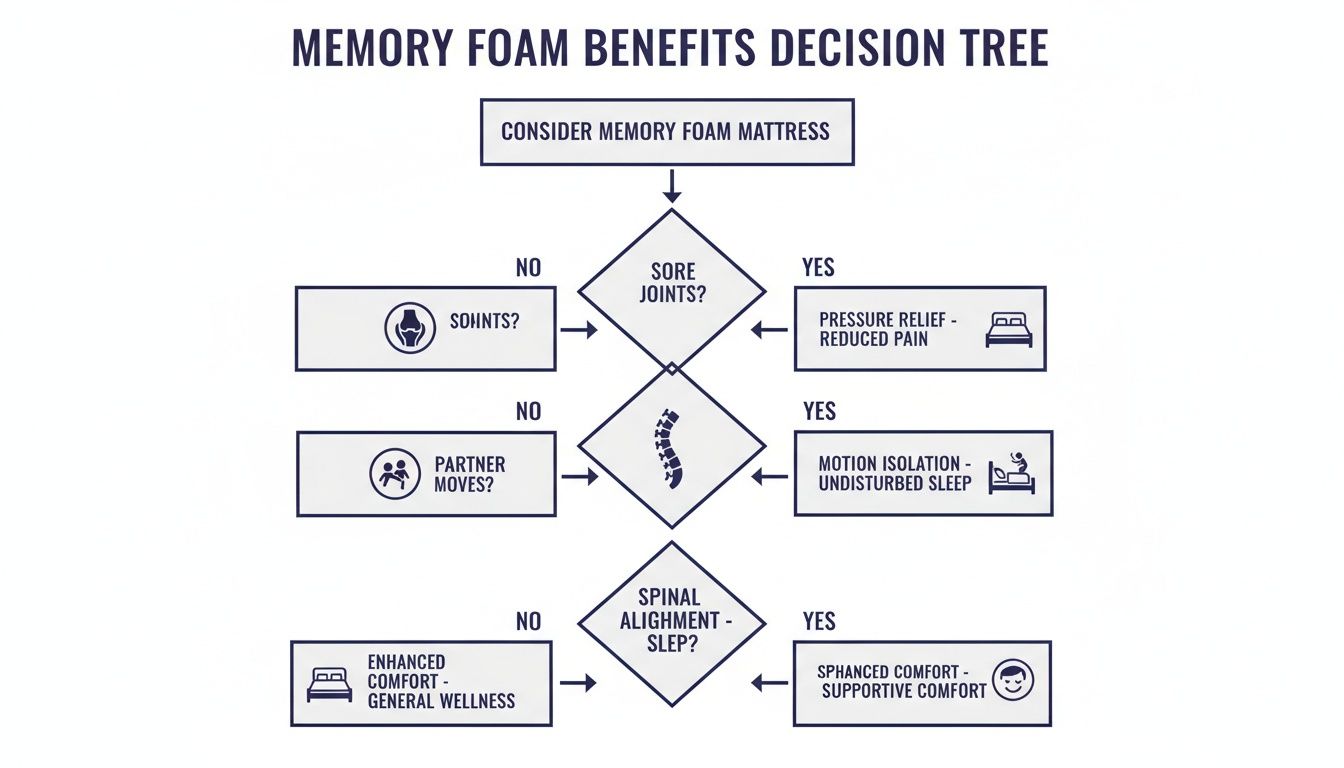
As you can see, memory foam is a great problem-solver, whether you're trying to ease joint pain, stop your partner's tossing and turning from waking you up, or just get your spine properly aligned. For an even deeper dive, our article on how to choose the perfect mattress in New Zealand has more expert tips.
Choosing the Right Size for Your Kiwi Home
Finally, let’s talk about size. It’s crucial to pick a bed that not only gives you enough room to stretch out but also fits comfortably in your bedroom. Getting the standard New Zealand sizing right from the start will save you a lot of hassle.
Here are the most common NZ bed sizes you’ll find:
| Bed Size | Dimensions (cm) | Best For |
|---|---|---|
| Queen | 153 x 203 cm | The Kiwi favourite. Perfect for couples or individuals who love a bit of extra room. |
| King | 167 x 203 cm | Great for couples wanting more personal space, or for parents with kids who like to pile in on Sunday mornings. |
| Super King | 183 x 203 cm | The ultimate in space and luxury. An excellent choice for large master bedrooms. |
Before you fall in love with a Super King, whip out the measuring tape. Make sure you have enough room to walk around the bed without shimmying past your other furniture. The popularity of memory foam is more than just a passing trend; by 2025, these mattresses are expected to make up over 30% of the global market. In New Zealand, where we really value ergonomic support and wellness, that number is even more significant. It’s a key reason why households from Christchurch to Auckland are making the switch.
Making a Smart Investment in Your New Bed
A great bed isn't just a piece of furniture; it's a serious investment in your health and happiness. When you start looking at memory foam beds in NZ, you'll see a wide range of prices, and it can be tricky to know what you're actually paying for. Let's break it down so you can feel confident you're getting the best value.
Think of it a bit like buying a car. A basic hatchback will get you from A to B just fine. But a premium model offers a smoother ride, more advanced features, and a level of comfort that makes the journey a pleasure. Mattresses are much the same.
Even an entry-level memory foam mattress gives you that core benefit of pressure relief. But as you move up the price ladder, you're paying for real, tangible upgrades that directly improve your sleep.
What Are You Paying For?
That bigger price tag isn't just for show. The extra cost almost always reflects better materials and more thoughtful construction, which translates to better sleep for you and a bed that will last much longer.
Here’s what you generally get as you invest more:
- Higher-Density Foams: This is a big one. Denser foam provides far better support, contours more accurately to your body, and is much more durable. It's the key to preventing those dreaded body impressions and sagging over time.
- Advanced Cooling Tech: If you're a hot sleeper, this is where your money is well spent. Premium beds often have clever features like gel infusions, copper particles, or a more breathable "open-cell" foam structure—all designed to pull heat away from you.
- Premium Cover Fabrics: The material on top matters more than you’d think. High-end covers might use naturally breathable bamboo or special moisture-wicking fabrics that contribute to a cooler, more comfortable night.
- More Sophisticated Layers: Top-tier models aren't just one slab of foam. They often have several distinct layers working together: a sturdy base for support, a transition layer for cushioning, and a plush top layer for that initial sink-in comfort.
A higher price usually means a more durable, comfortable, and feature-packed mattress. The trick is to find that sweet spot between the features you’ll genuinely benefit from and what your budget allows.
Making Your New Bed Affordable
Everyone in New Zealand deserves a quality bed, and thankfully, you don't always have to pay for it all upfront. There are a few common-sense ways to manage the cost without skimping on quality.
Interest-Free Finance
Most retailers offer interest-free deals through providers like Gem Visa or Q Card. This lets you take the bed home now and spread the payments over 12, 24, or even 36 months without paying a cent of interest. It’s a fantastic way to make a higher-quality mattress fit into your monthly budget.
WINZ Quotations
If you're getting support from Work and Income (WINZ), you can request a quote for essential bedding. Any good retailer can provide you with an official WINZ quotation for a new bed, which you can then use for your application.
Timing your purchase around sales can also lead to huge savings. For tips on how to catch the best deals, have a look at our guide on finding the best mattress sale in New Zealand.
By understanding what drives the price and knowing your payment options, you can choose a memory foam bed that's perfect for both your sleep and your wallet.
Looking After Your New Bed for the Long Haul
Bringing home your perfect memory foam bed is a fantastic feeling, but the job isn't quite done. To make sure you get years of incredible sleep, it's smart to know how to protect your investment from day one. This really comes down to two things: understanding your rights and adopting a couple of simple care habits.
The most important paperwork you'll get is the warranty. Think of it as your safety net against any manufacturing faults. Here in New Zealand, this usually covers things like major sagging (beyond normal body impressions) or foam that's lost its bounce. Always read the fine print before you buy, so you know exactly what’s covered, for how long, and what could void it—like using the wrong type of bed base.
Trials, Returns, and Peace of Mind
These days, many top Kiwi retailers offer in-home sleep trials, and they're a game-changer. You'll typically get around 100 nights to actually sleep on the mattress in your own bedroom, which is the only real way to know if it's right for you.
A fair and clear return policy is just as important. If it turns out the bed isn't a good match during that trial, you want a hassle-free way to return or exchange it. Confirm all the details before you hand over your money—it gives you real peace of mind and avoids any nasty surprises later on.
Simple Care for a Longer Lifespan
Once you've settled in with your new mattress, a little bit of care will go a very long way in keeping it comfortable for years.
- Get the Foundations Right: Memory foam mattresses need a solid, supportive base to do their job properly. A slatted base is great, just make sure the slats are no more than 7cm apart. A solid platform base works perfectly too. The right support prevents sagging and keeps the mattress feeling great.
- Give It a Regular Spin: You don't ever need to flip a memory foam mattress, but it's a good idea to rotate it 180 degrees (head to toe) every three to six months. This simple step helps it wear evenly and keeps the support consistent across the whole surface.
Think of a mattress protector as an essential insurance policy for your bed. It's the single most effective tool for guarding against spills, stains, and the buildup of allergens, which can void your warranty and shorten the mattress's life.
Putting a good quality protector on your mattress is non-negotiable. It creates a simple barrier that keeps your bed hygienic and safe from life's little accidents. To really keep your investment pristine, a waterproof mattress protector for NZ beds is the way to go. These easy habits will make sure you’re enjoying that amazing new-bed feeling for many years to come.
Got Questions About Memory Foam? We've Got Answers.
As you get closer to choosing the perfect mattress, a few final questions often crop up. It's completely normal. To make sure you feel totally confident in your decision, let's run through some of the most common things Kiwis ask when they're shopping for a memory foam bed.
"Don't Memory Foam Beds Sleep Hot?"
This is probably the number one concern we hear, but thankfully, it’s a bit of an old myth. The very first memory foam beds could indeed trap body heat, but mattress technology has come a long, long way since then.
Today’s memory foam beds are designed with cooling in mind. Many now feature gel-infused foam, which actively draws heat away from your body, or have an 'open-cell' structure that lets air circulate freely through the mattress. If you know you're a hot sleeper, just keep an eye out for these features – they make all the difference for a cool, comfortable night.
"How Long Will a Memory Foam Mattress Actually Last?"
A good quality memory foam mattress is a solid investment in your sleep, easily lasting between 7 and 10 years. That’s right up there with the best traditional innerspring beds, and often even better.
What really determines its lifespan is the density of the foam. Denser foams are simply more durable and stand up better to years of use without sagging. To get the maximum life out of your mattress, make sure it’s on a proper supportive base and always use a mattress protector. A solid 10-year warranty is also a great indicator that the manufacturer has built it to last.
Here's a little-known perk: The solid structure of memory foam means there are far fewer nooks and crannies for dust mites or bed bugs to hide in compared to a hollow spring mattress. It's just a less inviting home for them.
"What's That 'New Bed' Smell?"
When you first unbox a new memory foam mattress, you might notice a faint, slightly unusual smell. This is completely normal and harmless – it’s a phenomenon known as off-gassing.
It’s just a temporary odour from the manufacturing and vacuum-sealing process that gets trapped in the packaging. The smell isn't toxic and almost always disappears within a few hours to a day or two. The best trick is to let the mattress air out in a well-ventilated room before you put sheets on it. Reputable brands use certified foams like CertiPUR-US®, which guarantees low VOCs (Volatile Organic Compounds), meaning the smell is minimal and dissipates quickly.
"Can I Use My Electric Blanket with It?"
This is a really important one. It's always best to double-check the manufacturer's care instructions, but as a general rule, you shouldn't use an electric blanket directly on a memory foam mattress. The foam is designed to react to your body heat, and the constant, direct heat from an electric blanket can stop it from contouring properly.
Worse, over time it could even damage the foam's structure. If you love a toasty bed, here’s a safer way: use the electric blanket to warm up your bed before you hop in, then turn it off when you get under the covers. You get all the cosy warmth without risking your new mattress.
Ready to find the perfect memory foam bed for a better night's sleep? At New Zealand Bed Company, we've been helping Kiwis rest easy since 1986 with a huge range of high-quality, locally-made mattresses. Explore our collection and find your perfect match today at https://nzbeds.co.nz.