

A standard New Zealand single bed is 91cm wide and 188cm long. This compact footprint makes it a perennial favourite across the country, especially for kids' rooms, guest spaces, or any bedroom where floor space is at a premium.
Understanding NZ Single Bed Dimensions
Getting the dimensions right from the start is the secret to a hassle-free bed purchase. Knowing the exact size of a single bed is the first step to ensuring your mattress fits the frame, your sheets fit the mattress, and the whole setup works perfectly in your room.
The standard NZ single bed size is precisely 91cm x 188cm. These dimensions have been the go-to standard in Kiwi homes for decades, making it one of the most common and easy-to-shop-for sizes you'll find.
Standard Single Bed NZ Size Quick Reference
To keep things straightforward, here are the core measurements you'll need. Think of these numbers as the foundation for everything else, from choosing the right linen to planning your room layout.
| Component | Width (cm) | Length (cm) |
|---|---|---|
| Mattress | 91cm | 188cm |
| Base | 91cm | 188cm |
These dimensions refer specifically to the mattress itself. While most bed bases are built to these exact measurements, it’s always a smart move to quickly measure your existing frame to confirm it’s compatible. Little variations can sometimes cause a mismatch.
For a quick comparison with other sizes, you can check out our complete NZ bed size guide.
Measurements at a Glance
Here are the essential numbers broken down into different units for easy reference:
- Metric (cm): 91cm x 188cm
- Metric (m): 0.91m x 1.88m
- Imperial (feet/inches): 3' 0" x 6' 2" (approximately 36" x 74")
Comparing NZ Single Beds to International Sizes
When you're shopping online for a new bed frame or some fresh linen, it's easy to assume a "single" bed is the same size everywhere. Unfortunately, that's not the case. Those small differences between countries can lead to real headaches—like a fitted sheet that constantly pops off the corners or a duvet that looks oddly short.
Knowing the exact measurements is your best defence. A New Zealand single is very close to its Australian counterpart, but you'll find noticeable differences when looking at UK and US sizes. Even though the names sound the same, the centimetre dimensions tell the true story.
Here are the standard dimensions for a single bed here in New Zealand.
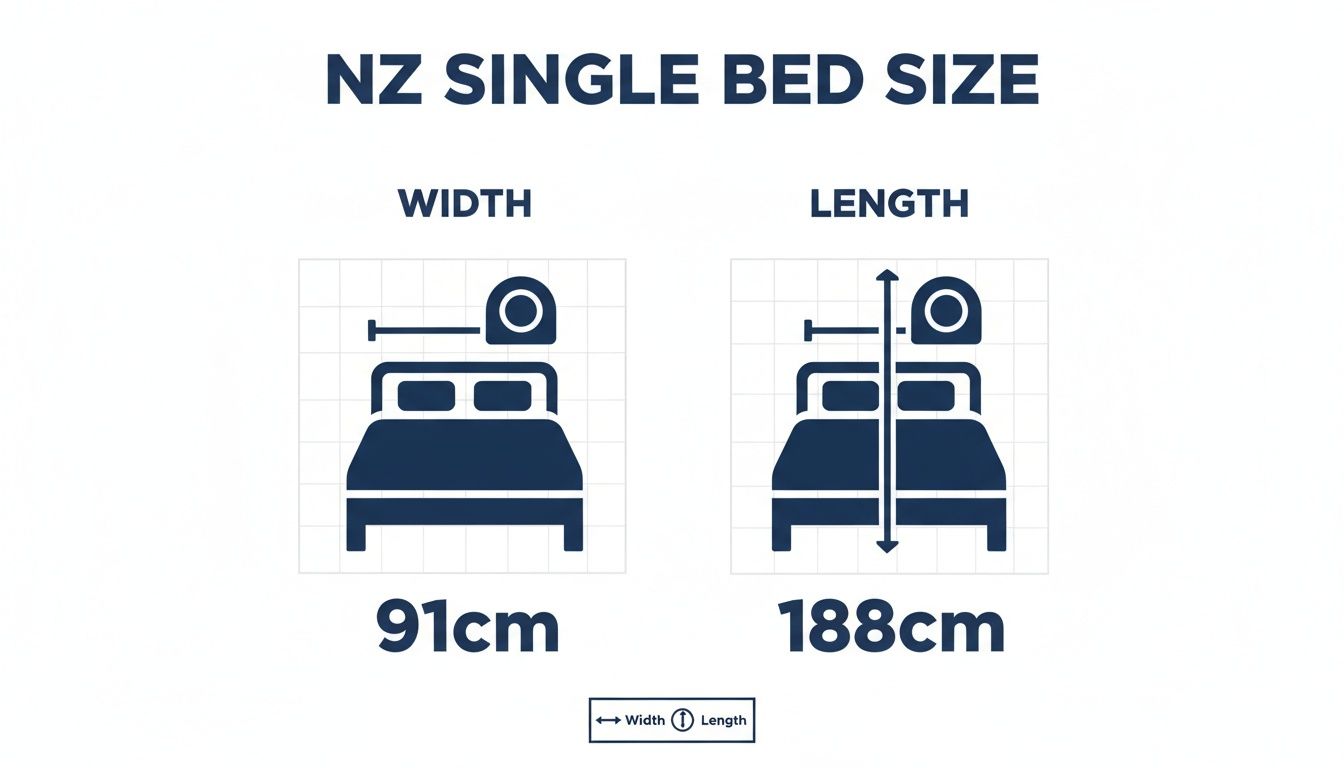
As the image shows, the core measurements are 91cm in width by 188cm in length. Keep these numbers handy, as they're the benchmark we'll use for comparison.
Single Bed Size Comparison NZ vs International
The best way to avoid a mismatch is to ignore regional names like "Twin" altogether and focus purely on the metric dimensions. The table below lays out how a New Zealand single stacks up against its closest international equivalents.
| Country/Region | Standard Name | Dimensions (cm) | Difference from NZ Single |
|---|---|---|---|
| New Zealand | Single | 91cm x 188cm | - |
| Australia | Single | 92cm x 188cm | 1cm wider, same length |
| United Kingdom | Single | 90cm x 190cm | 1cm narrower, 2cm longer |
| United States | Twin | 96.5cm x 189.2cm | 5.5cm wider, 1.2cm longer |
As you can see, an Australian single is a nearly perfect match, so Aussie-sized bedding is generally a safe bet. On the other hand, a US "Twin" is a whole 5.5cm wider, which means an American fitted sheet would be far too baggy for an NZ mattress.
These subtle variations are exactly why double-checking the measurements in centimetres on any packaging or product description is so important. If you want to see how these sizes compare to larger options, our guide on single and king single dimensions is a great next step. It’s all about making sure everything from your mattress protector to your quilt fits just right.
Choosing the Right Mattress Thickness for Your Bed
It’s easy to focus on just the width and length, but a mattress's thickness—often called its profile or height—is just as important for both comfort and daily use. This vertical measurement dictates the final height of your bed, which has a surprisingly big impact on everything from how the bed looks in the room to how easy it is to hop in and out.
This is something to really think about for children's beds or for older adults, where a specific bed height can be a matter of safety and mobility.
Your total bed height is simply the height of your bed base plus the thickness of your mattress. A low-profile base with a slim mattress gives you that modern, minimalist vibe, whereas a taller base topped with a thick, plush mattress creates a more traditional, grander look.
Common Thickness Ranges
For single beds here in New Zealand, mattress thickness typically falls into one of three brackets. Knowing the difference will help you pick the right one, whether it's for a kid's first bed or a space-savvy guest room.
-
Slimline Mattresses (around 20-23cm): These lower-profile mattresses are the go-to choice for bunk beds or trundler beds where height restrictions are a serious safety consideration. They're also brilliant for young children moving into their first "big bed," as the lower height makes it much easier for them to climb in and out on their own.
-
Standard Mattresses (around 24-29cm): This is the sweet spot and the most common range you'll find. It strikes a great balance between comfort, support, and practicality. A mattress in this range will fit nearly all standard single bed frames perfectly and suits most sleepers.
-
Premium & Plush Mattresses (30cm+): Thicker mattresses usually pack in extra comfort layers, like pillow tops or memory foam, for a more luxurious feel. While they can be incredibly comfortable, just double-check that the final bed height doesn't become too high to be practical for the person using it.
A thicker mattress doesn't always equal better support, but it often means more cushioning and comfort layers. The real goal is to find a height that works well with your bed frame and gives you that perfect feel for a great night's sleep.
If your current mattress feels a bit thin or firm, a single bed topper can be a fantastic way to add extra cushioning without having to buy a whole new mattress.
Finding Bedding and Linen That Fits Perfectly
Getting the right linen is the final, crucial piece of the puzzle for a comfortable bed. There's nothing more frustrating than a fitted sheet that pings off the corners in the middle of the night. For a standard single bed nz size of 91cm x 188cm, you need bedding that's made to match.
The most common mistake people make is forgetting about mattress depth. If you have a slim, basic mattress, standard sheets might do the trick. But for thicker, more premium mattresses—anything over 30cm deep—you absolutely must look for fitted sheets with a deeper pocket, often called a "wall."
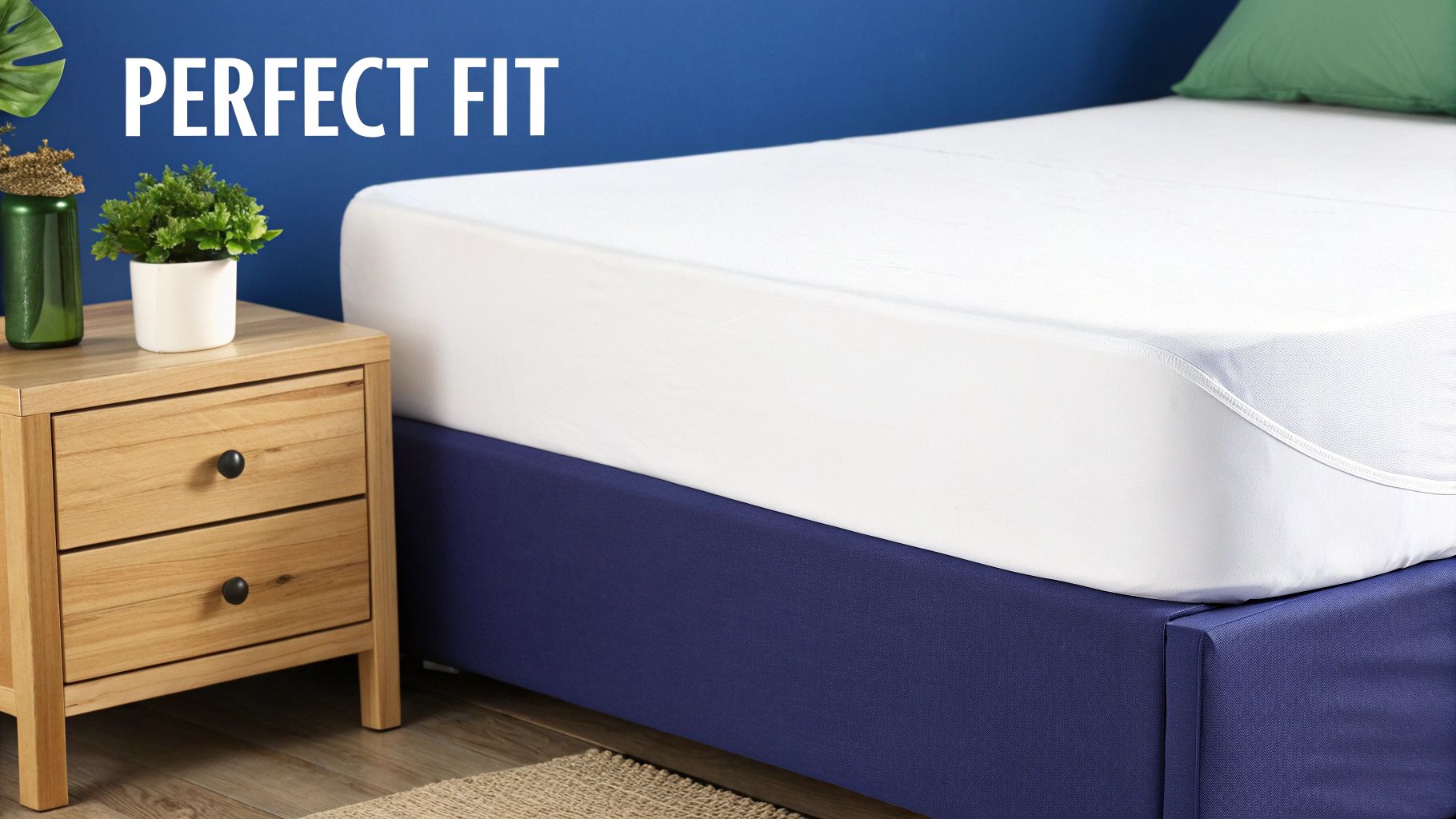
Getting this one measurement right is the secret to a snug, secure fit that won't budge.
Key Bedding Sizes for an NZ Single Bed
To take the guesswork out of it, here are the standard dimensions you should be looking for when buying new linen for a single bed. It's always a good idea to double-check the measurements in centimetres on the packaging, as sizing can vary a little between brands.
- Fitted Sheet: This needs to match your mattress dimensions perfectly: 91cm x 188cm. The most important part is the pocket depth or "wall" (e.g., 40cm wall), which should be listed separately.
- Flat Sheet: In New Zealand, a standard single flat sheet is generally around 180cm x 250cm. This gives you plenty of extra fabric to tuck in securely on all sides.
- Duvet Cover: You'll want a single duvet cover that measures 140cm x 210cm. This size drapes nicely over the edges of the bed without trailing on the floor.
Pro Tip: If you're buying bedding from overseas, particularly from the UK or US, ignore the name on the packet like "Single" or "Twin." Instead, rely only on the centimetre measurements to guarantee it will fit your NZ bed.
Knowing these numbers makes shopping so much easier. If you're curious about different fabric types, our guide to bamboo sheets in New Zealand is a great read—they’re a fantastic option for anyone with sensitive skin.
Planning Your Room Layout with a Single Bed
Making the most of the space in a smaller Kiwi bedroom is all about smart planning, especially when you're working with the compact footprint of a single bed. A good layout can make a room feel bigger, improve how you move around in it, and turn a potentially cramped space into a comfortable retreat. Before you start shifting furniture, have a think about how the room will be used every day.
The first, and most important, step is to make sure there's enough room to actually move. As a general rule of thumb, try to leave at least 60-70cm of open floor space around the sides of the bed you'll use to get in and out. This gives you enough space to walk without feeling squashed and makes everyday jobs, like changing the sheets, a whole lot easier.
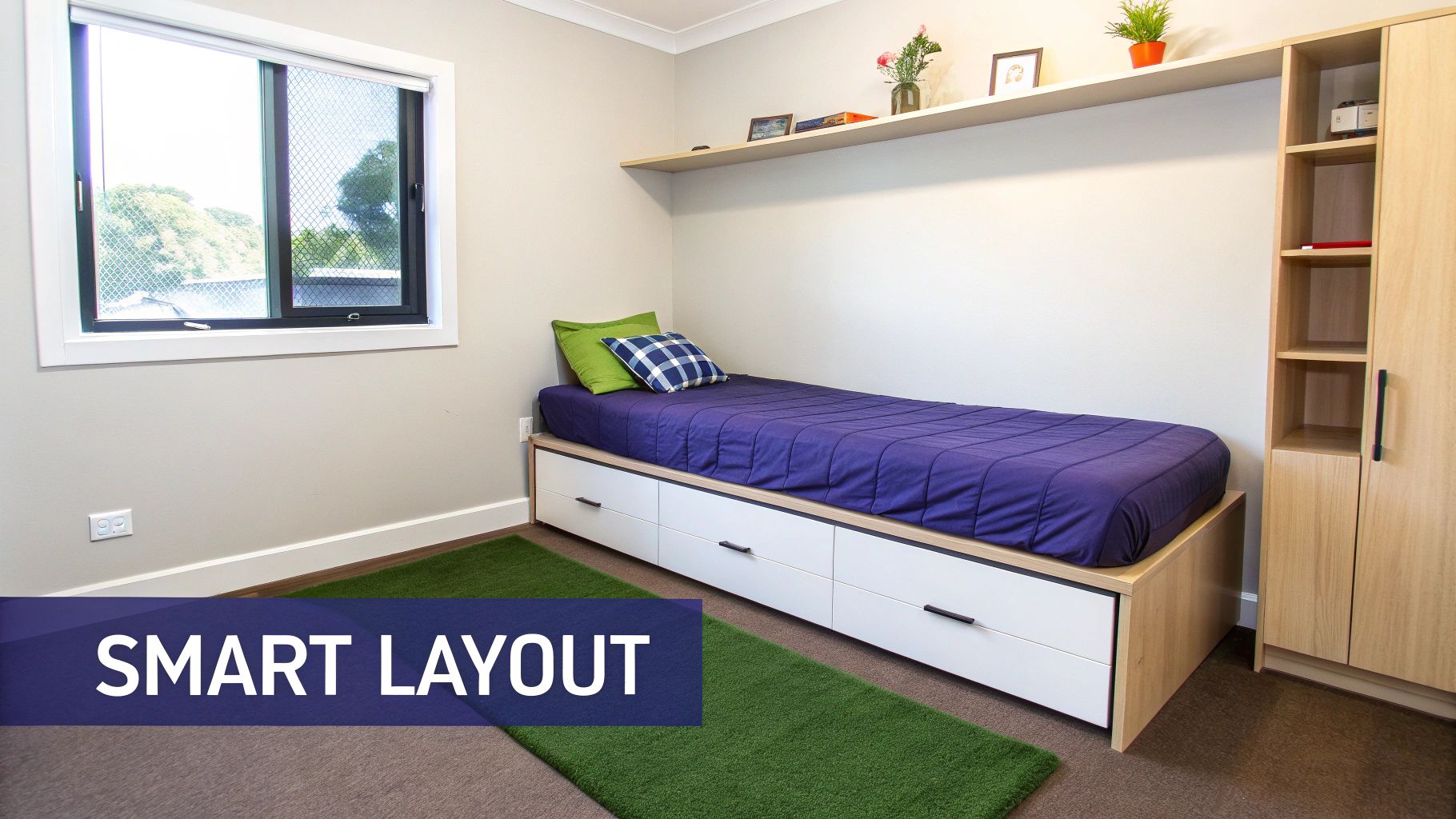
This clearance space is even more critical when you've got furniture with doors or drawers sitting next to the bed.
Key Clearance Measurements
To get a truly functional layout happening around your NZ single bed, it helps to keep a few key measurements in mind. Getting these right ensures everything in the room is accessible and easy to use.
- Wardrobe and Drawer Clearance: You’ll want to leave a good 90cm between the bed and any wardrobes or drawers. This is the minimum you'll need to open them fully without bashing into the bed frame.
- Main Walkway: For the main path into and through the room, aim for a width of at least 75-90cm. This keeps access clear and unobstructed.
- Window Access: Don't forget the windows! Make sure you can get to them easily to open them, leaving enough space to stand comfortably without the bed getting in the way.
A well-planned room just feels right. You'll often find that placing the bed against the longest wall opens up the most floor space. On the other hand, tucking it into a corner can create a really cosy nook, which is often a perfect setup for a child's room.
For some fantastic inspiration on putting together the whole space, check out these gender-neutral kids' bedroom ideas. If you map out your clearances first, you can arrange the rest of the furniture with confidence, knowing the room is going to work perfectly.
Ensuring Your Bed Base and Headboard Are Compatible
Picking out the right mattress is a big step, but it's only one piece of the puzzle. For a truly stable and comfortable setup, you need to make sure your mattress, bed base, and headboard all work together properly. Getting this wrong can lead to poor support, damage your new mattress, or just leave you with a bed that looks a bit off.
The good news? The standard single bed NZ size of 91cm x 188cm is made to fit any standard New Zealand single bed base. This means that if you buy an NZ single mattress and an NZ single base, they’re designed to be a perfect match, which definitely takes the guesswork out of it.
Bed Base Compatibility
The kind of base you put your mattress on has a huge impact on how it feels and how long it lasts. Different mattresses need different types of support to perform at their best, so it’s crucial to get the pairing right. A solid foundation is the key to getting the support you paid for.
Here are a few common base types you’ll come across:
- Slatted Bases: These are incredibly popular, and for good reason—they provide great airflow. Just make sure the slats are no more than 7cm apart. Any wider, and your mattress might start to sag between the gaps over time.
- Platform or Solid Bases: These offer a firm, totally flat surface, which is perfect for most modern foam and hybrid mattresses. They give you consistent, even support right across the mattress.
- Adjustable Bases: If you’re thinking about an adjustable base, you absolutely have to use a compatible mattress. This usually means a memory foam or latex model that can flex and bend without getting damaged.
A quick heads-up: using the wrong type of base can not only feel uncomfortable but might also void your mattress warranty. It's always a good idea to check what the mattress manufacturer recommends.
Checking Headboard Fit
When it comes to headboards, compatibility is mostly about getting the width right. A standard NZ single headboard is designed to be just a little bit wider than the 91cm mattress, creating a nice, clean frame.
If you're buying a headboard separately from your base, double-check that its mounting brackets line up with the holes on your bed base. To get a better handle on what makes a sturdy foundation, check out our guide on bed slats in NZ.
Got Questions About NZ Single Beds? We've Got Answers
Even after you've done your research, a few last-minute questions can pop up. Here are some quick, clear answers to the most common queries we get about the single bed NZ size, helping you tie up any loose ends before you buy.
What Is the Exact Single Bed NZ Size in Centimetres?
In New Zealand, a standard single mattress is precisely 91cm wide by 188cm long. This is a consistent, nationwide standard, so you can count on it. Any bed base sold as a "single" will be built to match these exact dimensions.
Is a King Single Just a Wider Single Bed?
Not quite. A King Single is both wider and longer than a standard single. Here in New Zealand, a King Single measures 107cm wide by 203cm long.
That extra space makes it a fantastic option for taller teens or adults who find a standard single a bit cramped. It’s a noticeable step up in both width and, crucially, legroom.
Can I Use Australian Single Bed Sheets on an NZ Single Bed?
Yes, you almost certainly can. An Aussie single mattress is 92cm x 188cm, which is only 1cm wider than ours. That tiny difference means Australian single fitted sheets will still fit an NZ single mattress perfectly well.
Just be careful if you're looking at bedding from further afield:
- UK Single: At 90cm x 190cm, a fitted sheet from the UK will probably be too narrow to get on.
- US Twin: This one measures 96.5cm x 189.2cm. A US Twin fitted sheet will be far too baggy and loose on an NZ single.
How Do I Know If My Child Is Ready for a Single Bed?
There’s no magic number, but most kids make the move from a cot to their first "big bed" somewhere between 18 months and 3 years old.
You'll know it's time when you see signs like them trying to climb out of their cot, getting curious about a bigger bed, or just plain outgrowing their current space. A standard single gives them plenty of room to stretch out and grow.
A quick tip on safety: When you do move a toddler into their first single bed, it's a great idea to choose a low-profile frame or add a temporary safety rail. It really helps prevent tumbles in the night and gives everyone a bit more peace of mind.
Getting the right bed is a huge part of setting up a comfortable, practical bedroom. With these final questions sorted, you can shop confidently, knowing exactly what to look for.
At New Zealand Bed Company, we’ve been helping Kiwis find their perfect sleep since 1986. We're experts at this, and we make finding the right bed simple. We have a huge range of quality mattresses and beds for every person and every budget.
Ready to find the ideal sleep solution? Explore our collection of single beds online today at https://nzbeds.co.nz.