

If you're a side sleeper, finding the right pillow isn't a luxury—it's essential for waking up without a stiff neck or sore shoulders. The sweet spot is usually a medium to high loft pillow with a medium to firm feel. This combination perfectly bridges the gap between your shoulder and head, keeping your spine straight.
Your goal is simple: create a perfectly straight line from your head all the way down to your hips. Let's find the pillow to make that happen.
Why Your Pillow Is the Secret to a Pain-Free Morning
If you're a side sleeper and that familiar neck ache is your daily alarm clock, I can almost guarantee your pillow is the culprit. It’s so easy to overlook, but for anyone who sleeps on their side, a pillow has a crucial structural job to do all night long.
Think of your pillow as a support bridge. Its main purpose is to fill that significant space between the side of your head and your mattress. When that bridge is the right height and strength, it holds your head and neck in perfect alignment with the rest of your spine.
The Dreaded "Pillow Sag"
When your pillow is too soft or too low, that bridge collapses. Your head dips down towards the mattress, forcing the muscles on the side of your neck and across your shoulder into a strained, unnatural stretch. Hold that position for eight hours, and it's no wonder you wake up in pain. An unsuitable pillow can make existing neck issues worse, which is why it's so important to find a solution. There are many proven methods to relieve neck pain, and choosing the right pillow is a foundational first step.
On the other hand, a pillow that’s too high or overly firm is just as bad. It shoves your head upwards, kinking your neck in the opposite direction and creating a whole new set of alignment problems.
Your Two Best Friends: Loft and Firmness
This is where two key concepts come into play: loft and firmness.
- Loft: This is just a fancy word for a pillow's height. Because of that gap between your head and the bed, side sleepers almost always need a higher loft.
- Firmness: This describes how well the pillow holds its shape under the weight of your head. A firmer pillow gives you the consistent support you need to stop your head from sinking overnight.
Getting this combination right is everything. It’s the difference between waking up feeling rested and refreshed, or starting your day with that all-too-familiar ache. As a Kiwi company, we at the New Zealand Bed Company know just how much a good night's sleep affects your daily life. Finding your perfect pillow is the first step in turning your sleep from a source of pain into a source of genuine recovery.
Of course, your pillow and mattress are a team. For more on this, check out our guide on finding the best mattress for back pain in NZ.
Finding Your Perfect Loft and Firmness
Let's get one thing straight: the idea of a ‘one-size-fits-all’ pillow is a myth. For a side sleeper, finding the right pillow is a deeply personal choice that comes down to your unique body shape and sleep setup. This is your practical guide to figuring out exactly what your body needs.
Think of it like getting a suit tailored—it has to fit your specific measurements perfectly. The two most crucial factors are your shoulder width and the softness of your mattress. These elements work together to dictate the ideal pillow height (loft) and support level (firmness) you need.
This quick decision tree shows just how connected side sleeping, neck pain, and your pillow really are.
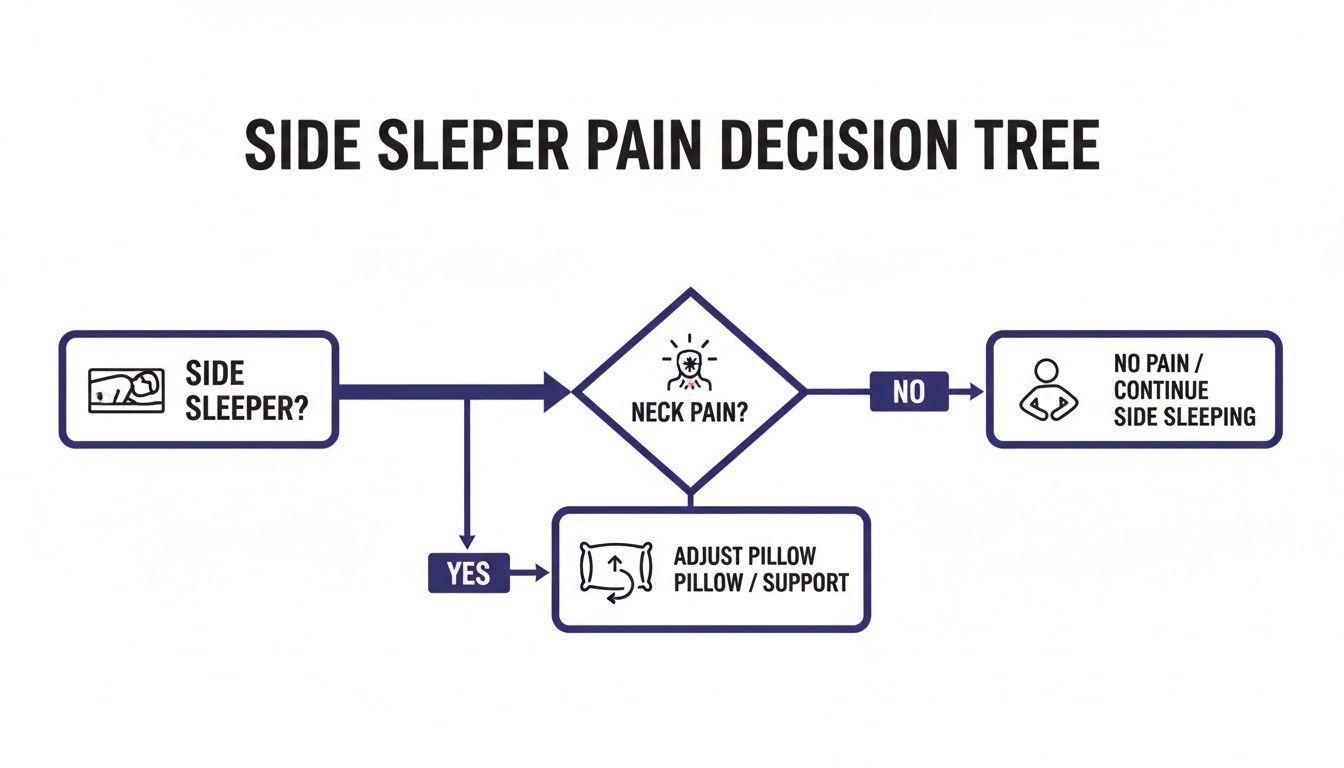
The key takeaway? If you're a side sleeper dealing with discomfort, adjusting your pillow is the first and most effective step towards a real solution.
How Body Shape and Mattress Firmness Work Together
Here’s a simple way to think about it. Imagine the space between your ear and the edge of your shoulder. Your pillow's job is to fill that gap perfectly. If it doesn't, your neck will bend at an unnatural angle, leading to strain and pain.
Someone with broader shoulders creates a larger gap, especially if they sleep on a firm mattress that doesn’t let them sink in much. In this case, you'd need a higher-loft, firmer pillow to properly fill that space and keep your spine aligned.
On the flip side, a person with a petite frame sleeping on a plush, soft mattress will sink into it more. This makes the gap between their head and the mattress much smaller. They’ll need a lower-loft, softer pillow to avoid their neck being propped up too high. A pillow that’s too tall is just as bad as one that’s too flat.
To help you get started, here’s a quick reference table.
Pillow Loft and Firmness Guide for Side Sleepers
Use this quick reference table to match your body frame and mattress type with the recommended pillow loft and firmness for optimal side-sleeping alignment.
| Shoulder Width / Body Frame | Mattress Firmness | Recommended Pillow Loft | Recommended Pillow Firmness |
|---|---|---|---|
| Broad / Large Frame | Firm or Medium-Firm | High Loft (5-7 inches) | Medium-Firm to Firm |
| Broad / Large Frame | Soft or Medium-Soft | Medium Loft (4-6 inches) | Medium |
| Average Frame | Firm or Medium-Firm | Medium Loft (4-6 inches) | Medium |
| Average Frame | Soft or Medium-Soft | Low to Medium Loft (3-5 inches) | Soft to Medium |
| Narrow / Petite Frame | Firm or Medium-Firm | Low to Medium Loft (3-5 inches) | Soft to Medium |
| Narrow / Petite Frame | Soft or Medium-Soft | Low Loft (under 4 inches) | Soft |
This table provides a great starting point, but personal preference always plays a role. Think of it as a guide, not a strict rule.
Measure Your Needs at Home
You don't need fancy equipment to figure this out. Here's a simple method to get a solid idea of your ideal pillow loft right at home:
- Stand Tall: Stand with your side against a wall, keeping your posture straight and relaxed.
- Position Your Head: Gently tilt your head until it touches the wall, making sure your neck stays in a straight line with your spine. Don't shrug your shoulder or crane your head.
- Measure the Gap: Ask a friend or family member to measure the distance from your ear to the wall. This measurement is an excellent baseline for the loft height you should be looking for.
Taking this simple measurement turns guesswork into a calculated decision, empowering you to shop with confidence. In New Zealand, a huge number of us are side sleepers. In fact, surveys suggest about 60% of Kiwis prefer sleeping on their side, making the right pillow crucial for our collective sleep health.
For most, a pillow with a medium to high loft (around 4-6 inches) is the sweet spot to fill that shoulder gap and prevent neck strain—an issue that affects a staggering 25% of New Zealand adults.
Key Takeaway: The goal is always neutral alignment. Your pillow's job is to ensure your spine stays in a straight, horizontal line from your head down to your hips while you sleep on your side.
Getting this right isn't just about immediate comfort; it's about preventative care for your spine. The right loft and firmness stop the nightly micro-strains that build up into chronic morning pain. To learn more about specific materials that deliver this kind of support, check out our guide on the benefits of a memory foam pillow in NZ.
Choosing The Right Pillow Material For Your Sleep Style
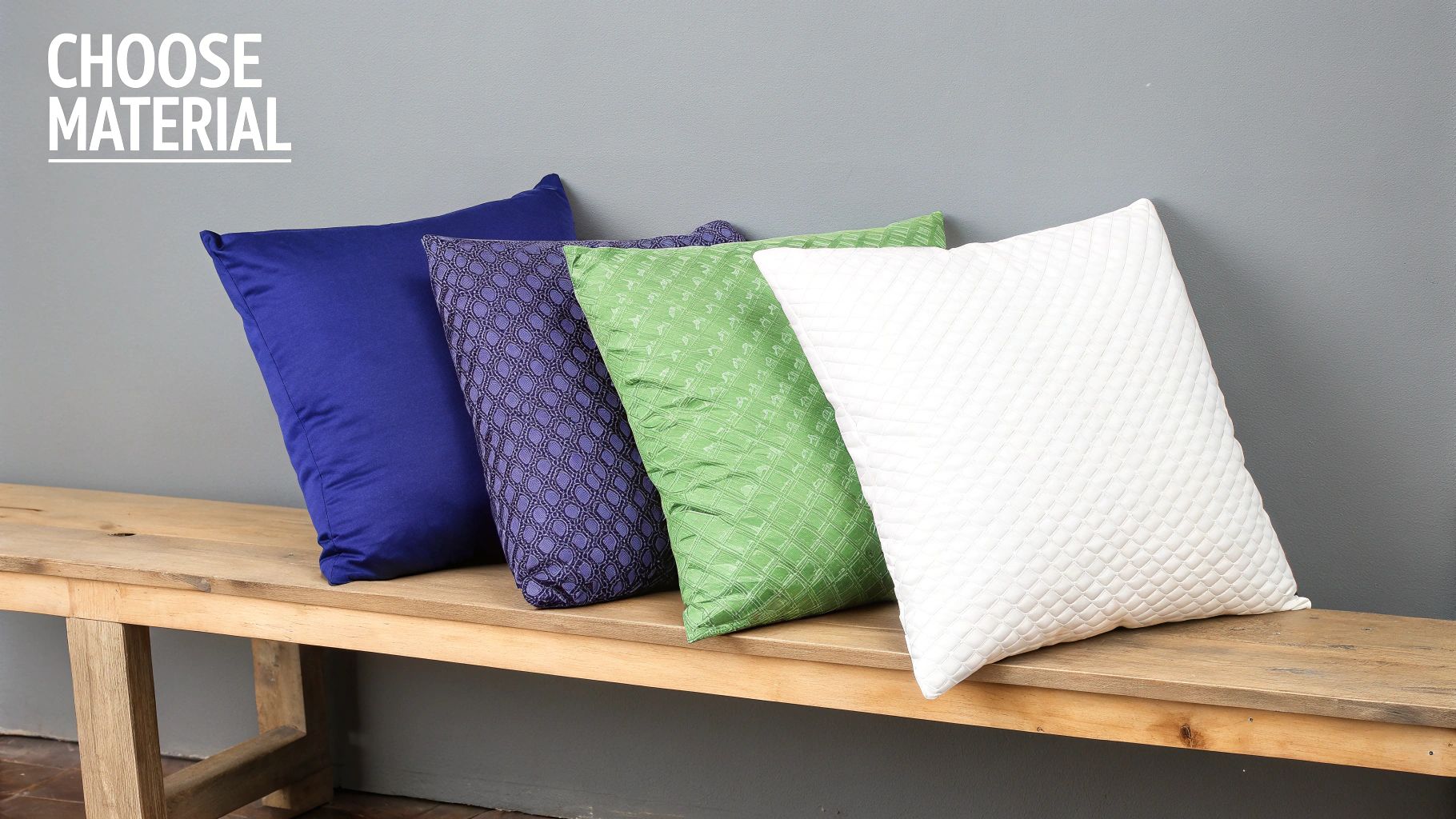
Once you’ve got a handle on the loft and firmness you need, the next piece of the puzzle is the material. The filling inside your pillow is what truly defines your nightly experience—from how it cradles your head to how cool you stay. This isn't just about technical specs; it’s about what feels right for you.
Let's explore the most popular materials for pillows for side sleepers here in New Zealand and match your personal preferences to the perfect fill.
Memory Foam: The Contouring Hug
Memory foam is a fantastic choice for side sleepers, and for one simple reason: its incredible ability to contour. Made from viscoelastic polyurethane, it responds to your body heat and pressure, softening and moulding itself to the unique shape of your head and neck. The result is a custom-fit cradle that distributes weight evenly and melts away pressure points.
Think about pressing your hand into a block of memory foam and watching it slowly return to its original shape. That slow, deliberate response is what provides such consistent support, stopping your head from sinking too low during the night.
- Best for: Side sleepers who love that deep, cradling sensation and need firm, consistent support to keep neck pain at bay.
- Watch out for: Traditional memory foam can sometimes hold onto heat. If you’re a hot sleeper, look for options infused with cooling gel or designed with ventilation channels.
Latex: The Responsive Bounce
If memory foam offers a slow, sinking hug, then latex gives you a buoyant and responsive lift. Derived from the sap of rubber trees, natural latex has a springiness that gently pushes back, offering immediate support without that "sinking in" feeling. You feel like you're sleeping on it, not in it.
This responsiveness makes it incredibly easy to shift positions without feeling stuck. Better yet, latex is naturally breathable. Its open-cell structure promotes fantastic airflow, helping to dissipate heat—a brilliant feature for Kiwis who tend to sleep warm. It’s a durable, supportive, and cool material that holds its shape for years. For a great example, check out the Puro Classic Latex Pillow to see these benefits in action.
Key Insight: The main difference between memory foam and latex is their response time. Memory foam slowly contours for a deep cradle, while latex offers instant, bouncy support.
Down and Down Alternatives: The Cloud-Like Comfort
For anyone who dreams of sleeping on a soft, luxurious cloud, down and its alternatives are the classic go-to. Genuine down, sourced from the soft undercoating of ducks or geese, is incredibly lightweight, plush, and easy to shape. You can bunch it up and mould it to perfectly fill that gap between your shoulder and neck.
However, pure down can sometimes be too soft for side sleepers unless it’s packed very densely or blended with feathers for more structure. This is where down alternatives (like microfibre) really shine. They mimic that soft, airy feel but are hypoallergenic and generally more affordable.
- Best for: Side sleepers who love a plush, hotel-style feel and want to be able to fluff and shape their pillow throughout the night.
- Watch out for: These pillows need regular fluffing to maintain their loft. Look for options with gusseted sides, which add extra height and structure.
Wool: The Natural Regulator
Wool is a phenomenal, all-natural option that feels perfectly suited to New Zealand’s varied climate. It’s a wonderfully breathable fibre that acts as a natural thermostat, keeping you warm in the winter and cool in the summer by wicking moisture away from your skin.
Wool pillows have a unique feel—they are naturally springy yet supportive, offering a medium-firm level of support that resists flattening over time. On top of that, wool is naturally resistant to dust mites and mould, making it an excellent hypoallergenic choice.
With so many options, picking the right material can seem daunting. This table compares the key features of each fill from a side sleeper’s perspective.
Comparing Pillow Materials for Side Sleepers
| Material Type | Best For... | Pros | Cons |
|---|---|---|---|
| Memory Foam | Consistent support and pressure relief | Contours precisely to head and neck, excellent support, absorbs motion | Can retain heat, slow response time isn't for everyone |
| Latex | Responsive, cooling support | Naturally breathable and cooling, durable, hypoallergenic, instant support | Can be bouncy and firm, sometimes has a higher price point |
| Down / Down Alt | Plush, mouldable comfort | Incredibly soft and luxurious, easy to shape, lightweight | Needs frequent fluffing, can be too soft, potential allergens (down) |
| Wool | Natural temperature regulation | Breathable and moisture-wicking, naturally hypoallergenic, firm and supportive | Can feel quite firm and dense, may have a natural odour initially |
Ultimately, choosing the right material is a deeply personal decision that directly impacts your sleep quality. It’s all about finding that perfect match that aligns your spine while meeting your personal comfort preferences. Interestingly, many of the same material considerations apply when creating decorative items like personalized photo pillows.
How Adjustable Pillows Are Changing the Game
If you've ever felt like Goldilocks trying to find a pillow that’s just right, you’re not alone. We’ve all been there: buying a pillow, trying it for a few nights, and realising it’s just too high or way too low. Thankfully, modern pillow design has a brilliant solution that puts an end to the guesswork.
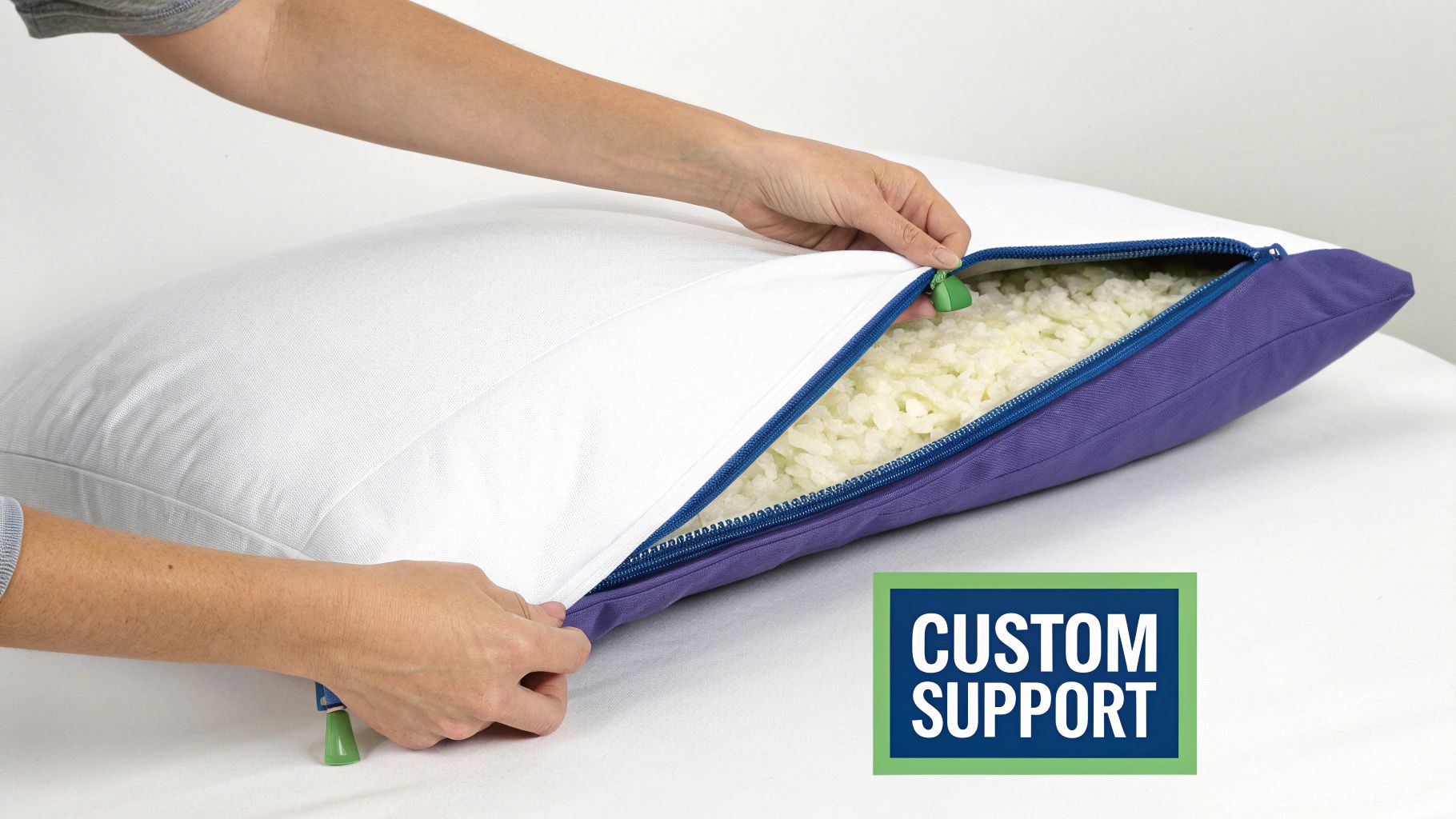
Newer designs, like adjustable-fill and contoured pillows, are purpose-built tools designed to solve the biggest challenges side sleepers face, giving you the power to customise your support for perfect spinal alignment.
Take Control with Adjustable-Fill Pillows
Imagine a pillow you could tune perfectly to your own body. That’s the simple genius behind an adjustable-fill pillow. These are usually filled with materials like shredded memory foam or latex and come with a zippered cover that lets you get right inside.
Does the pillow feel too high? Just unzip it and pull out a handful of the fill. Too low? Add some back in. This level of control is a total game-changer, especially for side sleepers who have a very specific gap to fill between their ear and shoulder.
Key Takeaway: Adjustable pillows completely remove the risk of picking the wrong loft. You can tweak the height and feel right at home, making the pillow adapt to you, not the other way around.
This adaptability makes them a fantastic choice for any body type. Whether you have broad shoulders or a more petite frame, you can achieve that all-important neutral spine alignment with a few easy adjustments.
The Engineering of a Contoured Pillow
While adjustable pillows let you control the height, contoured pillows are all about engineered shape. You might have heard them called cervical or orthopaedic pillows. They have a distinct, wave-like curve designed with ergonomics in mind.
That shape isn’t just for looks; it’s there to support the natural curve of your neck and head. For a side sleeper, the higher part of the wave tucks right into your neck for targeted support, while the dip in the centre cradles your head.
Think of it as an orthotic, but for your neck. It’s designed to guide your head and neck into the best possible position, reducing strain on your muscles. This can be a huge help for anyone who often wakes up with a stiff, sore neck.
- Higher Curve: Built to support the neck’s natural arch.
- Lower Curve: Offers a different height option or can be used by back sleepers.
- Central Dip: Cradles the head to keep it from rolling out of position.
These pillows almost always use a solid piece of memory foam to ensure the supportive shape doesn't flatten out during the night.
Why Customisation Matters Most
Ultimately, both adjustable and contoured pillows share one common goal: to get away from the "one-size-fits-all" approach that fails so many of us. Your own sleep needs can even change. For instance, if you get a new, softer mattress, you might sink in a little more, meaning you need a slightly lower pillow. An adjustable pillow can change right along with you.
These options offer a much more reliable path to comfort, taking the expensive trial-and-error out of the equation. This idea extends beyond just pillows, too; an adjustable bed can further improve comfort by letting you fine-tune your entire sleeping posture from head to toe.
Protecting Your Investment and Maximising Pillow Life
Finding the right pillow is a real win for your sleep quality. Once you’ve landed on that perfect match, you'll want to make it last. A few simple care habits can make a massive difference, ensuring it supports you properly for years, not just months.
Pillows, just like the rest of your bedding, are magnets for dust, body oils, and moisture. Over time, this build-up can break down the core materials, robbing your pillow of its supportive structure. A little regular maintenance keeps things fresh and preserves the loft and firmness you need for proper neck alignment.
Essential Pillow Care Habits
How you care for your pillow will depend on what it’s made of, but a few golden rules apply to almost every type.
- Daily Fluffing: Especially important for pillows with loose fill like down, wool, or shredded foam. Giving it a quick, vigorous fluff each morning helps separate the filling, get rid of clumps, and bring back the loft.
- Regular Airing: Once a month, take your pillow out of its case and let it breathe in a well-ventilated spot for a few hours. This allows trapped moisture to escape and keeps it feeling fresh.
- Spot Cleaning: For small spills, tackle them directly with a damp cloth and mild detergent. It's much better than a full wash unless absolutely necessary.
The Power of a Pillow Protector
Think of a pillow protector as an insurance policy. It’s a zippered case that fits over your pillow, sitting underneath your regular pillowcase, creating a critical barrier against all the things that prematurely age a pillow.
A good protector is your pillow’s best line of defence against sweat, moisture, and skin oils. These can soak right into core materials—especially foams—causing them to degrade and lose their supportive feel far too quickly.
It also does a brilliant job of blocking dust mites and other allergens, making for a much healthier place to rest your head. To get the full story, check out our detailed guide on the benefits of using pillow protectors in NZ.
Knowing When It's Time for a Replacement
Even the best-cared-for pillow won’t last forever. All materials eventually compress and lose their ability to give a side sleeper the support they need. Pushing on with a flat, lifeless pillow just brings back those old familiar neck and shoulder aches.
So, how can you tell when it’s time to call it quits? Try the simple fold test.
- Lay your pillow down on a flat surface.
- Fold it squarely in half, pressing the air out.
- Now, let go.
If it springs right back to its original shape, it’s still got some life in it. But if it stays folded or unfolds painfully slowly, the supportive core is officially shot. It’s no longer keeping your spine aligned, and it’s time for a replacement.
Your Action Plan for Finding the Perfect Pillow in NZ
Alright, you've done the hard yards learning what makes a great pillow. Now it's time to put that knowledge into action.
This is your practical roadmap for finding that perfect pillow, whether you're browsing online or planning a visit to one of our stores across New Zealand. Let's make sure your next purchase is the one that finally clicks.
You're no longer guessing. Armed with a solid understanding of loft, firmness, and materials, you can now shop with confidence, knowing exactly what your body needs.
Start Your Search Online
For most Kiwis, the hunt for better sleep kicks off online. We've designed our website to be as straightforward as possible, putting expert advice at your fingertips.
A brilliant place to start is with our online Sleep Selector tool. It’s an interactive guide that asks a few simple questions about how you sleep, your body type, and any issues you're dealing with. Based on your answers, it serves up a shortlist of pillows that are a great match for you. Think of it as having a sleep expert in your pocket.
Your First Action: Give the Sleep Selector a go. It does the heavy lifting by narrowing down the options, saving you time and ensuring you’re looking at pillows that will actually work.
Why Visiting a Store Can Make all the Difference
While our online tools are a game-changer, there’s no substitute for trying a pillow out in person. If you can pop into a New Zealand Bed Company store, we highly recommend it.
This is your chance to feel the difference between the slow sink of memory foam and the springy support of latex. Lie down on a mattress that feels similar to your one at home and test a few out.
Even better, bring a friend or your partner along. They can eyeball your posture from the side to see if your neck is properly aligned with your spine. Our in-store sleep experts are also always on hand to offer advice and help you lock in that final decision.
Buying with Total Peace of Mind
We get it—choosing a pillow is a big deal, and sometimes you really do need to sleep on it to know for sure. That’s exactly why we have clear trial and return policies.
We want you to be 100% happy with your choice, not stuck with a pillow that’s doing nothing for your neck pain. Our goal is to take the risk out of the decision so you can invest in your sleep with confidence, knowing you have the flexibility to get it just right.
Practical Support for Every Kiwi
We believe every New Zealander deserves the best sleep possible, and we offer practical help to make that happen.
- Nationwide Delivery: It doesn't matter if you're in the Far North or Invercargill; we'll get your new pillow delivered straight to your door.
- WINZ Quotes: We are happy to provide official WINZ quotations for essential bedding. If you need a supportive pillow for health reasons, just get in touch with our team, and we'll sort out the paperwork for your application.
You’re now equipped with everything you need to find the best pillows for side sleepers. Your journey to waking up refreshed and pain-free starts right now.
Still Have a Few Questions?
Even after digging into the details, you might have a couple of lingering questions. That's completely normal. Here are the answers to some of the most common queries we get from Kiwis trying to find the perfect pillow.
How Can I Tell if My Current Pillow is the Problem?
Your body will give you some pretty clear signals. Waking up with a stiff neck, nagging shoulder pain, or tension headaches are classic tell-tale signs.
Another giveaway? If you're constantly fighting with your pillow—bunching it up or folding it over just to feel comfortable—it's not doing its job. The right pillow should support you effortlessly.
Here's a quick test: lie down in your usual sleeping position and have a friend check your posture. From your neck down to your tailbone, it should be a straight, horizontal line. If your head is tilting up or dipping down, the pillow's loft is wrong for you.
Is a Pillow Between the Knees Really Necessary?
For a side sleeper, it’s an absolute game-changer. Popping a firm pillow between your knees does wonders for aligning your hips, pelvis, and spine.
Without that support, your top leg naturally falls forward, twisting your lower back and putting it under strain all night long. This simple adjustment can make a massive difference, especially if you're prone to lower back pain.
How Often Should I Be Replacing My Pillow?
Generally, you should replace your pillow every 1-2 years. This depends on the material; a high-quality latex or dense memory foam pillow will often last a bit longer. On the other hand, polyester or down-alternative fills tend to compress faster and will need swapping out more frequently.
Try the Fold Test: A simple way to check if your pillow is past its prime is to fold it in half. Squeeze the air out and then let go. If it doesn't spring back into its original shape, its internal support structure has broken down. Time for a new one!
Can I Get a WINZ Quote for a Good Pillow?
Yes, absolutely. Here at The New Zealand Bed Company, we know that the right pillow is a crucial part of your health and wellbeing, not just a luxury. That’s why we’re more than happy to provide official Work and Income (WINZ) quotes.
Just reach out to our team. We can sort out all the necessary paperwork for your application to make the process smooth and simple. We believe every Kiwi deserves a restorative night's sleep.
Ready to stop guessing and start sleeping better? At New Zealand Bed Company, our sleep experts can help you find the perfect pillow to end neck pain for good. Explore our curated collection of pillows for side sleepers today.