

Think of a mattress protector waterproof queen as your bed's best friend. It's a simple, fitted shield that guards your queen-sized mattress against spills, stains, sweat, and allergens. In short, it’s the smartest insurance policy for your bed, ensuring it stays clean, hygienic, and comfortable for years to come.
Why Your Queen Mattress Deserves a Waterproof Shield
Your mattress is a major investment in your health and well-being—after all, a good night's sleep is priceless. But everyday life happens. It could be a spilled morning coffee, a child's accident, or the slow, unseen buildup of dust and sweat. All these things can silently ruin your mattress from the inside out.
A waterproof protector is the ultimate bodyguard for that investment. It’s not just an optional extra; it’s an essential defence that preserves the hygiene and lifespan of your bed. For any Kiwi who wants to protect their assets, it's one of the most practical and affordable decisions you can make.
More Than Just Spill-Proofing
While stopping liquids is the most obvious job, a good protector does so much more. It creates a powerful barrier that prevents microscopic nasties from burrowing deep into your mattress fibres. This is key to maintaining a genuinely healthy place to sleep, keeping common irritants at bay.
Here’s what else it does for you:
- Allergen Barrier: It effectively blocks dust mites, pet dander, and pollen from settling in your mattress. For anyone with allergies or asthma, this is an absolute game-changer.
- Keeps Things Fresh: By stopping sweat, body oils, and skin cells from seeping through, it helps your bed stay much fresher and cleaner over time. No more mystery odours!
- Protects Your Warranty: Did you know most mattress warranties become void if the mattress is stained? A protector is your best defence to keep that warranty valid.
- Extends Mattress Life: Shielding the foam and fibres from moisture and contaminants prevents them from breaking down prematurely, helping your mattress last much longer.
While a waterproof protector is your first line of defence against spills and allergens, you can get even more comprehensive protection with a full mattress encasement for bed bugs, which provides a complete, sealed barrier against pests.
A waterproof protector is the single most effective way to guarantee a clean, healthy sleep sanctuary for years to come. It’s a small investment that delivers a massive return by protecting the quality and longevity of your mattress.
Ultimately, using a mattress protector waterproof queen means your bed stays in top-notch condition from day one. It gives you peace of mind, knowing your sleep space is safe from life's little mishaps and the allergens you can't even see. You can check out our full range of high-quality mattress protectors, all designed to fit New Zealand bed sizes perfectly.
How Do Waterproof Mattress Protectors Actually Work?
Ever wondered how a good waterproof queen mattress protector can stop a spill dead in its tracks without making you feel like you're sleeping on a plastic bag? It’s not magic, but clever material science. The truth is, not all waterproof protectors are the same, and knowing what's going on under the surface is key to picking one that keeps your bed dry, clean, and genuinely comfortable.
Think of it like the difference between a high-end rain jacket and a cheap plastic poncho. A great jacket keeps you bone-dry but also lets your body heat and sweat escape, so you don't feel clammy. The poncho blocks the rain, but traps everything inside, leaving you sticky and uncomfortable. Modern mattress protectors work on that same principle.
The Science of Staying Dry and Cool
The hero of the story is an incredibly thin, advanced layer called a breathable waterproof membrane. This nearly invisible layer is bonded to the underside of the protector's soft fabric top, so you'll never even feel it. It's usually made from a material called polyurethane.
This special membrane is engineered with microscopic pores that are perfectly sized to do two crucial jobs at once:
- Block Liquids: The pores are far too small for liquid molecules from a spill, sweat, or accident to squeeze through. This creates a solid, impenetrable barrier, keeping your mattress completely pristine.
- Allow Airflow: At the same time, these pores are just big enough to let air and water vapour (your body heat and perspiration) pass through freely. This breathability is what stops you from overheating and feeling stuffy.
A quality waterproof protector strikes the perfect balance. It provides 100% protection against liquids while ensuring air can still circulate—the secret to a comfortable, non-sweaty night's sleep.
This invisible technology is what separates a premium protector from a basic, crinkly one. It gives you total peace of mind without messing with the cool, comfortable feel of your bed.
Polyurethane vs Vinyl: What's the Difference?
When you start shopping, you’ll mainly find two types of waterproof materials: polyurethane and vinyl. While both will stop liquids, they feel worlds apart when you're actually sleeping on them. Understanding this difference is a big deal, especially when you're protecting a major investment like a queen mattress.
Polyurethane (PU) Protectors
This is the modern gold standard. The PU membrane is thin, flexible, and completely silent—no crinkling noises when you roll over! Because it's so pliable, it won't change the supportive feel of your mattress. Most importantly, it's highly breathable, making it the clear winner for a cool and comfortable sleep.
Vinyl (PVC) Protectors
Vinyl is older, cheaper technology, and it shows. While it’s waterproof, it comes with serious drawbacks. Vinyl isn't breathable, which means it traps body heat and moisture, often leading to a hot, sweaty night. It’s also much stiffer and is notorious for making those crinkling or rustling sounds every time you move. Over time, vinyl can also get brittle and crack, which defeats the purpose. You can dive deeper into the benefits of breathable materials in our article on how waterproof mattress protectors enhance sleep.
At the end of the day, choosing a protector with a polyurethane membrane is a no-brainer. It ensures you get robust protection without sacrificing the comfort you deserve. It’s the subtle but powerful technology that lets you sleep soundly, knowing your mattress is fully shielded.
Finding the Perfect Fit for Your Queen Bed
You’d think choosing a mattress protector waterproof queen would be as simple as matching the “queen” label on the package to your bed, right? Not quite. A protector that fits poorly can be a real nuisance, bunching up under your sheets or pinging off the corners in the middle of the night.
The goal is a perfect fit—one that works silently and comfortably, without you even noticing it's there. To get that snug, secure feeling, you need to look at three things: the style of the protector, its depth, and how it works with your specific mattress type. Getting this right is the key to protecting your investment without spoiling the feel of your bed.
Protector Styles: From Simple to Super Secure
Waterproof mattress protectors come in a few different styles, each offering a different level of coverage and convenience. The best one for you boils down to what you're looking for, whether that's quick changes on laundry day or complete, all-around protection.
Here’s a quick comparison to help you decide.
Mattress Protector Style Comparison
| Protector Style | Coverage Level | Best For | Considerations |
|---|---|---|---|
| Fitted Sheet Style | Top and Sides | Everyday spills, easy washing, and general mattress preservation. | The most common and convenient style for most people. |
| Five-Sided Style | Top and All Four Sides | Similar to fitted, but offers more secure side protection. Great for adjustable beds. | Slightly more coverage than a standard fitted style. |
| Zippered Encasement | Full 360-degree Coverage | Ultimate protection from allergens, bed bugs, and liquids. Ideal for allergy sufferers. | More effort to put on, but provides a complete seal. |
As you can see, a fitted sheet style is brilliant for general protection and ease of use, while a full encasement acts like a fortress for your mattress, creating a total health and hygiene barrier.
Matching the Protector to Your Mattress Type
The type of mattress you sleep on also makes a difference. You want a protector that complements your mattress, not one that gets in the way of its features. A poorly chosen protector can easily make a responsive memory foam bed feel stiff or a plush pillow-top feel flat.
For instance, memory foam and latex mattresses are all about contouring precisely to your body. To keep that signature feel, you need a protector made from a thin, flexible material that can stretch and move right along with the foam. A thick or rigid protector will create a barrier, stopping you from getting the full pressure-relieving benefits you bought the mattress for.
On the other hand, traditional innerspring or hybrid mattresses are generally a bit more forgiving. They can work well with slightly thicker, quilted protectors that might even add a touch of extra softness without interfering with the support from the springs below.
Ultimately, the key is to ensure the protector doesn't change the comfort you fell in love with when you chose your mattress. This simple flowchart shows why pairing protection with breathability is so crucial for a good night's sleep.
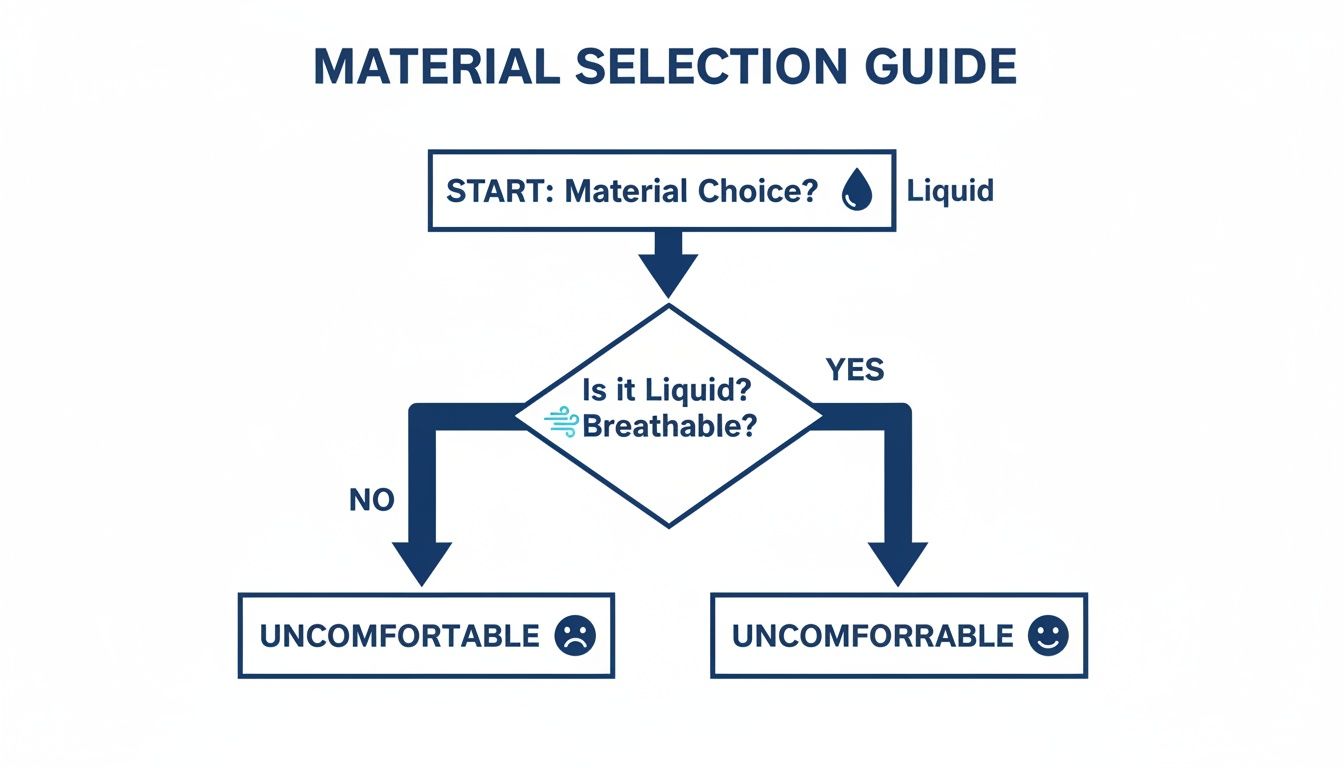
It’s a great visual reminder that while waterproof protection is essential, you’ll end up with a sweaty, uncomfortable night if it isn't breathable.
Getting the Depth and Dimensions Right in New Zealand
One of the most common mistakes people make is buying a protector with a skirt that’s too shallow for their mattress. If it's too tight, the corners will constantly pop off. If it’s too deep, you'll get annoying bunching under your sheets.
Before you buy, measure the height of your mattress from the bottom edge right to the top. If you use a mattress topper, be sure to include that in your measurement.
Most quality protectors list a maximum mattress depth on the packaging, so you can easily find one that matches your bed's profile perfectly.
It’s also important to know your local bed dimensions. While "queen" is a standard term, it’s always smart to double-check that you’re buying for New Zealand sizing. You can get a full rundown on our guide to the New Zealand queen mattress size.
A standard NZ Queen mattress measures 153cm wide by 203cm long. Making sure your protector is designed for these exact dimensions guarantees a smooth, taut fit that stays put all night, giving you that invisible and reliable protection you’re after.
The Hidden Benefits of a Waterproof Protector
Sure, the number one job of a waterproof queen mattress protector is to stop spills. But thinking that's all it does is missing the bigger picture. It's less of a simple cover and more of a complete upgrade for your health, your wallet, and your sleep. The real magic happens below the surface, creating a far cleaner, healthier bed.
Forget just guarding against the odd coffee spill. A good protector is your first line of defence in the battle for a truly hygienic sleep space. It forms a physical barrier that stops sweat, body oils, and skin cells from seeping deep into your mattress. Without it, that buildup can lead to nasty odours and bacteria growth over time.
A Healthier Sleep Environment
For many Kiwis, allergies are a real pain. Your bed should be a sanctuary, but without a protector, it can quickly become a breeding ground for allergens that trigger sneezing, itchy eyes, and breathing problems.
A waterproof protector is like a security guard for your mattress, stopping these microscopic invaders from getting in. It effectively blocks common irritants from settling deep within the fibres, including:
- Dust Mites: These tiny critters love warm, humid places and feed on shed skin cells. An unprotected mattress is their idea of a five-star hotel.
- Pet Dander: Even if your pets aren't allowed on the bed, their dander gets everywhere. A protector prevents it from working its way into your mattress.
- Pollen and Mould Spores: These allergens are easily tracked indoors, but a protector ensures they can’t make a permanent home in your bed.
While a protector is a fantastic barrier against pet dander in your bed, you can also learn how to get rid of pesky pet dander from your entire home for even better results. Simply adding this layer can make a world of difference to your breathing at night.
Protecting Your Warranty and Your Wallet
Let's be honest, a new queen mattress is a big purchase. And almost every mattress warranty has a strict rule: any stain or liquid damage makes it void. That means one little accident could cancel your warranty, leaving you high and dry if a real manufacturing fault appears down the road.
Using a waterproof protector is the single best thing you can do to keep your mattress warranty intact. Think of it as a cheap insurance policy that prevents you from losing hundreds, or even thousands, of dollars over a simple mistake.
By keeping your mattress looking brand new, a protector also extends its lifespan. Moisture is the ultimate enemy of mattress materials—it breaks down foams, compresses fibres, and can even cause springs to rust. By keeping everything bone-dry, a protector helps your mattress feel as supportive as the day you bought it, for much, much longer.
That means you won't need to replace your mattress nearly as often. It's a small, smart investment that pays for itself many times over by preserving the comfort you paid for in the first place.
How to Care for Your Mattress Protector
So, you've got a great mattress protector waterproof queen to keep your bed pristine. But to make sure it keeps doing its job for years to come, a little care goes a long way. Looking after it properly is the secret to preserving its waterproof barrier and keeping the fabric feeling fresh.
The good news? It's not complicated. The main thing to remember is to be gentle. That delicate waterproof membrane on the underside is fantastic at stopping spills, but it doesn't like harsh chemicals or high heat. A simple, mild approach is all it takes.
Simple Steps for Washing
Getting the wash cycle right means your protector stays hygienic without damaging its special waterproof features. We recommend washing it before you use it for the first time, and then just pop it in with your regular bedding.
Here’s the straightforward routine for a perfect wash:
- Gentle Cycle Only: Choose the gentle or delicate setting on your machine. This avoids putting too much stress on the seams and the waterproof layer.
- Keep it Cool: Always use cold or warm water—never hot. Anything above 40°C can damage the polyurethane membrane, which is what makes it waterproof.
- Mild Detergent is Best: Your standard laundry detergent is perfect. Just steer clear of fabric softeners and any detergents containing bleach.
Harsh chemicals, especially bleach, are the arch-nemesis of a waterproof protector. They can eat away at the protective membrane, making it brittle and causing it to crack. Once that happens, it's no longer waterproof.
The Most Important Rule: Drying Your Protector
How you dry your protector is actually more important than how you wash it. High heat is the number one enemy of the waterproof barrier, and it will cause the membrane to shrink, bubble, or peel right off the fabric.
To dry it without causing any damage, always tumble dry on a low heat setting. It might take a bit longer, but it's the only way to keep the waterproof layer intact. You can throw in a couple of dryer balls (or even clean tennis balls) to stop it from clumping and help it dry more evenly.
If you’d rather line dry, that’s fine too! Just try to keep it out of intense, direct sunlight for too long, as excessive UV exposure can also degrade the waterproof layer over time.
When to Wash and When to Replace
Knowing the right rhythm for washing your protector—and spotting when it’s time for a new one—is crucial for a healthy bed. As a general guide, washing it every one to two months is about right for most people.
Of course, if you have allergies or a furry friend who shares the bed, you might want to wash it monthly to keep dust mites and dander under control. And it goes without saying, wash it straight away after any spills. For more tips on keeping your whole sleep setup fresh, have a look at our guide on cleaning a mattress.
Even the best protector won't last forever. Keep an eye out for signs of wear and tear, like the waterproof layer visibly peeling, any new cracks, or if you notice it just isn't stopping liquids like it used to. Those are the tell-tale signs that it’s time for a replacement.
Your Questions About Mattress Protectors Answered
Still have a few questions? You're not the only one. Choosing the right mattress protector waterproof queen brings up some common concerns, so let's get them sorted.
Here are clear, straightforward answers to the most frequent questions so you can make your decision with total confidence.
Will a Waterproof Protector Make My Bed Hot?
Not the good ones! This is a classic worry left over from old-school vinyl covers that were notorious for trapping heat. Thankfully, technology has come a long way.
Today’s protectors use advanced, breathable membranes—like polyurethane—that cleverly block liquids while letting air and body heat flow right through. This means you stay cool and dry all night. The hot, sticky feeling is a thing of the past. Just look for the word “breathable” when you’re shopping, and you’ll be set.
How Often Should I Wash My Mattress Protector?
As a general rule, we suggest washing your protector every one to two months, much like you would your duvet or pillows. This is perfect for keeping your sleep space fresh and hygienic.
Of course, there are exceptions. If you have allergies or pets, you might want to wash it more frequently. A wash every few weeks can make a real difference in keeping dust mites and dander under control. And naturally, if there's a spill, wash it straight away.
Key Takeaway: A top-notch protector shouldn't change how your bed feels at all. Think of it as a silent, invisible guardian working behind the scenes to keep your mattress pristine, without you even noticing it's there.
Will It Change the Feel of My Memory Foam Mattress?
A well-made, thin mattress protector won't noticeably alter the feel of your bed, whether it’s memory foam, latex, or anything else. The best ones use flexible, lightweight fabrics that hug the mattress surface, rather than creating a stiff layer on top.
Look for a fitted-sheet style design. It’ll stretch and stay snug, allowing you to sink in and enjoy the full pressure-relieving comfort your mattress was designed to give. You can find more answers to common questions on our dedicated FAQs page.
Are Waterproof Protectors Noisy?
That annoying crinkling sound? That’s another ghost from protectors past. While cheap or old vinyl versions were famous for it, today's best waterproof protectors are virtually silent.
They achieve this by bonding a soft fabric surface—like cotton terry or bamboo—to a quiet, flexible polyurethane film. This modern construction gets rid of that rustling noise completely, so you can toss and turn all you like without any distracting sounds.
Ready to give your mattress the five-star protection it deserves? At New Zealand Bed Company, we offer a range of premium, breathable, and silent waterproof protectors designed to fit New Zealand queen beds perfectly. Protect your investment and sleep better tonight.