

A great night's sleep doesn't just happen; it starts with a truly clean bed. And that means more than just changing the sheets. This guide will walk you through how to clean your bed properly, from the steps most people miss—like vacuuming the mattress—to dealing with stubborn stains and smells for that deep-down freshness. It’s all about creating a sleep sanctuary that genuinely supports your health.
Why a Genuinely Clean Bed is a Game-Changer
We all change our sheets regularly, but if that’s all you’re doing, you're missing the bigger picture. Over time, your mattress, pillows, and even the bed base become a collection point for dust mites, dead skin cells, sweat, and other allergens. For many Kiwis, especially those with allergies or sensitive skin, this build-up can seriously disrupt sleep and even impact health. A deep clean is less about aesthetics and more about essential home hygiene.
Creating a truly clean bed is a massive step towards a healthier home. It plays a big part in improving home air quality, particularly in the room where you spend a third of your life. When you get the dust and allergens out of your mattress, you're breathing cleaner air all night long.
The Real Payoff of a Deeper Clean
Beyond basic hygiene, putting in the effort for a regular, thorough bed clean has some major benefits that directly boost your well-being. It really does make the extra work worth it.
- Better Sleep, Full Stop: An allergen-free, fresh-smelling bed can drastically cut down on night-time disruptions like sneezing, coughing, or itching. This leads to deeper, more restorative rest. If you're keen to learn more, check out our guide to enhance your sleep quality in New Zealand.
- A Longer Life for Your Mattress: Getting rid of sweat, body oils, and dirt actually stops the foams and fibres in your mattress from breaking down prematurely. You're protecting your investment and making sure your bed gives you the right support for years to come.
- Keeps Smells at Bay: Mattresses can start to smell a bit stale after a while. A proper deep clean gets rid of odours at the source instead of just covering them up, leaving your bed smelling genuinely fresh.
A recent study found that only 28% of New Zealanders regularly vacuum their mattresses. That's a huge number of us skipping the single best way to remove the dust mites that thrive in our humid climate.
This guide is packed with practical, no-fuss advice that works for Kiwi homes. We’ll cover the right techniques for different mattress types (including adjustable beds) and give you tips that won't void your warranty. Let's get started on turning your bed into the cleanest, freshest spot in your house.
Setting the Stage for a Deep Bed Clean
Before you even think about grabbing the vacuum, a little bit of prep work makes a world of difference. It’s the secret to a truly thorough bed clean, not just a surface-level tidy-up.
First things first: strip everything off the bed. That means sheets, duvet cover, pillowcases, and especially that all-important mattress protector. A great tip is to do this as soon as you get up in the morning.
This gives your mattress the entire day to breathe. In New Zealand, with our humidity, this step is a must. Throw open the windows, get a cross-breeze going, and let that air circulate. You’d be surprised how much moisture gets trapped in the mattress overnight, and this simple act helps pull it out, freshening up the whole room.
Get Your Space and Laundry in Order
As you're stripping the bed, sort your laundry as you go. It saves a headache later. Keep your whites separate from colours and take a quick glance at the care labels on things like your mattress protector or wool underlay. Some of these need a gentler cycle, so checking now prevents any laundry mishaps. A quality waterproof mattress protector is a lifesaver and makes this whole job so much easier.
Next, you need a clear workspace.
- Shift the bedside tables. Pull them back from the bed so you have clear access to every side of the mattress and the base.
- Clear under the bed. Get everything out from underneath. It’s the perfect time to give those storage boxes a quick wipe-down before they go back.
- Declutter the area. Move any books, phones, or remote controls that have found their way onto the bed.
Think of it like prepping a room for painting. You wouldn't just paint around the furniture, would you? Clearing the space and airing out the mattress sets you up for a far more effective clean, making sure you don't miss a single spot.
One Last Check Before You Start
With the bed stripped and the area clear, give the mattress a quick once-over. Make a mental note of any small spots or stains that you’ll need to tackle later. Knowing what you’re up against before you start makes the job feel much more manageable.
This whole setup process doesn't take long, but it's the foundation for doing the job properly. It ensures you’re not just cleaning what’s easy to see, but are refreshing your entire sleep environment. Now you're ready to get stuck in and get that mattress truly, hygienically clean.
Getting Stuck In: A Practical Mattress Cleaning Routine
Right, with the bed stripped and the windows open, it's time to get down to business. This is where we tackle that invisible build-up of dust, skin cells, and allergens to get your mattress properly, hygienically fresh.
This little flowchart shows the simple prep work that really sets you up for a successful deep clean.
Following this order just makes sense. Your mattress is clear and ready to be cleaned, and your laundry is sorted for the machine later on.
Your Vacuum Is Your Best Friend
Honestly, the single most effective thing you can do for your mattress is to give it a thorough vacuum. We're not just talking about surface dust; this is about getting deep into the fibres to pull out all the microscopic nasties.
A startling 2022 Dyson Global Dust Study found that only 28% of Kiwis regularly vacuum their mattresses. That means a whopping 72% of us are skipping the most vital step for getting rid of dust mites, which thrive in our humid climate. When you consider a single mattress can be home to millions of these allergens, it’s a job you really can't afford to skip.
To get it right, here’s what to do:
- Grab the upholstery attachment. Its wide, flat head is perfectly designed for this.
- Be methodical. Work your way across the entire surface in slightly overlapping rows, like mowing a lawn, to make sure you don't miss a single spot.
- Get into the details. Pay extra attention to the seams, button tufts, and any crevices where dust and crumbs love to hide. Don't forget to run it down the sides of the mattress, too.
Tackling Stains and Spots
Even with the best mattress protector, spills and stains are just a part of life. The secret is to act fast and use the right technique. Whatever you do, don't scrub aggressively—you'll only risk damaging the fabric and pushing the stain deeper into the mattress. A gentle touch is what’s needed.
For most common stains, like sweat marks or a spilt drink, a simple homemade solution usually does the trick. Just mix a small amount of mild laundry detergent or dish soap with cool water until you get a nice sudsy foam.
- Using a clean cloth, dab only the foam onto the stain. The goal is to avoid soaking the mattress.
- Gently blot the area. Always work from the outside edge of the stain inwards to stop it from spreading.
- Wipe the spot with a second cloth that's just dampened with clean water to "rinse" away the soap.
- Finally, press a dry towel firmly onto the area to blot up as much moisture as you possibly can.
Expert Tip: Never use hot water on protein-based stains like blood. The heat will cook the protein and set the stain permanently. Always reach for cold water for these types of marks. For more advanced tips, our detailed guide on cleaning a mattress properly has you covered.
Deodorise for That Ultimate Fresh Feeling
After you’ve dealt with any spots, the final step is to deodorise. This is a brilliant trick for drawing out any lingering moisture and odours, leaving your bed smelling genuinely clean and fresh—it’s especially handy for those of us living in the more humid parts of New Zealand.
All you need to do is sprinkle a generous layer of baking soda over the entire mattress. Don't be shy with it! Let it sit for at least a few hours, but honestly, the longer you can leave it, the better. This gives it plenty of time to work its magic absorbing oils and smells. Once you're ready, just vacuum it all up thoroughly.
Now, some people ask about steam cleaning for a deeper sanitisation. While it can be effective, it introduces a lot of moisture and high heat, which can seriously damage certain materials like memory foam. Before you even think about it, check your mattress warranty. Using a steam cleaner will often void your coverage completely.
Getting Your Bedding Truly Clean

A fresh, deodorised mattress is a great start, but it's only half the job done. To really create a hygienic sleep haven, every single layer of your bedding needs to be spotlessly clean. This is about more than just a quick wash; it’s about having a solid routine that keeps allergens and bacteria firmly in check.
Washing your sheets and pillowcases regularly isn't just a suggestion—it's essential for a healthy bed. It's best practice to do this weekly. This is the best way to get rid of the sweat, body oils, and skin cells that dust mites love.
Interestingly, the 2021 Sealy New Zealand Sleep Census found that a massive 50% of Kiwis deal with body aches that disrupt their sleep. While there are many causes, an unclean bed can definitely make things worse. A great rule of thumb, especially in our often-humid New Zealand homes, is to wash sheets in water around 60°C. This temperature is fantastic for killing 99.9% of bacteria. You can delve into the NZ Sleep Census data on Sealy's website if you're curious to see the full picture.
A Quick Guide to Washing Different Fabrics
Not all bedding is made the same, and the wrong wash cycle can lead to frustrating shrinkage or faded colours. The care label is always your best first port of call, but here are some handy tips for common materials.
- Cotton Sheets: This classic is tough and can usually handle a hot wash (around 60°C) with your everyday detergent. It’s the perfect setting for proper sanitisation.
- Linen Bedding: Linen is wonderfully breathable, but it needs a bit of care. A gentle cycle with lukewarm or cold water works best to keep the fibres strong and prevent them from getting brittle.
- Bamboo Fabric: We're seeing more and more bamboo sheets in New Zealand, and for good reason—they're incredibly soft. To keep them that way, stick to a cold wash on a gentle cycle and use a mild detergent. For a deeper dive, check out our complete guide on how to look after bamboo sheets in New Zealand.
To help you stay on top of things, here’s a quick reference table.
Bedding Washing Frequency Guide
This simple guide outlines how often you should be washing different bedding items to keep your sleep environment as fresh and hygienic as possible.
| Bedding Item | Recommended Washing Frequency | Best Practice Tip |
|---|---|---|
| Sheets & Pillowcases | Weekly | Wash at 60°C if the fabric allows, to effectively kill bacteria and dust mites. |
| Duvet Covers | Every 1-2 weeks | Wash along with your sheets to maintain consistent cleanliness across all layers. |
| Duvets & Pillows | Every 3-6 months | Check the care label first. If too bulky for your machine, use a laundromat. |
| Mattress Protector | Every 1-2 months | This is your mattress's first line of defence, so don't forget it! |
Following this routine makes a huge difference in cutting down on allergens and ensuring your bed is always a welcoming place to rest.
Tackling Bulky Items Like Duvets and Pillows
Washing bigger things like duvets and pillows can feel like a chore, but it’s a must-do every few months. Many modern synthetic and down-alternative duvets are fine to wash at home, as long as your machine is big enough for them to tumble freely. If it looks like a tight squeeze, don’t force it—head to a commercial laundromat to avoid damaging your duvet or your washer.
Here's a quick trick for pillows: fold one in half. If it doesn't spring back to its original shape, its internal support is gone. At that point, it’s time for a replacement, not a wash, to ensure your head and neck are getting the support they need.
Don't Overlook the Bed Base and Headboard
The final piece of the puzzle is the bed's structure itself. Dust settles everywhere, so grab a damp microfibre cloth and give your headboard and bed base a good wipe-down.
For an extra touch of freshness, especially between laundry days, you might want to use a good disinfectant linen spray. Once everything is clean, make sure it all dries completely. This is so important in our damp Kiwi climate to stop any chance of mould or mildew from setting in.
Maintaining a Clean Bed Long-Term
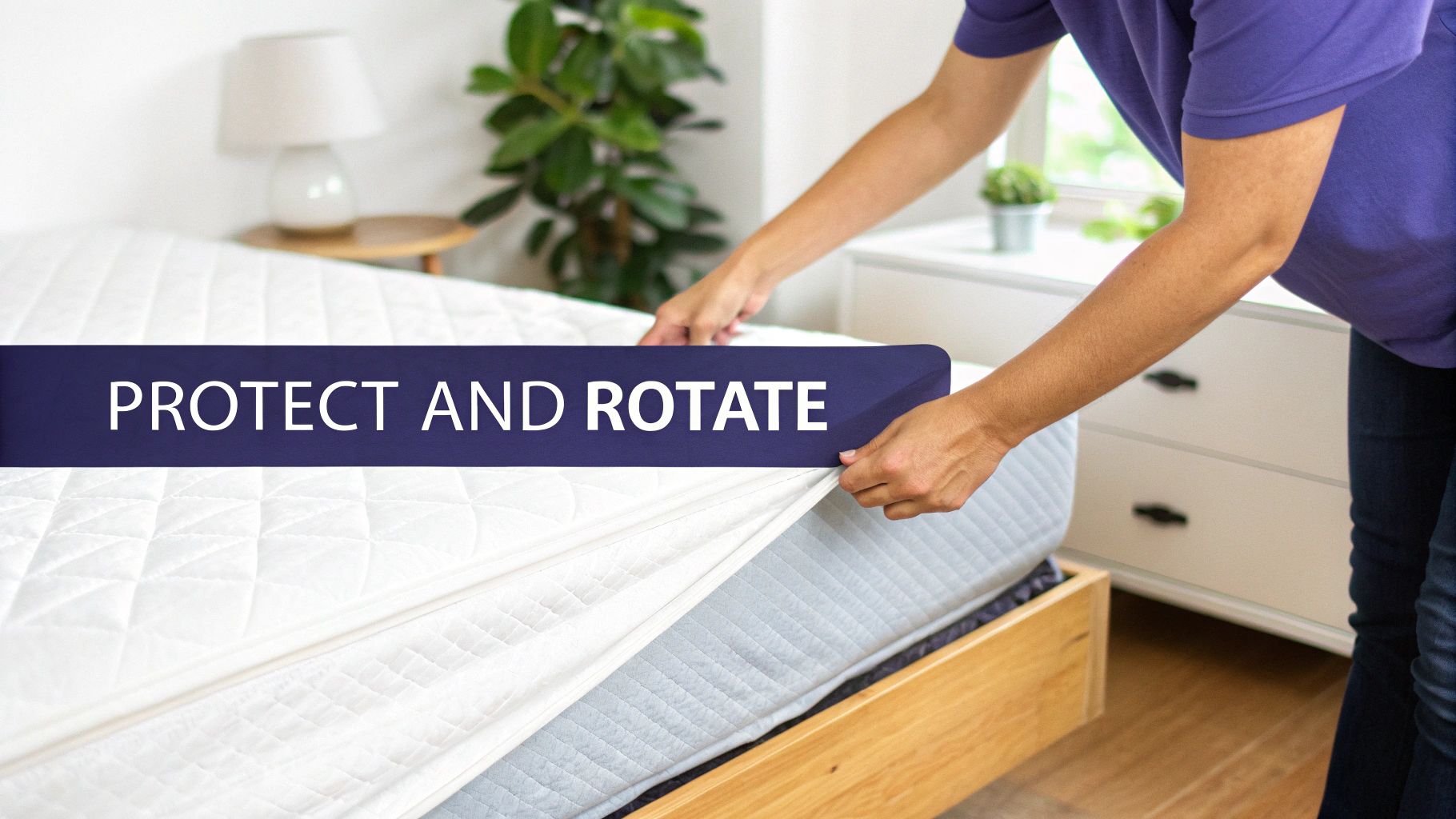
Keeping your bed truly fresh isn’t just about the occasional deep clean. It’s more about weaving a few simple habits into your routine that prevent grime from building up in the first place and protect your investment for years to come.
Honestly, the best thing you can do for your mattress is to get a high-quality, waterproof mattress protector. Think of it as insurance for your bed. It’s the frontline defence against spills, sweat, body oils, and allergens that can soak in and permanently damage the delicate foams and fabrics.
Just remember to wash the protector every month or two. There's no point having a barrier if it becomes a home for the very things you're trying to block out!
The Importance of Regular Rotation
Another habit that makes a world of difference is rotating your mattress. We all have our favourite spot to sleep, and over time this creates body impressions and uneven wear. By giving it a regular turn, you allow the mattress to wear evenly, which keeps it feeling comfortable and supportive for much longer.
- How often? Aim for every 3-6 months.
- How to do it? Just spin it 180 degrees, so the end that was at the head of the bed is now at the foot. Simple.
- Should I flip it? Probably not. Most modern mattresses, especially those with plush pillow tops, are one-sided. Flipping them would be a big mistake. Always double-check the manufacturer's care guide if you're unsure.
Small Daily Habits That Make a Big Difference
It’s not just about the big tasks. A couple of small things you do each day can have a surprisingly big impact on your bed's overall hygiene.
When you get up in the morning, resist the urge to make the bed right away. Instead, pull the duvet right back for at least an hour. This lets any moisture from the night evaporate—a must in New Zealand’s often-humid climate—and makes your bed a far less inviting place for dust mites.
It's also worth noting that a Sleepyhead survey of Kiwis found a strong link between unclean beds and poor sleep, often due to allergens. An easy win here is to take your pillows outside for a good, vigorous shake once a week. You’d be surprised how much dust this dislodges, keeping them much fresher between proper washes. You can read more about Kiwi sleep habits and see why these small actions are so worthwhile.
Knowing When It's Time for a Replacement
No matter how well you look after it, every mattress has an expiry date. Eventually, no amount of cleaning will bring back its original comfort and support. If you start noticing the signs, it's a clear signal that it might be time to look for a new one.
Persistent musty smells that cleaning can't shift, visible lumps or sagging that won't bounce back, or waking up with new aches and pains are all tell-tale signs. Often, your body will tell you it's time for a change before your eyes do.
Recognising these signs is key. A worn-out mattress doesn't just feel bad; it can genuinely disrupt your sleep and affect your physical health. If you're starting to wonder about your own bed, our guide explains in more detail how long a mattress should last.
Common Questions About Cleaning Your Bed
Even with a detailed guide in hand, a few specific questions always seem to pop up when it's time for a proper bed clean. Let's tackle some of the most common queries we hear from Kiwis, so you can get the job done with total confidence.
One of the biggest questions is about how often you really need to deep clean your mattress. While you should be washing your bedding weekly, a full mattress deep clean—vacuuming, spot-treating, and deodorising—is best done at least twice a year.
Of course, if you suffer from allergies, share your bed with a furry friend, or live in a more humid part of New Zealand, bumping this up to every three months is a brilliant idea.
Another frequent query is about those stubborn yellow stains. They’re a bit unsightly, aren't they? These are usually just a build-up of sweat and body oils over time, and thankfully, they're often manageable. A simple paste of baking soda and water, or a diluted vinegar solution, can work wonders. The real trick is to blot the stain gently, not soak the mattress, and let the area dry completely.
Handling Specific Cleaning Challenges
"Can I just throw my pillows in the washing machine?" We get this one a lot. The answer is usually yes, but always check the care label first! Most synthetic and down pillows can handle a gentle cycle. It's best to wash two at a time to keep the machine balanced and prevent it from thumping around.
When it's time to dry them, use a low heat setting and toss in a couple of clean tennis balls. This little trick helps fluff them back into shape and stops the filling from clumping together, giving your pillows a new lease on life.
A common mistake is reaching for harsh chemical cleaners like bleach to tackle mattress stains. Please don't! This can easily damage the delicate fabrics and foams inside. Plus, the strong fumes can linger, which is the last thing you want where you sleep. Stick to gentle, natural solutions whenever possible.
What about the dreaded bed bugs? This is a serious concern. If you even suspect you have bed bugs, a deep clean won't cut it. Your only reliable option is to call in professional pest control. They have the specialised treatments needed to eradicate an infestation for good.
Cleaning Different Types of Beds
Finally, people often wonder if cleaning an adjustable bed is different. The process is much the same, but with one crucial extra step: always unplug the base from the wall before you start. Safety first.
Once it's unplugged, grab your vacuum's crevice tool. Carefully clean around all the mechanical parts and joints, as this is where dust and fluff love to hide. It's not just about hygiene; keeping this area clean helps ensure the mechanism continues to operate smoothly for years to come.
At New Zealand Bed Company, we believe a better night's sleep starts with a clean, supportive, and comfortable bed. If your current mattress has seen better days, explore our wide range of options designed for every Kiwi home and budget at https://nzbeds.co.nz.