

Think of a waterproof mattress protector as the unsung hero of your bedroom. It’s a simple, unassuming layer that acts as the ultimate insurance policy for your mattress, shielding it from life's little (and not-so-little) accidents. In short, it’s the most effective way to keep your bed clean, hygienic, and in great shape for years to come.
Your Bed’s Essential Guardian Explained
You wouldn’t dream of using a new phone without a protective case, right? A mattress is a far bigger investment in your health and wellbeing, and a waterproof protector serves the exact same purpose. It’s a powerful, hardworking shield against the spills, stains, and allergens that are an inevitable part of everyday life.
This guide will show you that a protector is so much more than just another sheet. It's the silent guardian working tirelessly every night to make your sleep environment cleaner and healthier for you and your family.
More Than Just a Cover
A quality waterproof mattress protector isn't just a basic cover; it's a sophisticated barrier. Its main job is to stop any liquid from reaching the core of your mattress. We're talking about everything from a spilled cup of tea to a child's nighttime accident.
This is absolutely crucial. Once moisture gets into the deep layers of foam and fabric, it’s almost impossible to get out. That can lead to permanent stains, lingering odours, and even the growth of nasty mould and mildew.
A waterproof protector stops damage before it even has a chance to start. By blocking moisture right at the surface, it preserves the freshness and integrity of your mattress for its entire lifespan.
This is particularly important given New Zealand’s often-humid climate, which can be a perfect breeding ground for dust mites and other allergens. A good protector creates a physical barrier that keeps them out of your mattress.
The Foundation of a Healthy Bed
At the end of the day, a waterproof mattress protector is a non-negotiable part of a good sleep setup. It's a simple, affordable way to look after your investment, guaranteeing your bed remains a clean and supportive sanctuary.
By adding this one simple item, you’re ensuring your mattress stays in pristine condition. To see how this small addition can make a big difference, you can explore the various types of mattress protectors available right here.
The Real Benefits of Using a Waterproof Protector
When you hear "waterproof," it's easy to just think about spills. But the real value of a good protector goes so much deeper than that. It's a powerful trifecta of benefits that impacts your health, your wallet, and how comfortable you feel in your own bed.
Think of it less as an accessory and more as a non-negotiable upgrade for your sleep setup. A waterproof protector isn't just about defence; it's about proactive care for one of the most important investments in your home. Let's break down the three core advantages that make it so essential.
Unbeatable Liquid Protection
Life happens. Whether it's a morning coffee that takes a tumble, a child's nighttime accident, or a pet getting a little too comfortable, liquids are a constant threat to your mattress. Without a barrier, they don't just sit on the surface; they soak right into the complex layers of foam and fabric. And that's where the real trouble starts.
Once moisture gets into the core of your mattress, it's almost impossible to get out completely. This lingering dampness leads to stubborn stains and musty odours that just won't go away. Even worse, it creates the perfect breeding ground for mould and mildew, which can destroy the materials inside your bed and tank the air quality in your bedroom.
A waterproof protector is your first and best line of defence. It stops liquids right at the surface, so you can simply wipe them away or pop the protector in the wash.
By blocking moisture before it has a chance to soak in, a protector keeps your mattress fresh, clean, and structurally sound. It prevents the kind of deep-down damage that can permanently ruin a bed.
This is a game-changer for protecting your furniture. You can explore the real benefits of waterproof covers for protection to see how this simple layer preserves all sorts of home furnishings from spills and daily wear.
Creating an Allergen Free Zone
For so many Kiwis, allergies are a daily battle. Your bed should be a safe haven, but without protection, it can quickly become a five-star resort for dust mites, pet dander, and other nasties that thrive in warm, humid spots.
These microscopic irritants burrow deep into your mattress, feasting on dead skin cells and multiplying like crazy. If you suffer from asthma, eczema, or other respiratory issues, this can trigger nightly coughing, sneezing, and irritation that wrecks your sleep.
A waterproof mattress protector puts up an impenetrable shield. It completely seals off the mattress, stopping allergens from getting in and cutting off the food supply for any dust mites already there. It's one of the simplest and most effective ways to create a more hygienic, hypoallergenic sleep space. And don't forget the rest of your bedding! You can learn more in our guide to pillow protectors in NZ.
As Kiwis have become more health-conscious, protectors have become a go-to for allergy management. Studies have shown a huge 45% reduction in dust mite populations after just six months of consistent use. That's a massive win, especially since one in five of us suffer from allergies often made worse by bedroom humidity. Since they hit the NZ market in a big way around 2005, local brands have seen a 60% increase in sales to parents, particularly after bedwetting awareness campaigns kicked off post-2018.
Protecting Your Mattress Investment
A great mattress is a serious financial commitment, and you want it to last. A waterproof protector is the single best thing you can do to protect that investment and get every dollar's worth out of it.
It’s not just about big spills, either. Every night, your body naturally releases moisture through perspiration, and there's also the ambient humidity in the air. Over years, this slow and steady exposure causes foams to break down, fibres to clump together, and springs to rust. Before you know it, your mattress has lost its comfort and support.
On top of that, nearly every mattress warranty has a few non-negotiable clauses.
- Stains Void Warranties: A single stain, no matter how small or what caused it, can void your entire warranty. A protector is your insurance policy against this.
- Proof of Care: Warranties cover manufacturing defects, not damage from moisture or mould. Using a protector shows you've taken proper care of your mattress.
- Hygiene Rules: To even process a warranty claim, most companies require the mattress to be in a sanitary condition. A protector guarantees it stays that way.
At the end of the day, a waterproof mattress protector pays for itself many times over. It doesn't just add years to the life of your bed; it keeps your warranty intact, giving you total peace of mind.
Decoding the Different Materials and Styles
Choosing the right waterproof mattress protector can feel a bit overwhelming, but it really just boils down to two key things: the material it's made from and the style it comes in. Getting these two things right is the secret to finding a protector that not only does its job but also feels great to sleep on.
It’s the difference between a loud, crinkly cover that makes you sweat and a silent, breathable guardian for your bed. Not all protectors are created equal, and the technology has come a long way. Let's break down what you'll find on the market so you can confidently pick the perfect match.
Modern Materials: The Silent Revolution
The biggest leap forward in protector technology has been the shift away from old-school plastics to more advanced, breathable materials. The stuff used for the waterproof layer is the most important factor affecting comfort, noise, and how hot you feel at night.
Thermoplastic Polyurethane (TPU) is the modern gold standard, and for good reason. Think of it as a high-tech, flexible membrane. It's microscopically porous, meaning the tiny holes are big enough to let air and water vapour (your body heat) escape, but far too small for liquid molecules from spills or sweat to get through. This clever design makes TPU protectors:
- Completely Silent: Soft and flexible, so they don't make that annoying crinkling sound every time you move in bed.
- Highly Breathable: By allowing heat to escape, they help regulate your temperature and prevent that hot, sticky feeling.
- Durable and Effective: TPU provides a reliable 100% waterproof barrier without making your mattress feel like it’s wrapped in plastic.
On the flip side, older protectors often use Vinyl or PVC. While they are certainly effective at blocking liquid and are often cheaper, they come with some major trade-offs. Vinyl is essentially a non-porous plastic sheet, which means it traps everything—air, heat, and moisture. This almost always leads to a noisy, sweaty, and uncomfortable night's sleep.
A great waterproof mattress protector should guard your bed without you even knowing it's there. Modern TPU technology achieves this perfectly, being silent, breathable, and practically unnoticeable under your sheets—a world away from the plasticky feel of older vinyl options.
This simple map shows how a protector’s benefits all work together, creating a complete shield for your mattress.
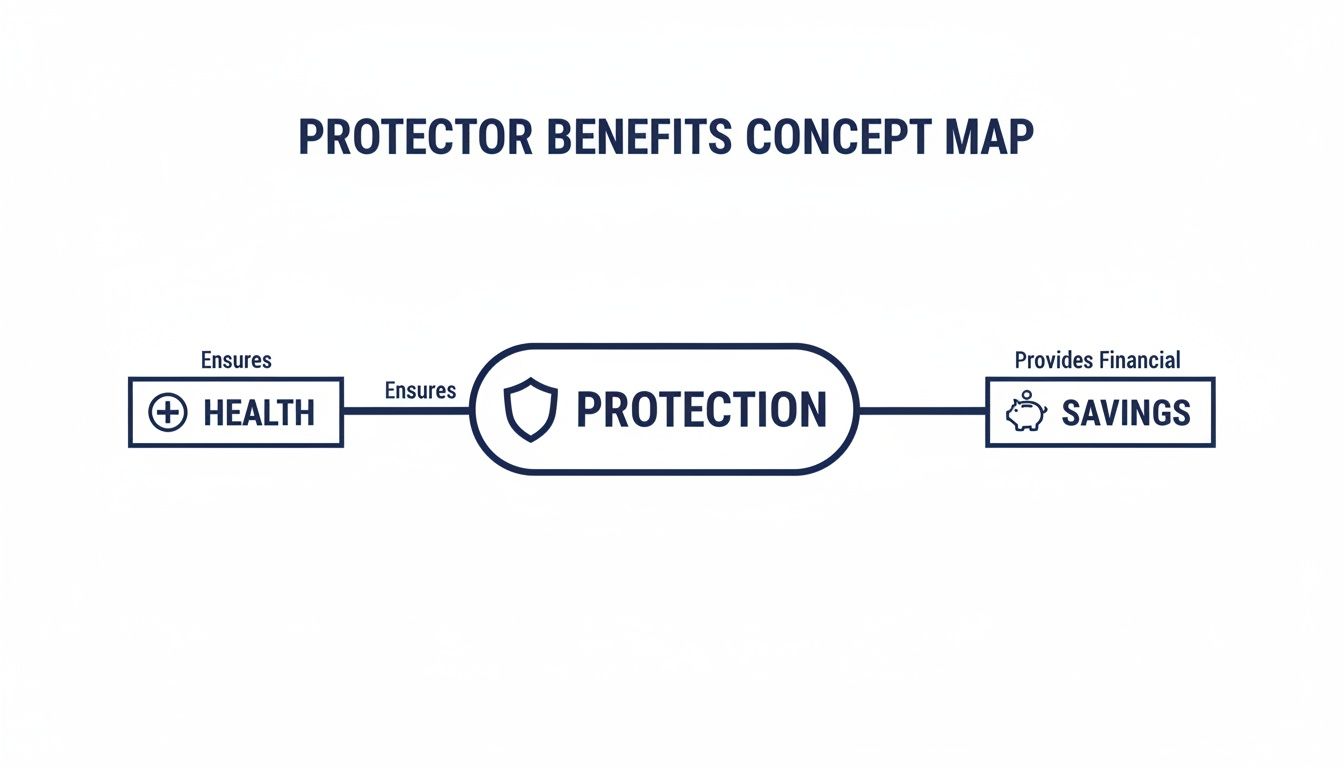
As you can see, effective protection directly leads to better health by fostering a cleaner sleep environment, which in turn leads to financial savings by making your mattress last longer.
Choosing Your Protector Style
Once you’ve landed on the right material, the next step is choosing the style. This decision really depends on your main goal: are you after everyday convenience or total, all-around defence?
The Fitted Sheet Style is, by a long shot, the most popular choice for New Zealand households. Just like a regular fitted sheet, it has a stretchy, elasticated skirt that pulls snugly over the corners of your mattress. It’s designed to protect the top surface of the bed, which is where 99% of spills and accidents happen.
Its biggest selling point is pure convenience. It's incredibly easy to whip off and throw in the wash, making laundry day a breeze. For most people, this style offers the perfect blend of effective protection and real-world practicality.
On the other hand, a Full Encasement protector delivers complete, 360-degree protection. It works like a giant zippered bag that completely seals your entire mattress inside. Absolutely nothing gets in or out.
While this might seem like overkill for a spilled cup of tea, it’s the ultimate solution for two very specific problems: severe allergies and bed bugs. By creating a total barrier, it locks out dust mites, pet dander, and other allergens, and it effectively traps and starves any potential bed bug infestations. It's a more specialised tool for when you need maximum security.
Mattress Protector Materials and Styles Compared
To help make your decision a little easier, we’ve put together a simple comparison of the different materials and styles. This table will help you quickly see which waterproof mattress protector is the best fit for your needs.
| Feature | TPU (Modern) | Vinyl/PVC (Traditional) | Fitted Sheet Style | Full Encasement |
|---|---|---|---|---|
| Waterproofing | Excellent | Excellent | Top surface only | 360-degree protection |
| Breathability | High (sleeps cool) | Low (traps heat) | High | Moderate to High |
| Noise Level | Silent | Can be noisy/crinkly | Silent | Silent |
| Ease of Use | Very easy to wash | Easy to wipe clean | Very easy to remove | Requires lifting mattress |
| Best For | Everyday comfort | Budget-focused needs | General protection, convenience | Severe allergies, bed bugs |
Ultimately, the best protector is one that fits your lifestyle. For most Kiwis, a TPU protector in a fitted sheet style offers an unbeatable combination of comfort, silence, and practical protection, ensuring your mattress stays clean and fresh for years to come without any fuss.
How to Find the Perfect Fit for Your Bed
There's nothing more frustrating than a mattress protector that bunches up, slips off, or feels like a drum skin stretched too tight. When it doesn't fit properly, it’s not just annoying—it’s not doing its job. A poor fit completely undermines the protector's ability to shield your mattress, turning your investment into a pointless, rumpled sheet.
Getting the size right is everything. It means your protector stays snugly in place, offering quiet, seamless protection night after night. This is especially true for modern beds, which often come with deep pillow tops or adjustable bases that need a bit more thought when it comes to sizing.
Measuring for Success Beyond Length and Width
Most of us know our mattress size—Single, Queen, King—but the measurement that trips people up is the depth. This is where most fitting problems start, particularly with newer, plusher mattresses that can be much thicker than older models.
A protector with a shallow skirt will constantly pop off at the corners, leaving your mattress exposed. To get it right, grab a tape measure and check the depth of your mattress. Measure from the very bottom edge to the absolute top of the surface, making sure to include any built-in pillow tops or toppers.
- Standard Mattresses: These usually sit between 20-30 cm deep, so most standard protectors will do the trick.
- Pillow-Top & Deep Mattresses: These can be anywhere from 30 cm to over 45 cm. You’ll definitely need a protector with a "deep pocket" or an "extra-deep skirt" to handle the extra height.
- Adjustable Beds: Flexibility is the name of the game here. Look for protectors with a stretchy TPU membrane and a really sturdy elastic band. This allows the protector to move and bend with the mattress without pinging off the corners.
Here’s a pro tip: always choose a protector with a pocket depth that’s a little deeper than your mattress. If your mattress is 40 cm deep, find a protector that fits up to 45 cm. That bit of extra fabric gives you enough to tuck under securely for a snug, reliable fit that won’t budge.
Tailored Solutions for Every Kiwi Household
The right waterproof mattress protector isn't a one-size-fits-all product. The best choice depends entirely on who’s using it, because different life stages and needs call for different features.
For example, a waterproof mattress protector is pretty much a non-negotiable in New Zealand's often damp climate. Local experts have pointed out that up to 70% of Kiwi homes get a bit too humid in winter, which leads to a 40% higher risk of mould growth in mattresses. A good protector not only helps your mattress last longer—by an average of 5-7 years—but can also reduce replacement costs by 30% for families keeping an eye on their budget.
Finding the right match for your specific situation really does make all the difference.
Recommendations for Different New Zealanders
Here’s a quick guide to choosing the best protector based on what your household looks like:
- For Young Families: You need something that’s tough and seriously waterproof. A protector with a robust TPU membrane is your best bet, as it can handle frequent spills and accidents without breaking a sweat. An easy-to-wash fitted style is also a lifesaver for busy parents who need to get a clean bed sorted in a hurry.
- For Seniors: Comfort and ease of use should be top of mind. A breathable protector made with natural fibres like cotton or Tencel will help keep things cool and prevent overheating. Lightweight, fitted designs are also much easier to take on and off, which is a big plus.
- For Those on a Budget (including WINZ Quotes): Affordable doesn’t have to mean cheap. A durable, effective protector is a smart purchase that saves you a lot more money in the long run. At New Zealand Bed Company, we can provide WINZ quotes for essential bedding, ensuring everyone can get the protection they need. Look for reliable materials that offer solid waterproofing without the luxury price tag.
By thinking about who’s actually sleeping in the bed, not just the size of it, you can find the perfect protector. You can also dive deeper into specific sizes with our guide on choosing a waterproof mattress protector for a queen bed. A well-chosen protector is your ticket to a clean, healthy, and comfortable night's sleep for everyone.
Simple Steps to Keep Your Protector Clean
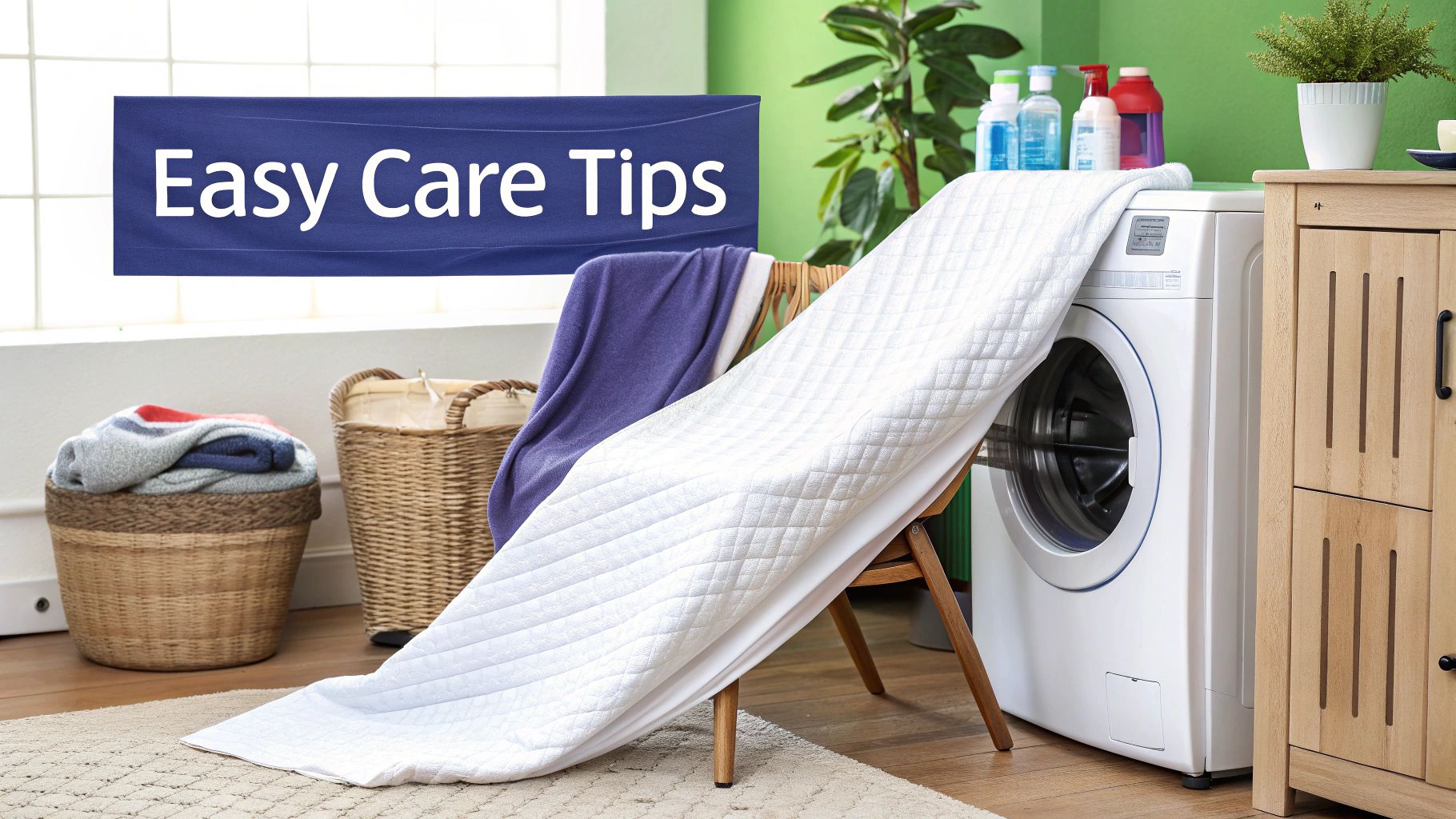
Looking after your waterproof mattress protector properly is the key to making it last. A simple cleaning routine keeps that all-important waterproof membrane in great shape, so your protector can keep doing its job for years to come. Think of it as easy maintenance for a very important investment.
Just like your bed sheets, your protector needs a regular wash. To handle the build-up of sweat and skin cells, popping it in the wash every one to two months is a good rule of thumb. Of course, if you have a spill, an accident, or someone's been sick, it’s best to wash it straight away.
Washing Your Protector The Right Way
The golden rule for washing a waterproof protector is to be gentle. Going too hard can easily damage the delicate waterproof layer, which basically makes it useless. A few simple guidelines are all it takes to keep it working perfectly.
Here are the essential "Do's" for wash day:
- Go for a Gentle Cycle: Always choose the delicate or gentle setting on your machine. This puts the least amount of stress on the protector's fabric and waterproof backing.
- Keep it Cool: Wash with cold or lukewarm water only. Hot water is the enemy of the waterproof membrane; it can cause it to warp, crack, or peel away. Cool is always the safest bet.
- Use a Mild Detergent: Stick with a gentle, bleach-free detergent. Harsh chemicals can slowly eat away at the waterproof layer. If you're keen on sustainable options, there are plenty of general eco-friendly cleaning tips you can explore.

Think of the waterproof layer like a high-performance raincoat. You wouldn't wash it with harsh chemicals or on a high-heat cycle because that would ruin its ability to keep you dry. Your protector needs the same gentle approach.
What to Avoid During Cleaning
Sometimes, what you don't do is just as crucial. A few common laundry habits can cause permanent damage, so it’s important to know what to steer clear of.
Here are the absolute "Don'ts":
- No Bleach or Harsh Chemicals: Bleach is public enemy number one for a waterproof protector. It will completely destroy the TPU membrane, leaving your mattress vulnerable.
- Avoid Fabric Softeners: While they might make things feel soft, fabric softeners leave a residue that can clog the pores of the fabric, reducing absorbency and degrading the waterproof barrier over time.
- Do Not Iron or Dry Clean: This one’s a deal-breaker. The intense heat from an iron or the solvents used in dry cleaning will melt the waterproof layer on contact.
Following these simple tips will ensure your protector remains a trusty guardian for your mattress. And while you're at it, keeping the mattress itself fresh is just as important. For more advice on that, check out our guide on cleaning a mattress. Taking care of both pieces is the best way to build a healthier, longer-lasting sleep setup.
Your Waterproof Protector Questions Answered
It's completely normal to have a few questions before you commit to a waterproof mattress protector. After all, your goal is a better night's sleep, not a new source of frustration. Let's walk through some of the most common worries we hear from customers, so you can feel totally confident in your decision.
Will a Waterproof Protector Make Me Hot?
This is probably the number one concern, and it’s a valid one based on older-style protectors. You might be picturing those stiff, plasticky sheets from years ago that made you feel like you were sleeping in a sauna.
The good news is, technology has come a long way. High-quality modern protectors are designed with breathability in mind. They use clever membranes that stop liquids but allow air and body heat to pass right through, so you stay comfortable. Materials like Tencel and bamboo are fantastic at this, actively wicking moisture away to keep your sleep environment cool and dry.
Is It Going to Be Noisy and Crinkly?
Another ghost of protectors past! The myth that they sound and feel like a plastic bag is just that—a myth. Today’s best protectors use a high-tech material called Thermoplastic Polyurethane (TPU).
TPU is incredibly soft, flexible, and totally silent. It's bonded to a soft fabric surface, so it moves with you and your mattress without making a single crinkle. Honestly, once it's on the bed and under your fitted sheet, you'll completely forget it’s even there.
Can I Use One on My Memory Foam Mattress?
Yes, you absolutely should! In fact, we highly recommend it for any specialty mattress, whether it's memory foam, latex, or a hybrid. These advanced materials are amazing for comfort, but they’re not friends with moisture.
Liquids can degrade the foam structure over time, causing it to lose its support and comfort. A good protector is the best insurance policy you can have. And because they're so breathable, they won't block the cooling features built into your mattress.
Think of your waterproof mattress protector as a silent guardian for your bed. It works quietly in the background, protecting your investment from spills and allergens without changing the feel, sound, or temperature of your mattress.
How Often Should I Wash It?
For regular upkeep and hygiene, popping it in the wash every one to two months is a good rule of thumb. Of course, if there’s a spill or an accident, you’ll want to wash it straight away to deal with it before any stains can set in.
Regular cleaning keeps it fresh and ready for anything, ensuring your mattress stays pristine.
Got more questions? We’ve compiled answers to all sorts of common queries about mattresses and bedding. Head over to our company FAQs page to learn more.
Your Mattress's Best Friend: Don't Go to Bed Without One
So, a waterproof mattress protector isn't just another piece of bedding, is it? It's the unsung hero of a good night's sleep and the single best way to make sure your mattress lasts for years. Think of it as insurance for one of the most important investments you'll make for your home and your health.
It’s your frontline defence against that morning coffee spill or a child's nighttime accident. It's also the barrier that keeps allergens like dust mites and pet dander from settling into your bed, letting you breathe easier. Ultimately, it’s what keeps your mattress feeling fresh, hygienic, and comfortable, just like the day you bought it.
So, What's the Next Step?
Hopefully, this guide has shown you that a protector isn't just an optional add-on; it's a non-negotiable part of your bedding setup. It's a small price to pay for cleanliness, better health, and the peace of mind that comes from protecting your mattress from the inevitable messiness of life. You now have everything you need to choose with confidence.
Your mattress is a significant investment in your well-being. A waterproof protector is the simplest, most effective step you can take to keep it clean, supportive, and hygienic for its entire lifespan.
Now it's over to you. The next step is finding the perfect protector for your bed and your family. Feel free to browse our hand-picked selection online, or better yet, pop into one of our stores to feel the different materials for yourself. Our team is always ready to give you honest, practical advice to help you find the right match.
Don't wait for a spill to happen. Protect your investment and your sleep today.
Ready to give your mattress the protection it deserves? Explore the full range of options at New Zealand Bed Company and find the perfect waterproof mattress protector for your bed by visiting https://nzbeds.co.nz.