

A waterproof mattress protector for your queen bed is more than just another layer of bedding. Think of it as an essential insurance policy for your mattress—one of the most important investments in your home. It’s a simple, non-negotiable barrier that defends against life's little accidents, allergens, and moisture, keeping your mattress feeling fresh, hygienic, and comfortable for years to come.
Why a Protector Is Your Mattress's Best Defence
Let’s be real about what a mattress goes through. It's not just about the dramatic, once-in-a-lifetime coffee spill. The real damage often happens slowly, from the gradual buildup of sweat, body oils, and skin cells that inevitably work their way deep into the mattress fibres. Over time, this creates the perfect breeding ground for bacteria, allergens, and unpleasant odours.
A quality waterproof protector stops all of that in its tracks. It acts as an impenetrable shield, preventing any liquid from reaching and staining the mattress fabric, which can cause permanent damage. In fact, most mattress warranties become void if the mattress is stained, making a protector an absolute must-have.
Protection That Goes Beyond Spills
The benefits are much bigger than just stopping accidents. A good protector also creates a physical barrier against the microscopic intruders that can seriously impact your health and sleep quality.
- Dust Mite Defence: It stops dust mites—a huge trigger for allergies and asthma—from burrowing deep inside your mattress where they’re impossible to remove.
- Peace of Mind for Pet Owners: If you share your bed with furry friends, a protector is essential. It guards against muddy paws, accidents, dander, and whatever else they bring to bed. The same logic applies to other furniture, which is why items like waterproof covers for pet protection are so popular.
- A Truly Hygienic Sleep: By blocking moisture and particles, a protector ensures your sleep surface stays clean and fresh, creating a far healthier environment than an unprotected mattress could ever offer.
A Must-Have for New Zealand's Climate
Here in New Zealand, our climate can be particularly tough on mattresses. With household humidity often hitting 70-80% during the colder months, the risk of mould and mildew is a real concern for many homes.
A recent survey revealed that a staggering 68% of Kiwi households have struggled with mattress dampness, which explains the significant jump in protector sales. It’s clear that this simple layer of protection is vital for maintaining a healthy bed in our unique environment. You can find more tips on choosing the right one in our guide to the best waterproof mattress protector for NZ conditions.
Investing in a waterproof mattress protector for your queen bed is one of the smartest, most affordable things you can do. It protects your health, your investment, and your peace of mind—all for the price of a clean, comfortable night's sleep.
Choosing the Right Material for Comfort and Protection
When you’re on the hunt for a waterproof mattress protector for a queen bed, the material is everything. It's what makes the difference between silent, breathable protection and a noisy, sweaty night's sleep. Let's be honest, nobody wants to feel like they're sleeping on a plastic bag.
Thankfully, technology has moved far beyond those stiff, crinkly vinyl covers of the past. Today’s protectors use clever materials that keep your mattress pristine without you even noticing they’re there.
The Membrane Matters: PU vs. Vinyl
The real magic of a waterproof protector lies in its membrane—the ultra-thin barrier that stops liquids. But not all membranes are created equal, and the material used here drastically affects your sleep quality.
- Polyurethane (PU): This is the gold standard in modern protectors. Think of it as a smart fabric. It's woven with microscopic pores that are tiny enough to block water molecules but large enough to let air and body heat escape. This means you get full protection without waking up in a clammy sweat.
- Vinyl (PVC): You'll find this in older or cheaper options. While it's 100% waterproof, it’s also 100% non-breathable. Vinyl traps heat and moisture, leading to a hot, uncomfortable sleep. Over time, it can also become noisy and brittle.
For a comfortable night, a protector with a PU membrane is the only way to go. It delivers the protection you need without compromising on that cool, dry feeling.
Softness and Silence: The Surface Fabric
While the membrane does the heavy lifting, the top fabric is what you actually feel. This surface layer is laminated to the waterproof membrane and determines the protector's comfort, quietness, and overall feel.
One of the best materials you'll find is Tencel™, derived from sustainably sourced eucalyptus wood pulp. It’s exceptionally soft, naturally hypoallergenic, and a champion at wicking away moisture. It works in perfect harmony with the PU membrane to keep your sleep surface feeling amazing. If you're looking to upgrade your whole setup, it’s worth exploring how different fabrics work together; for example, you can learn more about how materials like bamboo sheets can elevate your comfort. Other materials, like those explored in these insights into materials such as TPU foam, also highlight the importance of breathability and durability in products used every day.
Key Takeaway: Pairing a Tencel™ surface with a polyurethane membrane gives you the ultimate combination: 100% waterproof protection that’s also soft, silent, and cool to the touch.
This quick overview shows how a quality protector defends your mattress from every angle.
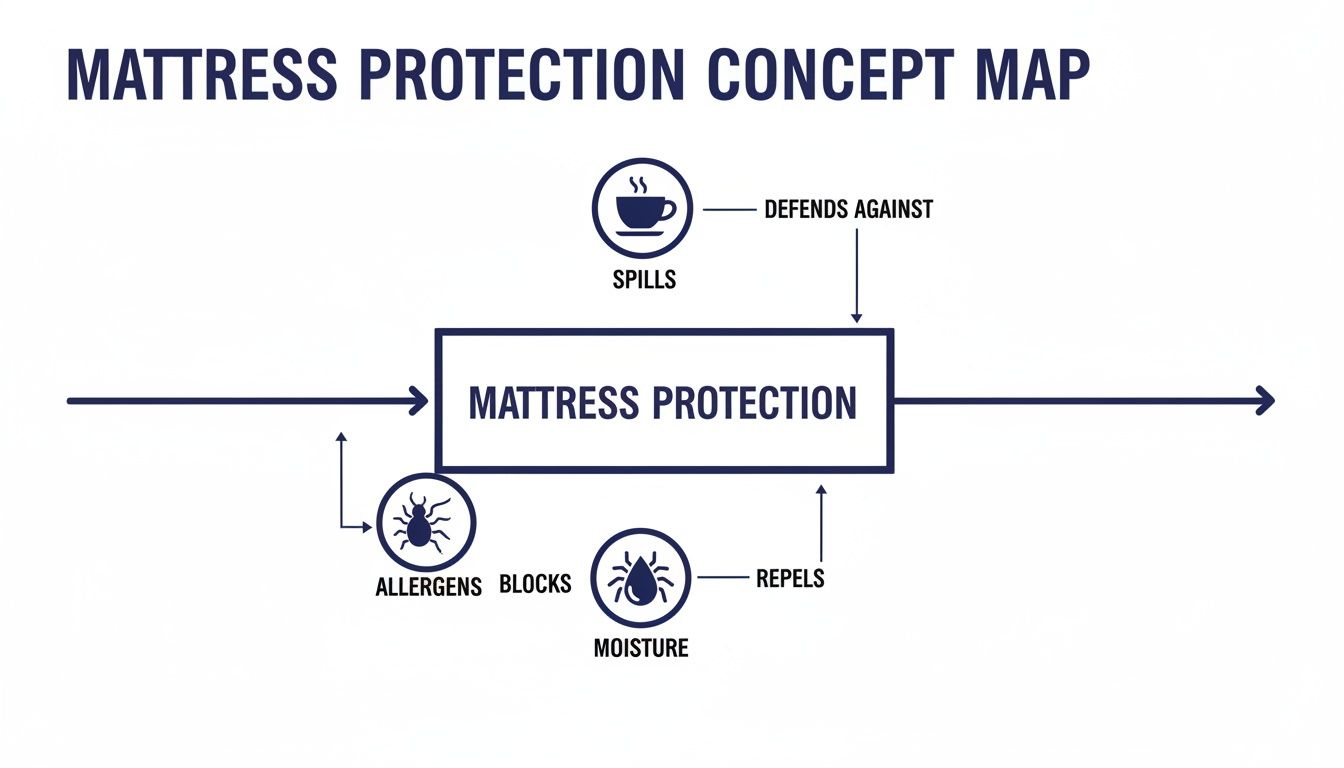
As you can see, it's not just about guarding against the odd coffee spill. It’s about creating a healthier sleep environment by keeping allergens and moisture out.
Fitted vs. Fully Encased Protectors
The final piece of the puzzle is deciding how your protector fits. You've got two main styles to choose from, each with its own advantages.
- Fitted Skirt Protectors: This is the most common style, going on just like a fitted sheet. It covers the top and sides of your mattress, making it a fantastic choice for everyday protection against spills and general wear. It’s easy to slip on and off for washing.
- Fully Encased Protectors: For total, 360-degree security, you can't beat an encasement. It zips around your entire mattress, sealing it off completely. This is the ultimate defence against allergens like dust mites and is essential for preventing bed bugs.
Here’s a quick comparison to help you decide which style is right for your queen bed.
Comparing Queen Mattress Protector Styles
| Feature | Fitted Skirt Protector | Fully Encased Protector |
|---|---|---|
| Coverage | Top and sides of the mattress. | All six sides of the mattress. |
| Primary Use | Everyday spills, stains, and moisture. | Allergens (dust mites), bed bugs, and complete waterproofing. |
| Installation | Easy and quick, like putting on a fitted sheet. | More involved; usually requires two people to lift the mattress. |
| Best For | General protection, convenience, and frequent washing. | People with severe allergies, asthma, or bed bug concerns. |
Choosing the right style comes down to your specific needs. Are you looking for simple, effective spill protection, or do you need a fortress against allergens?
Since we started helping Kiwis get a better night's sleep back in 1986, we’ve seen these products evolve dramatically. Protector sales have surged 55% in recent years as more people realise their value. For instance, fully encased models can block 99.9% of dust mites, a massive relief for many households, especially considering that 25% of families deal with childhood bedwetting and 30% of seniors face incontinence issues.
How to Get a Perfect Fit on Your Queen Mattress
There’s nothing more frustrating than a mattress protector that bunches up or pings off the corners in the middle of the night. It’s not just annoying; it means your mattress is no longer properly protected. For a standard queen mattress here in New Zealand, you're looking at surface dimensions of 153 cm x 203 cm. But that’s only half the story.
The one measurement that truly matters—and where most people go wrong—is the mattress depth. Nailing this is the secret to a protector that fits like a glove.
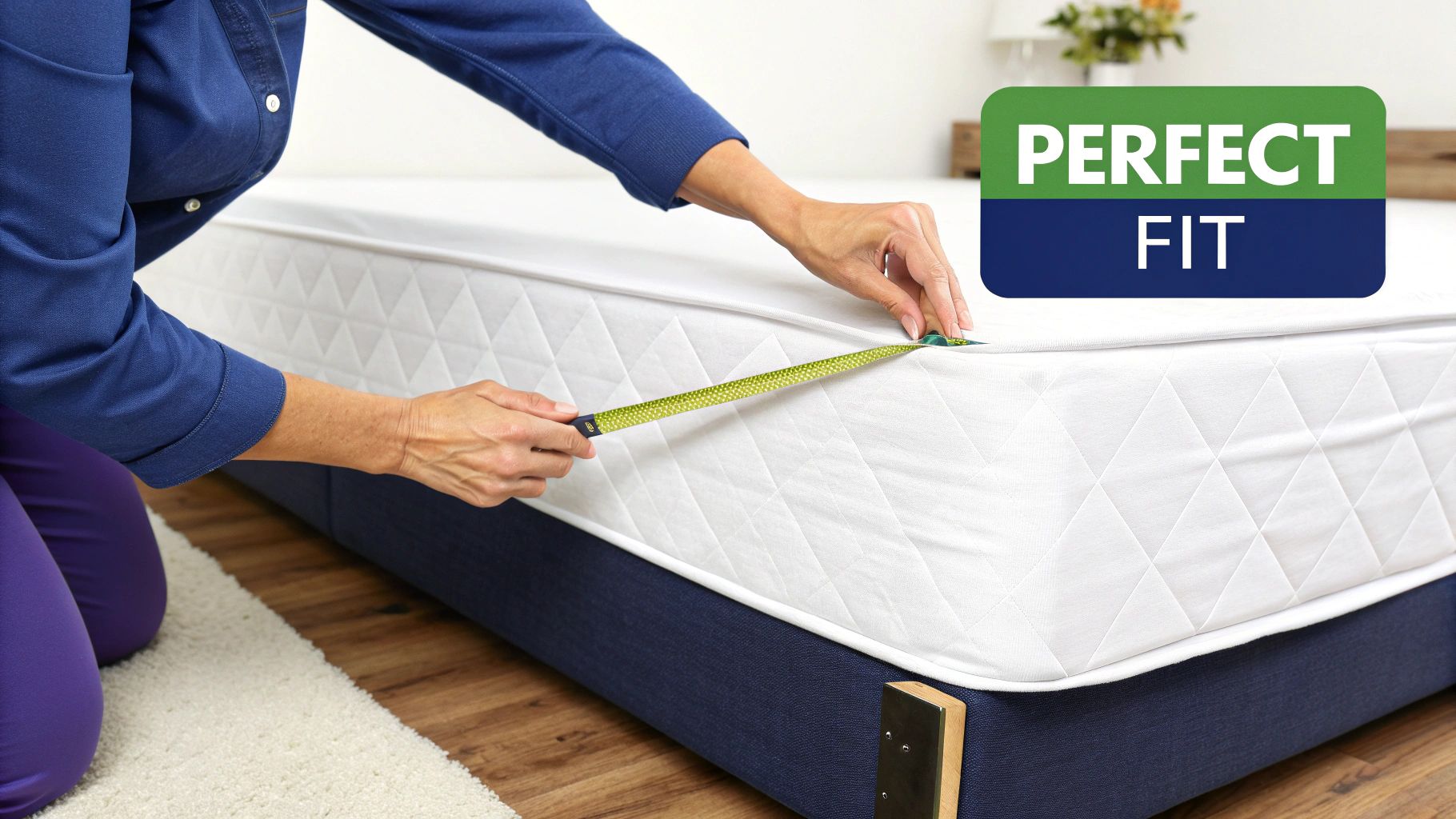
Why Mattress Depth is Crucial
Today’s queen mattresses aren’t all built the same. You’ve got plush pillow-tops, deep comfort layers, and memory foam toppers that all add precious centimetres to the overall height. If your protector’s skirt is too shallow, it’ll be a constant battle to keep it from pulling away at the corners, leaving the sides of your mattress exposed.
Before you buy anything, grab a tape measure. Measure your mattress from the bottom edge right to the very highest point of the surface. Be sure not to press down on any plush top layers—you need that full, uncompressed height. This single number will be your guide.
If you want to be absolutely sure, you can compare your measurements with our guide on what size a queen mattress is to see how it lines up with standard Kiwi sizes.
Features That Guarantee a Secure Fit
With your mattress depth in hand, you can start looking for a protector that’s built for it. A "deep pocket" design is a good sign, but a few other features will guarantee it stays put all night long.
- A Continuous Elastic Hem: The best protectors have a strong, fully elasticised hem that runs around the entire bottom of the skirt. This grips the underside of your mattress, preventing it from riding up. Cheaper versions often just have elastic in the corners, which simply doesn’t hold as well.
- Stretch-Knit Side Panels: Look for side panels (the skirt) made from a flexible, stretch-knit fabric. This material adapts to slight variations in mattress shape and ensures a taut, smooth surface free from wrinkles or bunching.
Insider Tip: I always recommend choosing a protector with a pocket depth that’s at least a few centimetres deeper than your mattress. For example, if your mattress measures 35 cm deep, look for a protector that can handle up to 40 cm or more. That little bit of extra fabric is what allows the elastic hem to tuck firmly underneath, locking it in place.
Finding the right waterproof mattress protector for your queen bed comes down to these small but critical details. By taking a moment to measure your mattress depth and looking for a deep pocket with a quality elastic hem, you’ll get a protector that stays smooth, silent, and securely in place, ready for whatever life throws at it.
Care and Maintenance for Long-Lasting Protection
Think of your waterproof mattress protector as the unsung hero of your bedding. It works tirelessly to shield your mattress from spills, allergens, and everyday wear. A little bit of TLC will go a long way in making sure it keeps doing its job effectively, preserving both its waterproof barrier and its breathability for years to come.
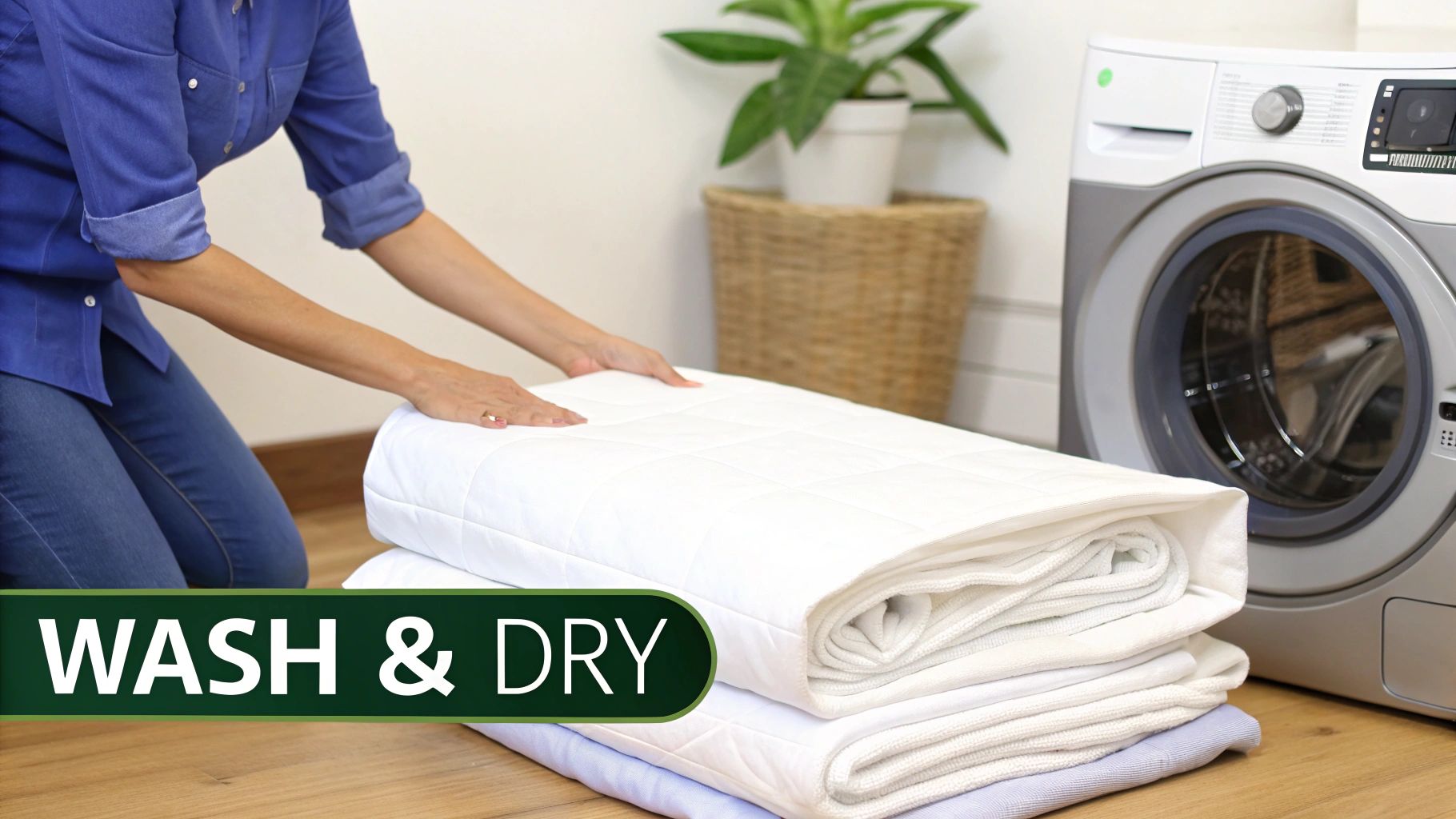
Before you do anything, always have a quick look at the manufacturer's care label. While most modern protectors are pretty straightforward to care for, different materials can have their own quirks. Still, there are a few golden rules that generally apply.
The Right Way to Wash Your Protector
For general upkeep, popping your protector in the wash every one to two months is a good routine. Of course, if you suffer from allergies or there's a spill, you'll want to wash it more frequently. If an accident does happen, get it into the machine as soon as you can to stop stains from setting in.
When wash day comes, remember to be gentle.
- Use Cold or Warm Water: Stick to a gentle cycle with cold or warm water. Hot water is the enemy here—it can damage the delicate waterproof membrane, causing it to shrink or lose its protective qualities.
- Choose a Mild Detergent: A simple, mild liquid detergent is all you need. Harsh chemicals and even powdered detergents can leave a residue that clogs the pores of the fabric, affecting its breathability.
- Skip Fabric Softeners and Bleach: This is a big one. Fabric softeners coat the fibres and destroy the protector's ability to absorb moisture. Bleach is even worse, as it can completely break down the waterproof polyurethane (PU) layer, which leads to leaks.
It's no surprise that a recent Consumer NZ study found that 72% of Kiwis have dealt with spills or pet accidents on their beds. The study also showed that waterproof protectors prevented 95% of stains and massively cut down on cleaning time. This is especially true for protectors made from advanced materials like Tencel™, which are brilliant at wicking away moisture and are a perfect match for our climate. You can get a better sense of how market trends reflect these needs at ibisworld.com.
Pro Tip: I always wash my protector with other linens, like sheets and pillowcases. This helps to balance the load in the washing machine and prevents the protector from getting tangled. Just avoid washing it with heavy items like towels, as their rough texture can cause unnecessary wear and tear.
Drying Dos and Don'ts
How you dry your protector is just as crucial as how you wash it. Get this part wrong, and all your careful washing could be for nothing.
Honestly, the best way to dry your waterproof mattress protector queen is to hang it on the line. Fresh air is great for getting rid of any lingering odours and puts zero stress on the waterproof backing. If you can, try to keep it out of direct, harsh sunlight, which can make the membrane brittle over time.
If you have to use a dryer, always use the lowest heat setting or a no-heat, tumble-dry cycle. High heat will absolutely ruin a waterproof protector; it causes the membrane to blister, crack, or separate from the fabric. Before you put it back on the bed, make sure it's bone dry to prevent any chance of mould or mildew. If any moisture ever does get through to the mattress itself, we've got a guide on properly cleaning a mattress that can help.
Your Smart Shopper's Checklist
Let's be honest, navigating the world of bedding can be overwhelming. But picking the right waterproof mattress protector queen size shouldn't add to the confusion. We've boiled everything down into this simple checklist to help you make a smart, confident choice.
Think of it as your final quality check before you commit. A great protector is a small investment that pays off big time in better sleep and a much longer life for your mattress.
Nail the Fit: Check Your Mattress Dimensions First
Before you even think about clicking 'add to cart', grab a tape measure. This one step is the absolute key to getting a perfect, slip-free fit.
- Measure the Depth: Don't just guess. Measure from the bottom edge to the very top surface of your mattress, making sure to include any plush pillow tops or comfort layers. Queen mattresses today come in all sorts of heights.
- Check the Protector's Pocket Size: You're looking for a protector with a skirt or pocket that's at least 5 cm deeper than your mattress. That bit of extra fabric is crucial—it allows the elastic to tuck right under, stopping those annoying corners from popping off in the middle of the night.
A protector that fits like a glove is a protector you won't even notice. It'll be silent, smooth, and do its job without any fuss.
The Feel Factor: Material and Membrane
The materials used are what separate a crinkly, sweaty mess from a protector you'll forget is even there. This is all about performance and comfort.
A good protector should be completely unnoticeable. If it's noisy, makes you overheat, or feels plasticky, it's not the right one. The goal is invisible protection, not a compromised sleep.
Here’s what you should be looking for:
- Breathable Waterproofing: Always go for a polyurethane (PU) membrane. It's the modern standard for a reason—it stops liquids dead in their tracks but still lets air flow through, so you stay cool and comfortable. Give old-school vinyl (PVC) a wide berth; it’s notorious for trapping heat.
- A Soft, Quiet Surface: Look for top fabrics like Tencel™ or a high-quality cotton blend. They feel great against the skin and, importantly, are whisper-quiet, so you won't hear any crinkling when you move.
The Nitty-Gritty: Construction and Warranty
It's the little details that often tell you everything you need to know about quality. A well-made protector is built to handle years of use and countless trips through the washing machine.
- Look for a Continuous Elastic Hem: Flip it over and check the skirt. The best protectors have a strong, fully elasticised hem that runs all the way around, not just on the corners. This gives it a far superior grip on your mattress.
- Check the Warranty: A decent warranty, usually around 5-10 years, is a great sign. It shows the manufacturer has real confidence in their product and protects you against any defects in the waterproofing or seams.
- Easy-Care is a Must: Life's too short for complicated laundry. The label should confirm it's machine washable and can be tumble-dried on a low heat setting. Simple, practical maintenance is key.
With this checklist in hand, you're all set to find the perfect shield for your mattress. And if you're in the market for a whole new setup, don't miss our latest tips on finding a fantastic mattress sale in New Zealand to build your ultimate sleep sanctuary.
Still Have Questions? We've Got Answers
Choosing the right protector can feel like a big decision, and it's normal to have a few questions left. We get asked about these all the time in our stores, so let's clear up some of the most common queries we hear from our customers right here in New Zealand.
Will a Waterproof Protector Make My Bed Hot?
That’s a classic concern, and a fair one if you’re thinking of those old, crinkly plastic sheets from back in the day. Thankfully, things have changed dramatically.
Modern protectors aren’t just plastic anymore. They use clever materials like breathable polyurethane (PU) membranes, which are designed to block liquids but let air flow freely. This means moisture and body heat can escape, helping you stay at a comfortable temperature all night long without that clammy, sweaty feeling.
Can I Get a WINZ Quote for a Mattress Protector?
Yes, you certainly can. We believe a good protector is a necessity for keeping your bed hygienic and healthy, not just some optional add-on.
New Zealand Bed Company is a registered supplier, so we can provide official WINZ (Work and Income New Zealand) quotations. We can arrange a quote for a protector by itself or bundle it in with a new mattress and bedding. Just have a chat with our team, and we’ll make the process straightforward for you.
Does a Protector Void My Mattress Warranty?
This is a great question, and the answer is usually the exact opposite of what people expect. In most cases, mattress brands not only recommend using a protector, but they often require one to keep the warranty intact.
Stains from spills, body fluids, or other accidents are almost always considered user-inflicted damage, which isn't covered by a standard mattress warranty. A waterproof protector is your number one defence, safeguarding your investment and ensuring your warranty stays valid.
How Often Should I Be Washing My Protector?
Keeping your protector clean is the key to making sure it does its job properly. As a general rule of thumb, popping it in the wash every one to two months is a good routine—maybe line it up with when you wash your duvet.
Of course, there are times you'll want to wash it sooner:
- After any spill or accident: Get it into the wash straight away. This stops stains from setting in and prevents any chance of moisture seeping through.
- If you have allergies: For those sensitive to dust mites and other allergens, washing the protector more often—say, every couple of weeks—can be a real game-changer. It helps keep your sleeping space much healthier.
A clean protector is an effective one. A little regular care will mean you get years of performance and peace of mind from your purchase.
Ready to give your mattress the protection it deserves? At New Zealand Bed Company, we have a fantastic range of high-quality, breathable, and perfectly fitting waterproof protectors for every queen bed. Explore our range of mattress protectors here.