

A good mattress protector is your bed’s best friend. Think of it as the unsung hero of your sleep setup—a simple, affordable layer that acts as the first line of defence against spills, allergens, and general wear and tear. It’s the single best piece of "insurance" you can buy to keep your mattress feeling new for years.
Why Bother with a Protector for Your King Single?
So, you've chosen a king single bed. Great choice! That generous 107cm x 203cm size gives you that much-needed extra room to stretch out, which is why they’re so popular across New Zealand.
But here’s the thing: you wouldn't leave a brand-new smartphone without a case, would you? Your mattress is a far bigger investment in your comfort and well-being, and it deserves the same smart protection. A protector isn't just an afterthought; it's a non-negotiable part of a clean and healthy bed.
Without that crucial barrier, your mattress is a sitting duck for everything life throws at it—the accidental morning coffee, sweat, dust mites, and everyday grime. Over time, this leads to stubborn stains, funky odours, and a premature breakdown of the foams and fibres inside.
The Real Cost of a Naked Mattress
An unprotected mattress is like a giant sponge. It soaks up moisture, dust, and allergens, which slowly but surely degrade the materials and ruin the support you paid for.
Even worse, this kind of damage can completely void your mattress warranty. Most manufacturers won't cover stains or liquid damage, meaning one clumsy moment could turn into a very expensive problem. Protecting your mattress from day one is the smartest move you can make. To learn more, check out our guide on how long a mattress should last.
It's no surprise that Kiwis and people worldwide are waking up to the importance of sleep hygiene. The global market for mattress protectors is booming, expected to jump from USD 3.6 billion in 2025 to a massive USD 5.5 billion by 2035. This isn't just a trend; it's a fundamental shift in how we view our beds—as long-term investments worth looking after.
The Big Wins: Key Benefits of a Protector
Wrapping your king single mattress in a quality protector brings a whole lot of peace of mind. Here’s what you stand to gain:
- A Healthier Bed: It forms a shield against dust mites, bacteria, and other allergens. This is a game-changer for anyone with allergies, asthma, or sensitive skin.
- Total Stain Defence: It stops spills and accidents in their tracks, preventing those ugly, permanent stains that can completely ruin the look and feel of your mattress.
- Longer Mattress Life: By keeping moisture and dirt out, a protector helps preserve the internal foams and springs, seriously extending the lifespan of your mattress.
- No-Sweat Comfort: Forget those old-school crinkly plastic sheets. Today's protectors are soft, breathable, and whisper-quiet, so you won't even know it's there—except for the fact your bed stays fresh and clean.
Choosing the Right Protector Material
Picking the right material for your king single mattress protector is a bit like choosing the right jacket for the weather—the one you choose dictates your comfort, performance, and how well you're protected. The fabric directly affects everything from the feel of your bed to how effectively it guards your mattress against spills, allergens, and everyday wear.
Thankfully, the days of stiff, crinkly plastic sheets are long gone. Modern protectors use sophisticated fabrics that offer serious protection without making you feel like you're sleeping on a plastic bag. Your best choice will come down to what you need most, whether that's superior breathability, a shield against allergies, or a natural, eco-friendly feel.
The Rise of Modern Waterproofing
The biggest leap forward in mattress protection has been the quiet revolution in waterproofing. The magic behind it is a material called polyurethane laminate (PUL), an incredibly thin, flexible membrane that's bonded to the underside of the fabric.
Think of it as the GORE-TEX of the bedding world. The membrane is microporous, which is just a fancy way of saying its pores are big enough to let air and moisture vapour out, but far too small for liquid molecules to get in. This brilliant bit of science makes the protector 100% waterproof while still allowing it to breathe, so you don't get that hot, sticky feeling. It’s complete peace of mind, minus the noise. For a deeper dive, check out our guide on the modern waterproof mattress protector in NZ.
This diagram helps visualise how a good protector works to improve the health, comfort, and longevity of your mattress.
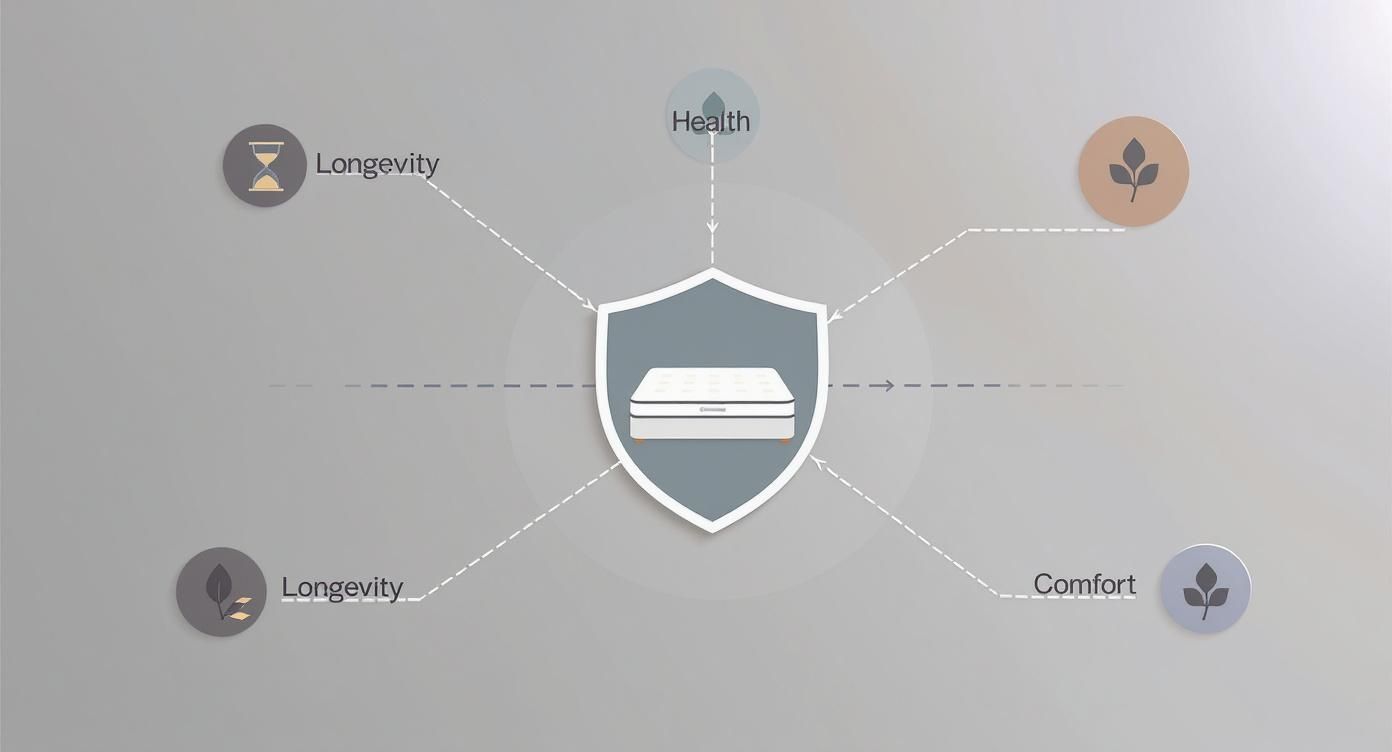
As you can see, it's not just a simple sheet; it’s an essential part of your sleep system, where each benefit supports the others to create a better night's rest.
Natural Fibres for Breathable Comfort
If you’re someone who values a soft, natural touch, protectors with a cotton or bamboo top layer are fantastic choices. Each brings something special to your bed.
- Cotton: A true classic for a reason. Cotton is soft, breathable, and incredibly durable. A terry cotton top, for instance, is great at absorbing moisture and feels beautifully soft against the skin, making it a reliable all-rounder.
- Bamboo: Known for its silky, luxurious feel and sustainable credentials, bamboo fabric is a champion of breathability. It’s also brilliant at wicking away moisture, which helps regulate your body temperature for a cooler sleep in summer and a warmer one in winter.
Getting to know how different fabrics perform is always helpful. For example, while not typically used in protectors, understanding the benefits of French linen fabric gives you a wider appreciation for how natural fibres can enhance comfort.
Comparing King Single Mattress Protector Materials
To make things easier, here's a quick-reference table comparing common materials. Use it to find the perfect match for your sleep priorities.
| Material | Best For | Breathability | Waterproofing Level | Feel |
|---|---|---|---|---|
| Terry Cotton | All-round comfort & absorbency | Good | High (with PUL backing) | Soft & textured |
| Bamboo | Temperature regulation & luxury | Excellent | High (with PUL backing) | Silky & smooth |
| Tencel™ | Sensitive skin & moisture-wicking | Excellent | High (with PUL backing) | Exceptionally soft & cool |
| Polyester | Durability & budget-friendliness | Moderate | High (with PUL backing) | Smooth & synthetic |
This table is a great starting point, but remember that the "best" material is always the one that best suits you.
Specialised Materials for Allergy Sufferers
If you or someone in your family deals with allergies or asthma, a hypoallergenic king single mattress protector isn't just a good idea—it's essential. These protectors are specifically engineered to create a barrier against the dust mites, pet dander, and other allergens that love to make a home in our beds.
Here's what to look for:
- Certified Dust Mite Barriers: These fabrics feature an incredibly tight weave that physically blocks dust mites and their waste from getting into your mattress.
- Hypoallergenic Fabrics: Materials like bamboo or specially treated synthetics are naturally resistant to mould and mildew growth.
- Full Encasement Protectors: For the ultimate line of defence, a zippered protector that covers all six sides of the mattress is the gold standard. It completely seals it off from allergens and even bed bugs.
By choosing a material that fits your needs, you can be sure your protector is doing its job perfectly—quietly protecting your health and your mattress investment while you get a great night's sleep.
Getting the Perfect Fit for Your NZ King Single
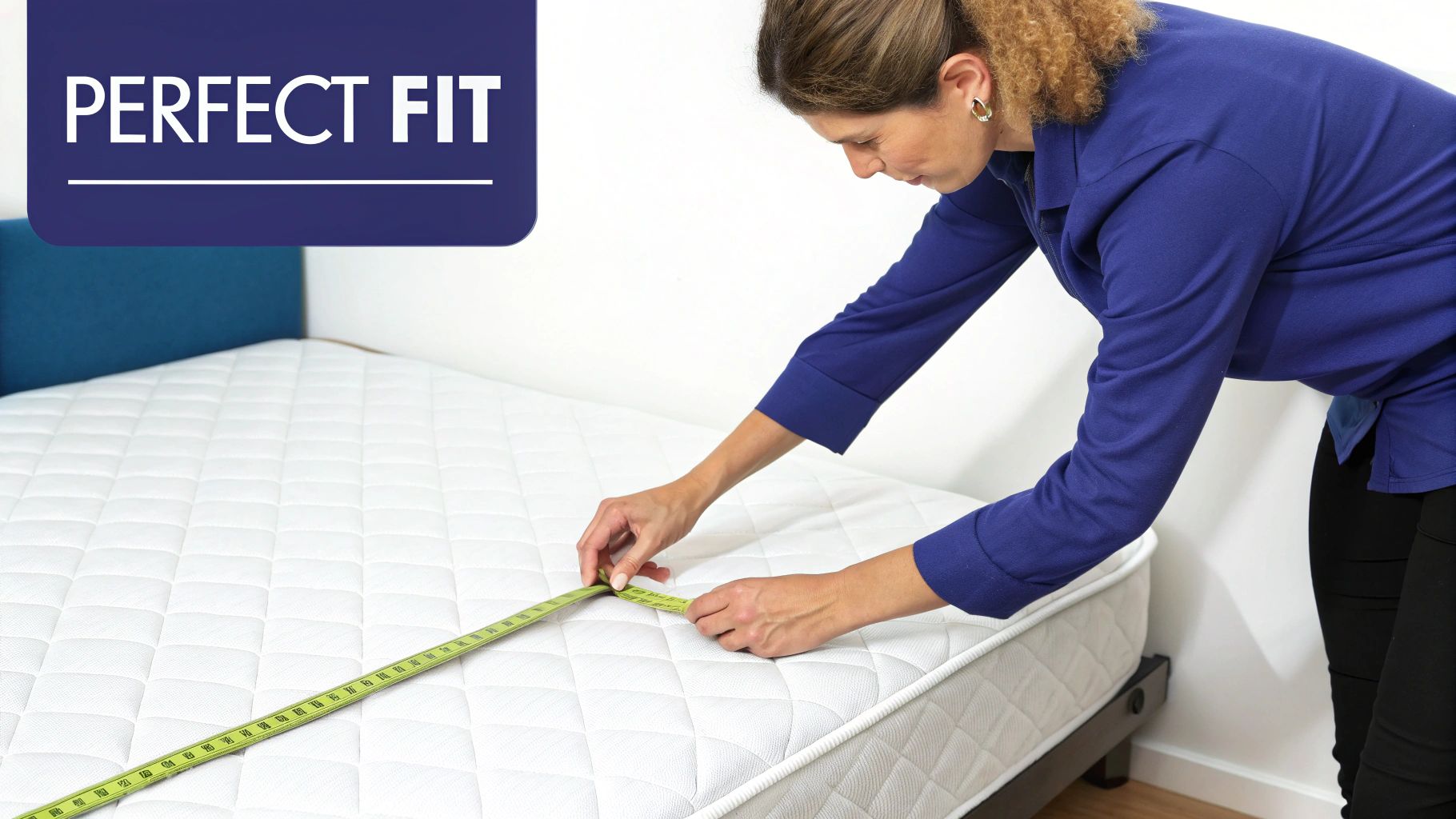
When it comes to a king single mattress protector, nothing matters more than the fit. Think of it like a phone case – too loose and it won't protect anything properly; too tight and it's a nightmare to get on and off. A protector that bunches up creates annoying lumps under your sheets, while one that's stretched too taut can actually pull off the corners while you sleep. You're aiming for a snug, secure fit that acts like a second skin for your mattress.
This is especially true here in New Zealand, where our specific bed sizes mean you can't just grab any old "single" or "double" protector and hope for the best. A well-fitted protector gives you complete coverage right where you need it, without getting in the way of a comfortable night's sleep.
Why NZ King Single Dimensions Matter
A New Zealand king single mattress has a unique footprint, and it's a non-negotiable one. You need a protector that’s been made specifically to match.
In New Zealand, a king single mattress measures 107 cm wide by 203 cm long. It’s a popular size for growing kids, teens, and anyone trying to make the most of the space in a smaller bedroom or apartment.
Because of these precise dimensions, trying to squeeze a smaller protector on or letting a larger one bunch up just doesn't work. A purpose-built king single protector is designed to cover your mattress perfectly from corner to corner, so every centimetre is shielded. For a full rundown on local bed sizes, take a look at our guide to king single dimensions.
Don't Forget to Measure Your Mattress Depth
While the length and width are standard, mattress depth – its height – can be all over the place. This is the detail that trips most people up. A sleek, firm mattress might only be 20 cm deep, but a plush pillow-top model can easily be 35 cm or more.
Getting this measurement right is simple:
- Strip the bed: Take everything off your mattress to get a true reading.
- Grab a tape measure: Place it on top of the mattress, usually at the highest point in the centre.
- Measure straight down: Run the tape measure straight down to the bottom edge of the mattress. Make sure you don't press down and compress the padding.
- Add a buffer: Always pick a protector with a skirt that’s a bit deeper than your mattress. For example, if your mattress is 35 cm deep, find a protector that fits depths of up to 40 cm. That little bit of extra fabric is what allows the skirt to tuck securely underneath and stay put.
Fitted vs Fully Encased Protectors
Once you have your measurements sorted, you have a choice to make between two main styles. Each offers a different level of defence for your mattress.
-
Fitted-Sheet Style: This is the one you’ll see most often. It goes on just like a fitted sheet, with an elasticated skirt that hugs the sides of your mattress. It's brilliant for protecting the top surface from everyday spills, sweat, and allergens. Quick, easy, and effective.
-
Fully Encased (Zippered) Style: If you're after the ultimate fortress of protection, this is it. A fully encased protector covers all six sides of your mattress and zips shut, creating an impenetrable barrier. It's the gold standard for blocking bed bugs, dust mites, and other nasties, making it the best choice for anyone with severe allergies or asthma.
So, which one is for you? If your main goal is hygiene and guarding against the odd spill, the fitted style is perfect. But for total peace of mind against allergens and pests, you really can't beat a fully encased protector.
How to Care for Your Mattress Protector
Think of your king single mattress protector as the unsung hero of your bed. Night after night, it works silently to shield your mattress from spills, allergens, and general wear and tear. A little bit of care goes a long way in making sure it can keep doing its job properly, keeping your sleep space fresh, hygienic, and protecting your investment.
Thankfully, you don't need a complicated routine. Most modern protectors are designed to be low-maintenance. Still, there are a few golden rules to follow to avoid common laundry mistakes that can ruin its special features—especially that all-important waterproof layer.
Simple Washing Steps for Longevity
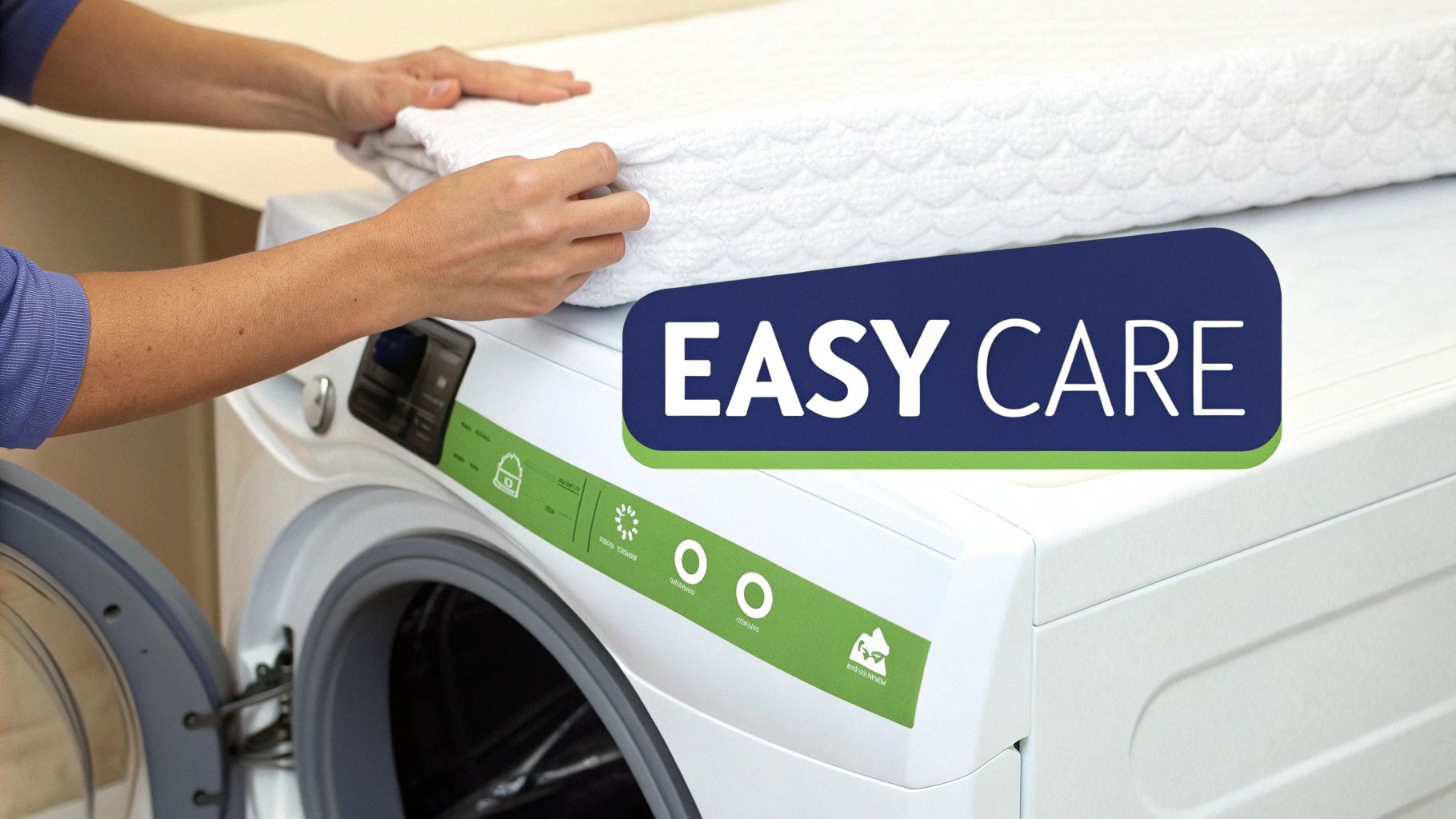
Washing your protector is straightforward, but the key is to be gentle. The waterproof membrane is surprisingly delicate and won't stand up to a rough-and-tumble wash. Aggressive cycles or harsh chemicals can cause this layer to break down, leaving your expensive mattress completely exposed.
Always start with a quick look at the care label, as some instructions might differ. But for the most part, these steps will get it perfectly clean every time:
- Go for a Gentle Cycle: Pop it in the machine on a cool or warm gentle wash. Hot water is a definite no-go, as it can damage the waterproof polyurethane backing, causing it to bubble, crack, or peel.
- Use a Mild Detergent: A simple, mild liquid detergent is your best bet. Avoid anything with bleach. Powdered detergents can sometimes leave behind a residue that clogs the fabric's pores and reduces breathability.
- Wash with Similar Friends: To stop it from getting snagged or pulled, wash it with other lightweight bedding like your sheets and pillowcases. Keep it away from heavy hitters like towels or denim jeans.
- Add an Extra Rinse: If your machine has the option, an extra rinse cycle is a great idea. It ensures every last bit of detergent is washed away, leaving the fabric soft and free from potential skin irritants.
Pro-Tip: Steer clear of fabric softeners and bleach. These products are the enemies of mattress protectors. They can clog the fibres and the waterproof membrane, which not only stops the fabric from breathing but can also eat away at the protective barrier over time.
The Art of Drying Your Protector
The drying process is where most well-intentioned owners make a critical mistake. High heat is the number one enemy of a waterproof mattress protector. Just like in the wash, a gentle, low-heat approach is absolutely essential to keep it in one piece.
Cranking the dryer up to a high setting might seem faster, but it can literally melt or warp the waterproof layer, making it completely useless.
To dry your protector safely and effectively:
- Tumble Dry on Low: Choose the lowest heat setting available on your dryer. It might take a little longer to dry, but your patience will be rewarded by a protector that actually lasts.
- Add Dryer Balls: Chuck in a few wool dryer balls (or even clean tennis balls). This simple trick stops the protector from clumping into a damp ball, creating better airflow and speeding things up.
- Air Dry When Possible: Nothing beats the old-fashioned line. Hanging your protector outside on a sunny day is the best and most energy-efficient option. If you dry it inside, just make sure it's in a well-ventilated spot and is completely dry before you put it back on the bed—this prevents any chance of mildew.
How Often Should You Wash It?
So, how often does it need a clean? That really depends on your household.
As a general rule, washing it every one to two months is perfect for most people. This keeps it feeling fresh and gets rid of the slow build-up of skin cells and body oils.
If anyone in the house suffers from allergies, you'll want to up the frequency. Washing it every 2-3 weeks will help keep dust mites and other allergens at bay, creating a healthier sleep environment.
And of course, if there’s a spill or accident, wash it straight away. That’s what it’s there for! For advice on tackling any messes that might have gotten through to the mattress itself, check out our guide on cleaning a mattress.
Shopping for a Protector in New Zealand
Trying to find the right bedding can sometimes feel like a bit of a mission, but it doesn't have to be. Once you know what to look for, picking out a king single mattress protector here in New Zealand is actually pretty straightforward.
A little local knowledge goes a long way, whether it's understanding pricing, knowing your consumer rights, or even how to get a hand with funding. Let's walk through a few practical tips to help you find the perfect protector without the hassle.
What Is a Fair Price to Pay?
A quality mattress protector is one of the best small investments you can make for your bed. It’ll easily pay for itself by keeping your expensive mattress in top condition for years to come, and you really don’t need to break the bank to get a good one.
Here in New Zealand, you can expect to find a really decent king single protector for around $40 to $50. For that price, you should be getting a fully fitted, waterproof model, often with a comfortable terry cotton top. This gives you that ideal balance of a breathable but protective barrier. Kiwis tend to see protectors as an essential, not a luxury, which thankfully keeps the market competitive and the quality high.
Checking Warranties and Return Policies
Before you click "buy," it's always smart to have a quick look at the warranty and return policy. It’s a good sign of how much a retailer backs their own products and cares about their customers.
A reputable company will always offer:
- A Clear Warranty: Look for one that covers manufacturing defects. Things like a faulty waterproof layer or dodgy stitching should be covered, protecting you from issues that aren't your fault.
- A Fair Return Policy: A good policy gives you a reasonable timeframe to return a product if it’s faulty or doesn't match the description. It's that extra bit of peace of mind, especially when you're buying online.
When you buy from an established, 100% New Zealand-owned company like New Zealand Bed Company, you're getting support from local experts. We stand by our products with clear, fair policies designed for Kiwis.
Getting a WINZ Quote for Your Bedding
For many Kiwis, getting a bit of help with essential items is a huge relief. If you need support, Work and Income (WINZ) can often help with the cost of bedding, including a new mattress and a king single protector.
The process is pretty clear-cut. You’ll need to get an official quote from a registered supplier to kick things off.
- Figure out what you need: Make a list of all the bedding you require, from the mattress itself to pillows and a protector.
- Contact a registered supplier: Get in touch with a company that handles WINZ quotes, like us here at New Zealand Bed Company.
- Get your official quote: We'll put together a formal quote for you that lists all the items and costs clearly.
- Submit it to WINZ: You then take this quote to your WINZ case manager for them to review and approve.
This system is in place to make sure you can get the essentials you need for a decent night's sleep. Working with a retailer who knows the ropes makes the whole process that much smoother. Feel free to browse our range to find the perfect mattress protector for your needs.
Got Questions About Mattress Protectors? We've Got Answers
Choosing the right bedding can feel a bit overwhelming, so we get a lot of questions about mattress protectors. To help you feel confident in your choice, here are some straight-up answers to the most common queries we hear from our customers.
Will a Waterproof Protector Make Me Feel Hot?
This is a classic concern, but thankfully, it’s mostly a myth these days. The old-style plastic sheets were definitely culprits for trapping heat, but modern protectors are a whole different story. Today's designs use advanced, breathable membranes that act like a smart barrier.
Think of it this way: the technology is clever enough to stop liquids from seeping through, but it still allows air and water vapour to pass freely. You get total waterproof protection without that hot, clammy feeling. For an even cooler night's sleep, look for a protector with a natural top layer like cotton, bamboo, or Tencel™ – they're brilliant at wicking moisture away from your body.
Can I Use an Electric Blanket with a Protector?
Yes, in most cases, you absolutely can. The crucial thing is to always check the manufacturer’s instructions for both your electric blanket and your mattress protector, just to be safe. The golden rule is simple: the electric blanket always goes on top of the protector, never underneath it.
Placing it directly on the mattress, under the protector, can trap a huge amount of heat against the waterproof layer. Over time, that intense heat can damage the membrane, causing it to bubble or crack, which ruins its ability to protect your mattress. Following this simple layering rule keeps both products working safely and effectively.
How Often Should I Wash My Protector?
For general hygiene, popping your protector in the wash every one to two months is a great routine. This keeps things fresh by removing the natural build-up of skin cells and body oils.
But if you or someone in your family struggles with allergies, you’ll want to wash it more often. A wash every two to three weeks will go a long way in reducing dust mites and other allergens, helping to create a healthier sleep space. And of course, always wash it immediately after any spills, accidents, or illness.
Will a Protector Change How My Mattress Feels?
A good-quality, well-fitted protector should barely be noticeable. The thin, fitted-sheet style protectors are designed specifically to be unobtrusive, made from soft, quiet fabrics that won't get in the way of the mattress feel you chose so carefully.
If you’ve invested in a memory foam or latex mattress for its unique contouring feel, it's best to steer clear of protectors with thick, quilted padding. A slim, smooth-top protector will give you all the defence you need without altering that comfort you love.
Ready to give your mattress the protection it deserves? The experts at New Zealand Bed Company are here to help you find the perfect fit for your bed and budget. Explore our full range of protectors and sleep essentials online. https://nzbeds.co.nz