

If you’ve started shopping for a new mattress, you've probably seen latex beds NZ pop up and wondered what all the fuss is about. Simply put, they offer a unique feel that’s a world away from traditional memory foam or innerspring mattresses—blending responsive support, incredible durability, and natural comfort.
Why More Kiwis Are Making the Switch to Latex
Tired of waking up with a stiff back or tossing and turning all night? It’s a common story. A growing number of New Zealanders are turning to latex beds to finally get a decent night's sleep, and for good reason.
A great mattress is one of the most important investments you can make for your health. It affects your energy, your mood, and your overall well-being. For a closer look at just how crucial this is, check out our guide on understanding and enhancing sleep quality in New Zealand.
Think of this guide as a friendly chat with an expert, not a dense technical manual. We'll walk you through everything you need to know about latex, breaking it down in simple terms so you can feel confident you’re making the right choice for your sleep.
What You'll Learn
We'll start with the basics and build from there, making sure you have a solid foundation before getting into the finer details. Here's a glimpse of what's ahead:
-
The Fundamentals: We’ll explain the real difference between natural and synthetic latex, and what separates the two main production methods, Dunlop and Talalay.
-
The Pros and Cons: You'll get an honest, no-fluff look at what makes latex stand out—like its amazing pressure relief and natural cooling—along with a few things to keep in mind.
-
A Kiwi Buyer's Guide: We’ve packed this with practical advice on NZ sizing, what you can expect to pay, understanding warranties, and even how to get a WINZ quote.
-
Looking After Your Bed: Simple, straightforward tips to make sure your new mattress stays comfortable and supportive for years to come.
By the time you've finished reading, you'll have everything you need to decide if a latex bed is the perfect fit for you.
What Exactly Is a Latex Bed, Anyway?
Let's get right to it. At its core, natural latex is a foam made from the sap of the Hevea brasiliensis rubber tree. Think of it like tapping a maple tree for syrup; a similar, sustainable process is used to collect the milky white sap, which is then transformed into the supportive, springy foam that forms the heart of a latex mattress.
This natural origin is a huge part of the appeal for Kiwis looking for a healthier, more eco-friendly way to sleep. But it's important to know that not all latex is the same. The first thing to get your head around is the difference between natural, synthetic, and blended latex.
Natural vs Synthetic Latex: What’s the Difference?
The type of latex in a mattress has a massive impact on its feel, how long it will last, and what you’ll pay for it. Getting this right is key to choosing a bed you'll love for years.
- Natural Latex: This is the real deal, made 100% from rubber tree sap. It's famous for being incredibly durable, responsive (it bounces back!), and naturally breathable. It’s the premium option for pure, long-lasting comfort.
- Synthetic Latex: This is a man-made version created from petroleum-based compounds like styrene-butadiene rubber (SBR). It's designed to mimic the feel of natural latex, but it generally doesn't last as long and lacks the same unique elasticity and airflow.
- Blended Latex: As the name suggests, this is a mix of natural and synthetic latex. It’s a middle-ground option that gives you some of the benefits of natural latex at a more wallet-friendly price.
Blended latex beds are becoming more common in New Zealand, often seen as a cost-effective alternative. Globally, they hold over 41% market share because they offer a good balance of durability and price. Here in NZ, retail data shows blended latex makes up about 28% of premium mattress sales, with models in the NZ$1,200-$2,200 range seeing a 15% year-on-year growth. You can dig deeper into these trends in this global latex mattress market report.
Dunlop vs Talalay: Two Ways to Make the Foam
Beyond the raw materials, the manufacturing process also creates two very different types of latex foam. Think of it like baking a cake – even with the same ingredients, a different recipe and method will give you a completely different texture.
Dunlop: This is the original, time-tested method. The liquid latex sap is whipped, poured into a mould all at once, and baked. Because of gravity, some sediment settles at the bottom, making Dunlop foam slightly denser and firmer on the bottom than on the top. The result is a highly supportive, resilient, and extremely durable foam.
Talalay: This is a more modern, involved process. The mould is only partially filled with latex, then expanded with a vacuum to create a more consistent, open-celled structure. It’s then flash-frozen to lock in that airy structure before being baked. This creates a lighter, softer, and more breathable foam with a perfectly even feel.
To make things clearer, here’s a quick rundown of how the two methods stack up.
Dunlop vs Talalay Latex At a Glance
| Feature | Dunlop Latex | Talalay Latex |
|---|---|---|
| Feel | Denser, more supportive, springy | Softer, bouncier, more "cushioning" |
| Density | Firmer and denser at the bottom | Consistent density from top to bottom |
| Production | Simpler, more energy-efficient | Complex, multi-stage process |
| Breathability | Good airflow, naturally cool | Excellent airflow due to open-cell structure |
| Best For | Support layers, people who prefer a firmer feel | Comfort layers, people who want plush softness |
Both Dunlop and Talalay make fantastic mattresses; the best one for you simply comes down to personal preference.
This infographic neatly sums up the main reasons so many New Zealanders are choosing latex, all stemming from its natural origins and unique feel.
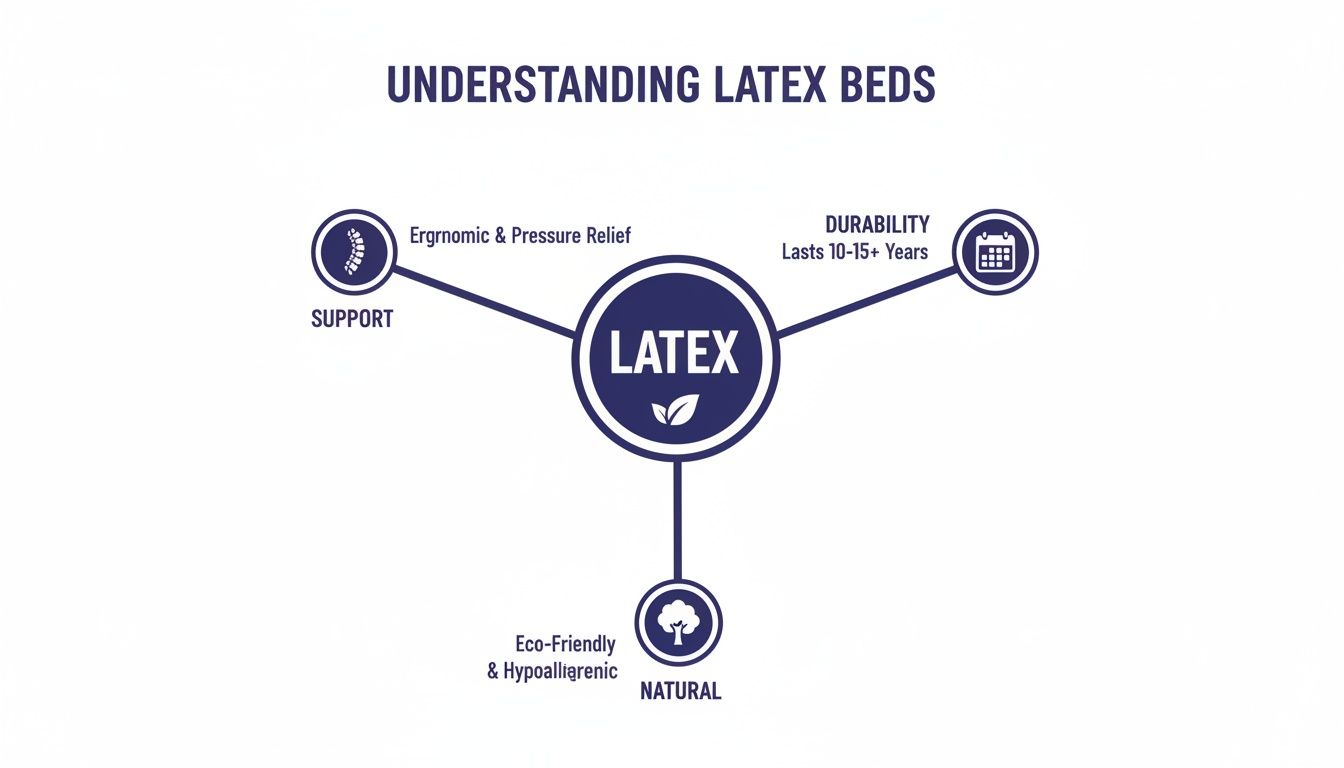
As you can see, the key benefits—amazing support, incredible durability, and natural materials—all work together. These qualities directly influence how a mattress feels, and you can learn more about why mattress firmness matters in our dedicated guide.
The Real-World Benefits of Sleeping on Latex
Putting aside the technical talk, what really counts is how a latex bed actually improves your sleep, night after night. For Kiwis dealing with everything from a bad back to those humid summer evenings, the practical advantages are where latex truly shines. These are genuine solutions to common sleep problems.
The magic is in the unique, springy nature of latex. It moulds to your body's natural curves, offering gentle support that feels both soft and incredibly buoyant. This is a world away from memory foam, which often gives you that slow, sinking feeling that can make it a struggle to roll over. Latex bounces back instantly, giving immediate relief to pressure points like your shoulders and hips.
Unbeatable Pressure Relief and Support
One of the most celebrated qualities of a latex mattress is its ability to soothe aches and pains. By spreading your body weight evenly, it takes the stress off your joints and helps keep your spine in a healthy, neutral position. This dynamic support is a game-changer for anyone who wakes up feeling stiff or sore. A huge plus for latex beds is their superior ergonomic support, which is a key factor in alleviating neck pain while sleeping.
This quality makes latex an outstanding choice for managing discomfort. In fact, a Sleep Foundation NZ report noted that people sleeping on latex report 25% fewer complaints of back pain compared to those on traditional foam alternatives. That’s a powerful testament to its ability to deliver truly restorative sleep.
A great latex bed delivers a unique blend of contouring comfort and responsive support. It cradles your body to relieve pressure but never makes you feel stuck—a key reason many sleep experts consider it the best mattress for back pain in NZ.
A Cooler and Healthier Night's Sleep
If you tend to sleep hot, you know how miserable a warm, stuffy mattress can be, especially during a classic Kiwi summer. Latex tackles this problem head-on. Its natural open-cell structure lets air move freely through the mattress, pulling heat and moisture away from your body to keep you comfortably cool all night.
This breathability also creates a much healthier place to rest. Natural latex is inherently hypoallergenic and antimicrobial, making it a terrible home for common allergens.
- Resists Dust Mites: The dense structure of latex makes it nearly impossible for dust mites to burrow in and multiply.
- Prevents Mould and Mildew: Its moisture-wicking properties stop dampness from building up, which is what mould and mildew need to grow.
This makes latex beds in NZ a fantastic choice for anyone with allergies, asthma, or simply someone who wants a cleaner, healthier sleep environment.
Built to Last: An Investment in Quality
Finally, let’s talk durability. A high-quality natural latex mattress can easily last for 15 to 20 years without sagging or developing the body impressions that plague other mattresses.
While the upfront cost might be a bit higher, its incredible lifespan makes it a smart, cost-effective choice for the long haul. You're not just buying a bed; you're investing in over a decade of consistently great sleep.
How to Find the Perfect Latex Bed for Your Sleep Style
Choosing a new mattress isn't a one-size-fits-all deal. The best bed for you comes down to how you sleep. Your favourite sleeping position determines where your body needs the most support, and matching that with the right firmness is the secret to waking up refreshed instead of achy.
A good mattress should work with your body, not against it. Once you understand what you need, you can find a latex bed that feels like it was made just for you.
Matching Firmness to Your Sleep Position
The ultimate goal is to keep your spine in a neutral, natural line—no awkward curves, no unnecessary strain. Different sleeping positions need different kinds of support to make that happen.
-
For Side Sleepers: If you're a side sleeper, your shoulders and hips take most of the pressure. A softer to medium-firm latex mattress is usually your best bet. It has enough give to let those pressure points sink in comfortably, relieving strain while keeping your spine perfectly straight.
-
For Back and Stomach Sleepers: These positions demand a sturdier foundation. The main risk is your midsection sinking too low, which throws your spine out of alignment. A medium-firm to firm latex bed offers the solid support needed to keep your hips up and your spine happy all night long.
Tailored Solutions for Specific Needs
Beyond your go-to sleeping pose, other factors can point you toward the perfect latex bed. The inherent qualities of latex make it a fantastic problem-solver for common sleep issues.
One of the best things about latex is its natural buoyancy. Unlike memory foam, which you sink into and can feel a bit stuck in, latex gently pushes back. This makes it much easier to move around or get out of bed—a huge plus for anyone with mobility challenges.
This springy feel means you sleep on the mattress, not in it.
Finding Relief for Hot Sleepers
Do you often kick off the covers or wake up feeling too warm? The type of latex in your mattress can make a world of difference. While all latex is naturally more breathable than memory foam, one type is the clear winner for temperature control.
For Kiwis who run hot, especially during those muggy summer nights, Talalay latex is the answer. The way it's made creates a more open, airy structure that lets heat escape easily. This incredible airflow helps you stay cool and comfortable right through the night, ensuring your bed is a refreshing oasis, not a sauna.
A Practical Guide to Buying Latex Beds in New Zealand
Ready to find your perfect latex bed? It's easy to get a bit lost in all the options, but knowing the local landscape here in New Zealand makes a huge difference. Let's walk through the practical side of things—money, warranties, and getting it to your door—so you can feel confident in your choice.
First things first, let's talk budget. The price of a latex bed depends on its size, the type of latex (natural costs a bit more than synthetic), and the brand. But to give you a ballpark idea, here's what you can generally expect.
Understanding Local Pricing and Retailers
The mattress market in New Zealand is a busy one, and latex beds are a popular choice at the premium end. In fact, retailers often report that latex models make up 10-15% of their high-end sales. This sits within an industry projected to bring in over US$80.77 million.
So, what does that mean for your wallet? You can expect to find a quality queen-size latex mattress somewhere in the NZ$1,500 to $3,000 range. For a deeper dive into the numbers, you can explore the data on New Zealand's mattress industry.
You’ll find latex beds everywhere from big nationwide chains to specialised online stores like us. The most important thing is to find a retailer who is transparent about what you’re buying and has a helpful team ready to answer your questions.
Navigating Warranties and Finance Options
A new bed is a big investment, so it pays to read the fine print. A solid warranty is non-negotiable and should cover you against manufacturing faults, like significant sagging, for at least 10 years. Always get clear on what the warranty covers and, just as importantly, what it doesn't. Using the wrong type of base, for instance, can sometimes void it.
To make the purchase easier on the pocket, most Kiwi retailers have flexible payment options. Keep an eye out for these common choices:
- Interest-Free Finance: Services like Gem Visa or Q Card are great for spreading the cost over a set period without adding interest.
- Buy Now, Pay Later: Platforms such as Afterpay break the total cost down into smaller, bite-sized payments.
Need a WINZ Quote? If you're seeking assistance from Work and Income, a good retailer should have no problem providing an official quote for your new bed. Here at New Zealand Bed Company, our team can sort that out for you—just ask.
Delivery Across New Zealand
Last but not least, think about how your new bed will get to you. Always check the delivery costs and options, particularly if you're in a rural area. Find out how long it will take, if the delivery team will bring it inside for you, and whether they can take your old mattress away. A hassle-free delivery is the final, satisfying step to a great night's sleep.
For more helpful advice, take a look at our comprehensive 2025 buyer's guide on how to choose the perfect mattress in New Zealand.
Caring for Your Latex Bed for Lasting Comfort
When you invest in a quality latex bed, you're investing in years of incredible sleep. With a bit of straightforward care, that investment can easily last for a decade or more. And looking after it is simpler than you think.
It all starts from the ground up—with your bed base. A good base does more than just lift your mattress off the floor; it's essential for providing the right support and airflow. We always recommend a solid or properly slatted base for a latex mattress. This gives it the even support it needs and allows air to circulate, which is key to keeping your bed fresh.
Simple Maintenance for Longevity
The single best thing you can do for your new bed? Get a high-quality, breathable mattress protector. Think of it as your first line of defence against spills, sweat, and allergens. It keeps the latex core in perfect condition without making you feel hot at night.
If an accident does happen, a quick spot clean is all you need.
- Act Fast: The moment a spill occurs, grab a clean, dry cloth and gently blot the area to soak up as much liquid as you can.
- Mix a Mild Solution: A little bit of mild detergent mixed with water is perfect. Lightly dampen another cloth with the solution and gently dab the stain. Don't scrub or soak the foam.
- Let it Air Dry: Patience is key. Let the spot air dry completely before putting sheets back on. Steer clear of direct heat like a hairdryer, as it can damage the latex.
A little bit of upkeep goes a long way in making sure your latex bed stays supportive and comfortable for its entire lifespan. For a deeper dive, check out our guide on the best ways to clean a mattress.
A Few Final Questions About Latex Beds
We get a lot of questions from Kiwis considering a latex bed for the first time. To wrap things up, here are some straight-up answers to the most common queries we hear. It’s often these practical details that help you make that final, confident decision.
Do Latex Beds Have a Strong Smell?
It’s a great question, especially for those sensitive to smells. A 100% natural latex mattress might have a very faint, almost sweet scent when you first unwrap it. Think of it as the ‘new bed’ smell, but a natural one! This is completely normal and harmless, and it’s nothing like the chemical ‘off-gassing’ you sometimes get from memory foam. Let it air out in a well-ventilated room, and it’ll be gone in a few days.
If you opt for a blended or synthetic latex model, the initial smell might be a bit more rubbery. But again, this fades quickly, leaving you with a fresh sleep surface.
Are Latex Mattresses Good for Adjustable Bases?
Yes, they’re a fantastic match! Latex is naturally flexible and durable, which means it can bend and flex with an adjustable base without getting damaged or losing its shape.
This ability to conform to different positions—whether you're reading, watching TV, or elevating your legs—means you get the full benefit of your adjustable frame. While it's always smart to double-check with the manufacturer, you'll find that most latex beds NZ retailers offer are designed to work perfectly with them.
Pairing a latex mattress with an adjustable base is the ultimate comfort combination. You get the targeted pressure relief of the base, combined with the responsive, body-hugging support of latex.
How Can I Tell If a Latex Bed Is Genuinely Natural?
This is where you need to be a savvy shopper. The easiest and most reliable way to know what you’re buying is to look for independent, third-party certifications. Any good retailer will be upfront about these.
Here are the big ones to look for:
- GOLS (Global Organic Latex Standard): This is the gold standard. It guarantees the latex comes from organically grown rubber trees and that the entire manufacturing process meets strict environmental and social standards.
- OEKO-TEX Standard 100: This certification is all about your health. It tests the final product to ensure it’s completely free from a long list of harmful chemicals.
Asking about these certifications isn't being difficult; it's how you ensure you're bringing a safe, high-quality, and genuinely natural product into your home.
Ready to feel the difference a high-quality latex bed can make? At New Zealand Bed Company, our sleep experts are on hand to help you find the perfect fit for your sleep style and budget. Explore our range of premium latex beds and start your journey to better sleep today.