

Feeling a bit lost in the world of mattresses? You're not alone. But if you're looking for a bed that feels like it was made just for you, a memory foam mattress is a game-changer. It works by moulding perfectly to your body, offering support exactly where you need it. This clever material, first dreamed up by NASA, has become the go-to choice for Kiwis chasing a genuinely deep and restorative night's sleep.
Why Kiwis Are Choosing Memory Foam for Better Sleep
Let’s be honest, mattress shopping can feel like you're trying to crack a code. All the talk of "viscoelastic," "open-cell," and "density ratings" is enough to make anyone’s head spin. My goal here is to cut through that jargon and show you what it all means for your comfort, night after night.
The real magic of a memory foam mattress is how personal it feels. A traditional spring mattress pushes back against you with the same force everywhere. Memory foam is different. It responds to your body heat and weight, softening and yielding to create a unique cradle that supports every curve. This helps keep your spine in a natural, healthy alignment, which means less tossing and turning. For so many New Zealanders, that simple difference means waking up feeling properly rested, without the usual morning stiffness and aches.
The Science of Comfort and Support
The secret behind memory foam is a property called "viscoelasticity." It's a fancy word, but the concept is simple. Imagine pressing your hand into a dense, high-tech sponge. When you press into it, it yields slowly to your shape (that's the "visco" part). When you move, it gently springs back to its original form (the "elastic" part).
This slow, adaptive response is what delivers the incredible benefits you hear about:
- Exceptional Pressure Relief: The foam spreads your body weight out evenly, taking the pressure off hotspots like your shoulders, hips, and knees. It's a huge relief for side sleepers in particular.
- Superb Motion Isolation: If you share a bed, this is a big one. Your partner’s movements are absorbed by the foam instead of being transferred across the bed, so you can sleep right through their late-night trip to the kitchen.
- Personalised Contouring: The foam sinks in just enough to fill the gaps, like the curve of your lower back, giving you customised support that feels incredible.
Kiwis often choose a memory foam mattress to optimise their rest and facilitate physical repair, complementing other efforts like finding fast, safe strategies to improve muscle recovery. A good night's sleep is a cornerstone of overall wellbeing.
This guide will walk you through everything you need to know, from the different layers inside a memory foam mattress to choosing the right firmness level for you. We’ll tackle the common questions, make sense of the pricing, and help you feel confident in your decision. Getting the basics right is the first step, and for a deeper look, you can learn more about enhancing your sleep quality in our dedicated article.
How a Memory Foam Mattress Actually Works
Ever wondered what makes a memory foam mattress feel so unique? The best way to picture it is to imagine pressing your hand into a dense, high-tech sponge. It doesn’t just spring back. Instead, it holds the shape of your hand for a second before slowly, smoothly returning to flat. That’s the magic in action.
This slow-response feel comes from the foam's "viscoelastic" nature. It's a bit of a technical term, but it simply means the material is both viscous (it flows slowly, like honey) and elastic (it can stretch and return to its original shape). When you lie down, your own body heat and pressure soften the foam, letting it mould perfectly to your contours. It’s a feeling many people describe as a gentle, supportive hug.
This is worlds away from traditional innerspring mattresses, which push back against you with a uniform force. Memory foam doesn’t fight your body's curves; it cradles them, providing personalised support that feels like it was made just for you.
The Two Key Layers for Comfort and Support
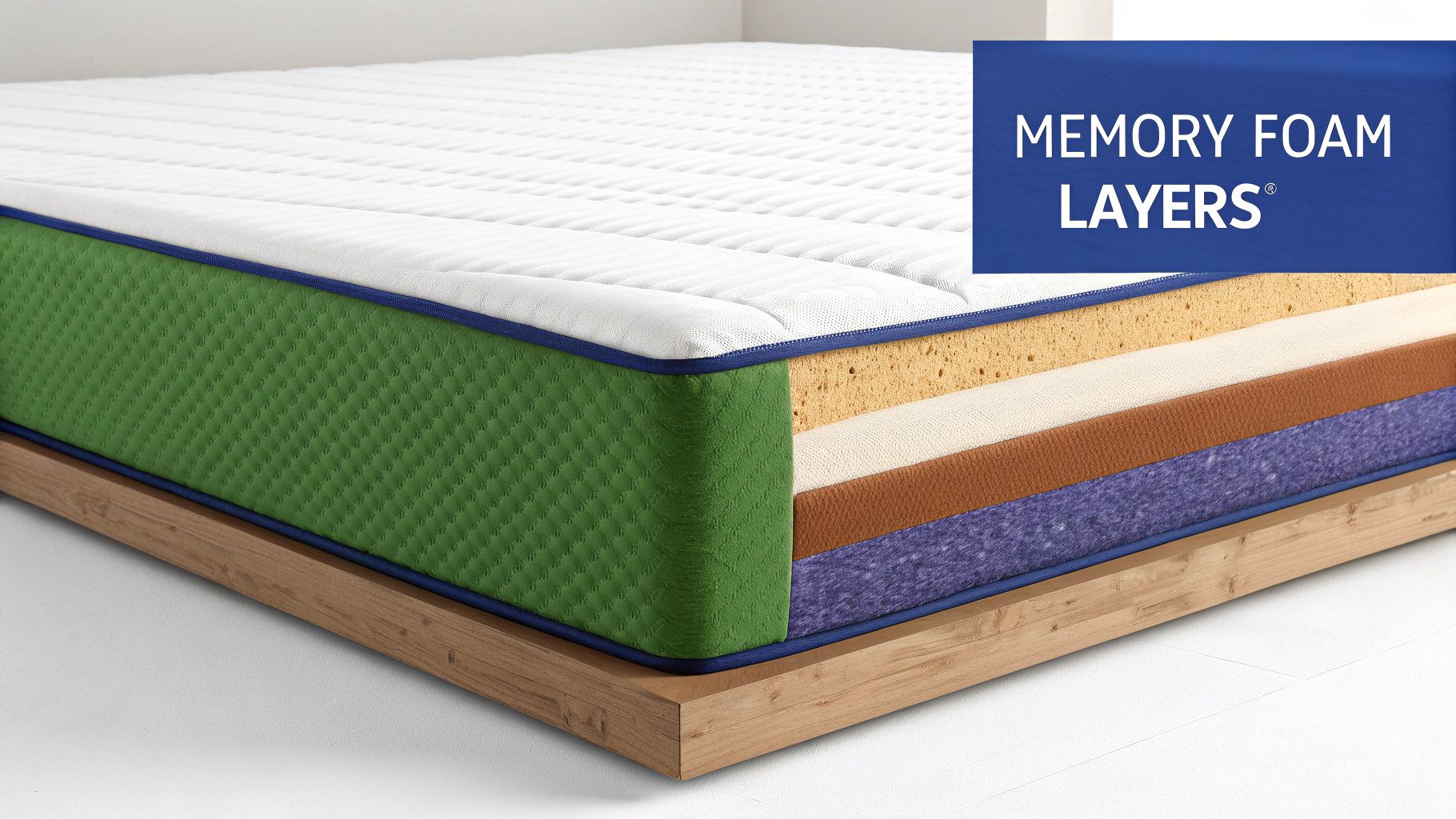
A good memory foam mattress is never just a single slab of foam. It’s a carefully engineered system, with different layers working together to give you the perfect balance of comfort and support. Think of it like a well-made tiramisu—each layer has a distinct purpose that contributes to the final, fantastic result.
You'll almost always find two main layers doing the heavy lifting:
- The Comfort Layer: This is the plush top layer you actually sleep on. It’s usually a softer, lower-density foam designed for that signature body-contouring feel. It gives way just enough to let your shoulders and hips sink in, keeping your spine beautifully aligned.
- The Support Core: Underneath the soft top layer is the foundation—a much firmer, high-density foam base. This is the powerhouse of the mattress. It provides the deep-down support, prevents you from sinking in too far, and gives the mattress its long-term durability and shape.
Together, these layers strike a perfect balance. It’s a winning combination that sleepers around the world have embraced. Kiwis are no exception, with the NZ mattress market expected to reach NZ$80.77 million in 2025. Memory foam is a huge part of that, holding an impressive 81% customer satisfaction rating that has barely budged since 2015.
Decoding the Jargon for a Cooler Sleep
Let’s be honest: one of the biggest worries people have about memory foam is that it sleeps hot. The earliest versions definitely had that reputation, but today’s foam technology is vastly different, especially with designs suited for New Zealand’s climate.
The real innovation isn't just in the material, but in its structure. Modern memory foams are specifically engineered for breathability to help regulate your temperature all night long.
To see how, let's break down a couple of terms you'll often come across:
- Open-Cell Structure: Picture the foam as being made of millions of tiny, interconnected bubbles. This "open-cell" construction creates pathways for air to move freely through the mattress, wicking heat and moisture away from you while you sleep. In short, it lets the mattress breathe.
- Gel-Infusion: This is a process where tiny cooling gel beads or swirls are mixed right into the foam as it's being made. These gel particles act like little heat sponges, absorbing excess body warmth and dispersing it away from the surface of the mattress.
These features make all the difference, especially on a humid summer night. They help transform the memory foam experience from potentially stuffy to refreshingly cool. If you're curious to try this without committing to a new mattress, our guide on how a memory foam mattress topper can upgrade your current setup is a great place to start. By understanding this smart but simple engineering, you can see past the marketing buzz and choose a mattress truly built for a great night's sleep.
The Pros and Cons of a Memory Foam Mattress
Every mattress type has its fans and its critics, and memory foam is no exception. It's definitely not a one-size-fits-all solution, but for the right person, the unique feel can be a total game-changer for sleep quality.
To figure out if it's the right fit for you, let’s take an honest look at both sides of the coin—the celebrated benefits and the common concerns. A good decision comes from weighing these points against your own sleep habits, what you find comfortable, and what you need for a truly restful night.
What People Love About Memory Foam
There’s a good reason memory foam mattresses have become so popular across New Zealand. The advantages they offer directly tackle some of the biggest complaints people have about sleep, from waking up with sore joints to being disturbed by a restless partner.
Here are the main benefits that keep people coming back:
- Unbeatable Pressure Relief: This is memory foam's superpower. It contours precisely to your body, distributing your weight evenly and cradling pressure points like your hips, shoulders, and knees. This can dramatically reduce aches and pains, making it a fantastic choice for side sleepers or anyone with joint sensitivity.
- Incredible Motion Isolation: If you share a bed, this feature is a real relationship-saver. The dense foam structure absorbs movement, so when your partner rolls over or gets out of bed, you're far less likely to feel a thing. Motion is deadened on the spot, meaning fewer disturbances and a more peaceful sleep for both of you.
- Naturally Hypoallergenic: Because memory foam is so dense, it's a difficult place for common allergens like dust mites and mould to flourish. For those with allergies or asthma, this can mean a cleaner, healthier sleeping environment and easier breathing throughout the night.
This unique ability to support and relieve pressure is why memory foam is so often recommended for orthopaedic needs. By keeping your spine aligned and cushioning the body, it helps take the stress off your back and joints.
Common Concerns to Keep in Mind
Of course, no mattress is perfect for everyone. It's just as important to understand the potential downsides of memory foam so you can decide if they're deal-breakers for you. The good news is that modern mattress technology has come a long way in solving many of these classic issues.
Here are a few things to be aware of:
- Sleeping Hot: This is the most famous complaint, but it really applies to older, first-generation foams. Today's memory foam mattresses fix this with cooling technologies like gel infusions and open-cell structures that promote airflow, creating a much more breathable and temperature-neutral surface.
- A "New Mattress" Smell: Sometimes, a brand-new memory foam mattress has a slight smell when you first unwrap it. This is known as "off-gassing," and while it might be a bit noticeable, it's harmless and usually disappears within a few days once the mattress is in a well-ventilated room.
- That "Sinking In" Feeling: Memory foam is known for its slow-response, body-hugging feel. Some people absolutely love being cradled like this, but others who toss and turn a lot might find it a bit restrictive. If you prefer a bouncier feel, an innerspring or hybrid might be more your speed.
For sleepers with specific health needs, like chronic back pain or arthritis, the benefits of memory foam often far outweigh these considerations. The targeted support can provide real, substantial relief. You can learn more about the top advantages of investing in orthopaedic mattresses in our detailed guide.
Ultimately, knowing both the good and the bad helps you line up your expectations and choose a mattress that truly improves your sleep.
How to Select the Perfect Memory foam Mattress
Choosing a new bed is so much more than a simple purchase; it’s a genuine investment in your health and wellbeing. So let's cut through the noise and get straight to what really matters when picking out the perfect memory foam mattress. We'll focus on the three things that make all the difference to your sleep: firmness, density, and thickness.
When you match these elements to your body and the way you sleep, you unlock a level of comfort that feels custom-made. Get this right, and you'll wonder how you ever slept on anything else.
Match Firmness to Your Sleeping Position
First things first, let's talk about how you sleep. The whole point of a mattress is to keep your spine in a straight, neutral line all night long. If your mattress is too soft, your hips will sink in too far, throwing your back out of alignment. Too firm, and you’ll feel pressure on your joints and uncomfortable gaps between your body and the bed.
It’s a bit like buying a good pair of shoes. A marathon runner needs something completely different from a tradie on a worksite. In the same way, your favourite sleeping position determines the kind of support you need.
-
Side Sleepers: You’ll want a soft to medium mattress. This gives your shoulders and hips room to sink in just enough to relieve pressure and keep your spine straight. A firm mattress would just push back, leading to a restless night.
-
Back Sleepers: A medium to medium-firm mattress is usually the sweet spot. It offers enough support to stop your lower back from arching but still has enough give to contour nicely to your body.
-
Stomach Sleepers: You should look for a firm mattress. This is crucial for preventing your midsection from sinking too low, which can put a lot of strain on your lower back and neck.
Understand Foam Density and Thickness
Once you have a feel for the right firmness, it’s time to look at density and thickness. These two factors are your best guide to how durable the mattress will be and the quality of support you can expect night after night, year after year.
Foam density is simply a measure of how much foam is packed into a given space. A higher density means a heavier, more durable, and more supportive mattress that won't sag over time. Lower-density foams feel lighter but will break down much faster.
Higher density foam (think around 4-5 lbs per cubic foot) gives you the best bang for your buck. It might have a higher price tag upfront, but its superior support and longevity mean you're making a smart investment that will last.
Mattress thickness is also a big piece of the puzzle. A thicker mattress usually has more layers dedicated to comfort and support, which translates to better pressure relief and a longer lifespan. For most adults, a memory foam mattress between 25-30 cm thick strikes an ideal balance between plush comfort and solid, long-lasting support.
This flowchart can help you weigh up the pros and cons as you narrow down your options.
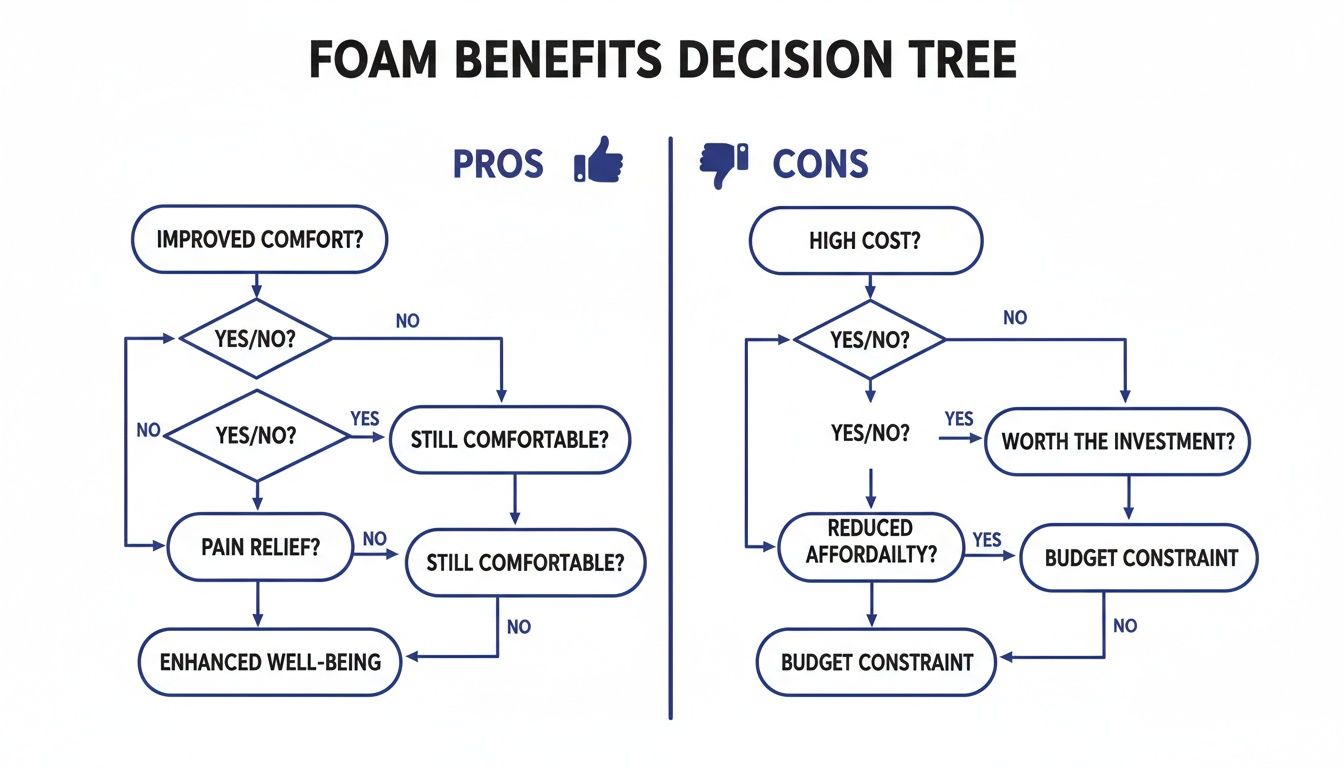
As you can see, the incredible pressure relief and motion isolation often make it a clear winner, especially as modern foams have largely solved the old issue of sleeping too hot.
Tailored Choices for Specific Needs
With the basics covered, let's look at a few common scenarios. The right memory foam mattress can be an absolute game-changer for many Kiwis, particularly those dealing with specific sleep challenges.
This is something we're seeing across the country. The adjustable bed market, which relies heavily on memory foam, is poised for big growth from 2025. It’s part of a wider trend that values the NZ mattress industry at NZ$80.77 million in 2025, driven by memory foam's high satisfaction rates and its brilliant suitability for our aging population.
Here are a few practical recommendations based on what we see every day:
-
For Couples: The number one feature you’re looking for is motion isolation. Any medium-density or higher memory foam mattress will be fantastic for this, absorbing movement so you don't feel every toss and turn from your partner. A medium firmness is often a safe bet that works well for different body types and sleeping styles.
-
For Back Pain Sufferers: A medium-firm mattress with a high-density support core is usually the way to go. This combination provides the essential support to keep your spine aligned, while the top comfort layer gently cushions the body to relieve pressure points.
-
For Side Sleepers with Sore Joints: Look for a soft to medium mattress with a generous comfort layer (at least 7 cm). This provides that extra bit of cushioning needed for the shoulders and hips, preventing pressure build-up and helping you wake up without that familiar morning stiffness.
By thinking through these key factors—firmness, density, and thickness—and relating them to your own needs, you can cut through the confusion and choose your next mattress with confidence. For a deeper dive into all the options available, take a look at our guide on how to choose the perfect mattress in New Zealand.
Your New Zealand Buyer Checklist
Alright, you’ve got the theory down. Now, let’s talk about the practical side of actually buying a memory foam mattress here in New Zealand.
Think of this as your final checklist. It covers everything from what to budget to making sure your new bed has a long and happy life. After all, a smart purchase isn’t just about how the mattress feels on night one; it’s about knowing you’ve made a solid investment for years to come.
First things first: the money talk. In NZ, prices for a quality memory foam mattress can be all over the map, but the old saying rings true—you tend to get what you pay for, especially when it comes to foam density and how long it'll last.
- Entry-Level (Under NZ$1,000): You'll typically find thinner mattresses with lower-density foam in this bracket. They're a decent shout for a guest room or a temporary fix, but they might not have the staying power for nightly use over the long haul.
- Mid-Range (NZ$1,000 - NZ$2,500): This is the sweet spot where most Kiwis land. Mattresses here usually have multiple foam layers, better density for support, and often include cooling features like gel infusions.
- Premium (Over NZ$2,500): This is top-tier territory. Expect the highest-density foams, the most advanced cooling tech, and thick, plush comfort layers for a truly luxurious feel that’s built to last.
This isn't surprising when you look at the bigger picture. The New Zealand mattress market is booming, set to be worth a massive NZ$80.77 million by 2025. It’s clear Kiwis are taking their sleep seriously and are willing to invest in it. The rise of online shopping has also made finding great value—especially in that popular mid-range—easier than ever before.
Understanding the Fine Print
Before you pull the trigger, take a moment to look at the policies that back up your purchase. A mattress is a big deal, so you want to buy from a company that stands by its products with fair, easy-to-understand terms.
A trial period is your best friend here. Many retailers offer a risk-free trial, usually anywhere from 30 to 100 nights. This gives you the chance to actually sleep on the mattress in your own home, which is a far better test than lying on it for five minutes in a bright showroom.
The warranty is just as crucial. A good memory foam mattress should be backed by at least a 10-year warranty. Make sure you read what it actually covers—it’s usually for manufacturing defects like major sagging or deep body impressions, not for the normal softening that happens over time.
Don’t forget to check the payment options. Many retailers offer interest-free finance, which can make that higher-quality mattress a lot more affordable by letting you spread the cost out.
Caring for Your New Mattress
Once your new bed is home, a little TLC will go a long way in making sure you get every penny's worth out of it. Following the care instructions is often a condition of the warranty, too, so these simple steps are well worth doing.
The right base is non-negotiable. Memory foam needs a solid, flat foundation to stop it from sagging. A slatted base is perfectly fine, just make sure the slats are close enough together (generally no more than 7-8 cm apart). An old, worn-out box spring just won’t cut it and could even void your warranty.
Here are a few more tips to keep your mattress in great nick:
- Use a Mattress Protector: Honestly, this is the single best thing you can do. A good waterproof, breathable protector will shield your mattress from spills, sweat, and allergens, keeping the foam clean and hygienic.
- Rotate It Regularly: To help it wear evenly, give your mattress a 180-degree spin every three to six months. Most modern memory foam mattresses are designed to be one-sided, so you won’t need to flip it over.
- Keep It Clean: If a spill happens, gently spot-clean the area with a mild detergent and water, but try not to soak the foam. A quick vacuum of the surface every now and then will also help get rid of dust and debris.
Follow these simple rules, and your mattress will give you consistent comfort and support for years. For a deeper dive, check out our guide on how long a mattress should last and how to get the most out of it.
Got Questions About Memory Foam? We've Got Answers
Even after you’ve done your research, it’s natural to have a few last-minute questions before committing to a new memory foam mattress. It’s a big decision! To help you feel completely sure about your choice, we’ve rounded up the most common queries we get from our Kiwi customers and answered them straight up.
Think of this as your final checklist. We’ll tackle everything from sleeping hot to what kind of base you really need, so you have all the facts for a fantastic night’s sleep.
Will I Sleep Hot on a Memory Foam Mattress?
This is probably the number one worry we hear, but thankfully, modern memory foam is a world away from the old-school stuff that gave it a bad name. It's true that the very first memory foam mattresses had a habit of trapping body heat.
Today’s mattresses, however, are specifically designed for a cooler sleep. Reputable New Zealand brands now build advanced cooling technologies right into the foam to keep you comfortable, even on those sticky summer nights.
Here’s what to look for:
- Gel-Infusion: This is a game-changer. Tiny cooling gel beads are swirled directly into the foam, where they work to actively pull heat away from your body.
- Open-Cell Structure: Think of it like a sponge. This design creates millions of tiny air passages throughout the foam, allowing air to circulate freely and letting the mattress breathe.
These clever innovations mean you get all that beautiful, body-hugging comfort without any of the unwanted warmth.
How Long Will It Take to 'Break In' My New Mattress?
Just like a new pair of shoes, every memory foam mattress needs a bit of a break-in period. You can expect this to take anywhere from 30 to 90 days. During this time, the foam cells need to "wake up" and open fully, allowing the mattress to soften and adapt to your unique body shape and weight.
So, don't be surprised if it feels a little firmer than you expected right out of the box—that’s completely normal. The best way to speed things along is simply to sleep on it every night.
You might also notice a slight "new mattress" smell when you first unbox it. This is just off-gassing, and it's totally harmless. The scent usually fades away within a few days, especially if you leave it to air out in a well-ventilated room.
Can I Just Use My Old Bed Base?
This one’s a definite "it depends"—specifically on the type of base you have and its condition. Memory foam needs a solid, flat foundation to do its job properly and to stop it from sagging over time.
A slatted base is perfectly fine, as long as the slats are no more than 7-8 cm apart. Any wider and the foam can start to sink between the gaps. A solid platform base is an even better choice.
Be warned: using an old, worn-out, or unsuitable base (like a traditional sprung box spring) is a recipe for disaster. It won't just feel uncomfortable; it can ruin the foam and will almost always void your new mattress warranty.
When in doubt, always check the mattress manufacturer’s guidelines to make sure your base is up to the task.
Is a Firmer Mattress Always Better for a Sore Back?
Not necessarily. It's a common myth that a rock-hard mattress is the fix for back pain. While a mattress that’s too soft is a problem because it lets your spine dip out of alignment, one that's too firm can create its own issues, like painful pressure points on your shoulders and hips.
For most people struggling with back pain, a medium-firm memory foam mattress is the sweet spot. It hits that perfect balance of providing solid support to keep your spine straight while still being gentle enough to cushion your joints and relieve pressure. Ultimately, your sleeping style and what feels right for your body are the most important factors.
So, Is a Memory Foam Mattress Right For You?
We've covered how memory foam works, unpacked the pros and cons, and looked at what to look for when you're buying. Now for the million-dollar question: is a memory foam mattress actually the right choice for you?
Ultimately, the answer comes down to matching its unique strengths with your specific sleep needs.
If you’re constantly being jolted awake by a partner who tosses and turns, the motion isolation of memory foam is a game-changer. If you wake up with nagging aches in your hips or shoulders, its incredible ability to contour to your body and melt away pressure points could be the solution you've been looking for. This personalised support is what it's all about.
Making the Call
To help you decide with confidence, let’s quickly recap who really stands to gain the most from this type of mattress. This isn't just about feeling comfortable; it's about finding the right tool for better sleep, health, and wellbeing. A great mattress is a cornerstone of good rest, but pairing it with an effective bedtime routine can truly elevate your sleep quality.
A memory foam mattress could be your perfect match if you're:
- Sharing the bed: Its genius lies in absorbing movement, meaning you (and your partner) can sleep soundly through the night without disturbing each other.
- Dealing with back or joint pain: The way memory foam cradles your body helps keep your spine aligned and cushions those sensitive spots, which can make a huge difference to how you feel in the morning.
- A side sleeper: It gives your shoulders and hips the space to sink in just the right amount, preventing pressure from building up and encouraging a much healthier sleeping posture.
At the end of the day, choosing memory foam is a vote for deep, uninterrupted sleep. Its unique knack for adapting to your exact body shape offers a level of personalised comfort that other mattress types struggle to replicate.
For many Kiwis, that trio of pressure relief, motion isolation, and tailored support makes a memory foam mattress a fantastic investment. If those benefits sound like exactly what you need, then it’s very likely your path to a much better night’s sleep.
Ready to feel the difference for yourself? Explore our wide range of memory foam mattresses at the New Zealand Bed Company and find the perfect fit for your sleep style and budget. Discover your perfect memory foam mattress today!