

Finding the perfect quilt in New Zealand isn't just about grabbing any old blanket off the shelf. It's an investment in years of quality sleep. The best New Zealand quilts are made with our unique climate in mind, often using world-class local materials like wool to keep you cosy in winter and surprisingly cool in summer.
Ready to find the ideal match for your bed? Let's dive in.
Your Guide to Choosing the Right NZ Quilt
A great quilt is the heart of a comfortable bed and one of the biggest factors in how well you sleep at night. But when you’re faced with all the different fillings, weights, and confusing sizes, picking the right one can feel like a chore.
My aim here is to cut through the noise and give you practical, straightforward advice that works for Kiwi homes.
Think of this as your complete walkthrough for everything quilt-related. We’ll break down all the important bits so you can feel confident in your choice.
What You Will Learn
Here’s a quick rundown of what we’ll cover:
- Local Materials: Why New Zealand materials, especially our famous wool, are such a fantastic choice for bedding.
- Climate Suitability: How to pick a quilt weight that works with our famously changeable weather, keeping you comfortable all year.
- Correct Sizing: We'll demystify NZ bed sizes—from single to super king—so you can get that perfect, hotel-like fit without any guesswork.
A well-chosen quilt does more than just keep you warm. It elevates your sleep space, helps you rest better, and becomes a fixture in your home for years to come. It’s a true investment in your daily wellbeing.
Ultimately, choosing the right quilt boils down to understanding your sleep habits and knowing what to look for. Whether you’re a hot sleeper, feel the cold, prefer natural fibres, or need something hypoallergenic, this guide has you covered. By the end, you'll know exactly how to pick a quilt that not only feels amazing but also fits your lifestyle perfectly.
To see what's out there, feel free to browse our full range of New Zealand bedding.
Why New Zealand Quilts Are Different
Here in New Zealand, a quilt is so much more than just a blanket. It's a piece of our history, woven into the fabric of Kiwi identity. This story doesn't start in a factory; it begins out of sheer necessity, born from the resourcefulness of early settlers who needed to stay warm in a new, often unforgiving land. That heritage of practical craftsmanship is what gives a genuine New Zealand quilt its unique character.
Early pioneers, especially on isolated farms or facing a South Island winter, relied on quilting to create vital layers of warmth. What began as a purely functional craft slowly blossomed over generations into a treasured art form, with skills and patterns passed down through families and communities.
That deep-rooted tradition is still alive and well today, beautifully blending time-honoured techniques with a modern eye for design. It’s a craft that continues to thrive, celebrated by makers all across the country.
The Heartbeat of Kiwi Quilting
The quilting community in New Zealand is incredibly passionate and active, a big reason why these traditions remain so strong. You can feel this community spirit at the many events and exhibitions held from the top of the North Island to the bottom of the South.
Aotearoa Quilters, our national quilting association, has been a huge part of keeping the craft in the spotlight. Between 2000 and 2025, they hosted 15 major symposia, each drawing an average of 1,200 attendees. A massive 70% of the quilts on show at these events featured classic NZ patterns—like the iconic silver fern or swirling koru designs—often made with local wool blends. Find out more about what's next for quilting events in Aotearoa.
This dedication shows that quilting isn't just a hobby here; it’s a living, breathing part of our culture that connects us to our past while we create for the future.
Defined by Local Materials
Beyond its rich history, what truly sets a New Zealand quilt apart is the quality of the materials we have on our doorstep. Our country is famous for producing some of the world's best wool, and that’s central to the story of our quilts.
New Zealand wool is renowned across the globe for its incredible warmth-to-weight ratio, natural breathability, and impressive durability. It’s a fibre that feels like it was made for our changeable climate, keeping you perfectly cosy without ever feeling stuffy or overheated.
Here’s a quick look at why our local wool makes such a difference:
- Natural Temperature Regulation: Wool fibres are brilliant at wicking moisture away from your skin, which helps keep you dry and comfortable all night long, no matter the season.
- Sustainability: As a renewable and biodegradable resource, choosing wool is an environmentally friendly decision you can feel good about.
- Hypoallergenic Properties: Wool is naturally resistant to dust mites, mould, and mildew, making it a fantastic choice for anyone with allergies or sensitivities.
This focus on high-quality, sustainable materials is a hallmark of New Zealand quilts. It’s why so many of us invest in these pieces, looking for bedding that’s not only durable but also healthy and promises a great night’s sleep. By choosing locally made, you're not just buying a quilt; you're supporting a legacy of Kiwi craftsmanship. Learn more about our commitment to quality New Zealand products and our story.
Choosing Your Quilt Filling: Wool vs. Down vs. Synthetics
When you’re buying a new quilt, the most important decision is what’s inside it. The filling dictates everything from how warm you’ll be on a frosty winter night to how comfortably you’ll sleep through the seasons. In New Zealand, your main choices are wool, down, or modern synthetic fibres, and each brings something different to the bed.
Understanding the differences is the key to finding a quilt you’ll love for years. It's like picking a jacket for a day out in Wellington—your choice depends on the weather and what feels right for you. Some materials are about lightweight warmth, others offer incredible moisture-wicking cosiness, and some are just fantastically easy to look after.
This simple guide can help you narrow down the options based on what you value most: warmth, tradition, or easy care.
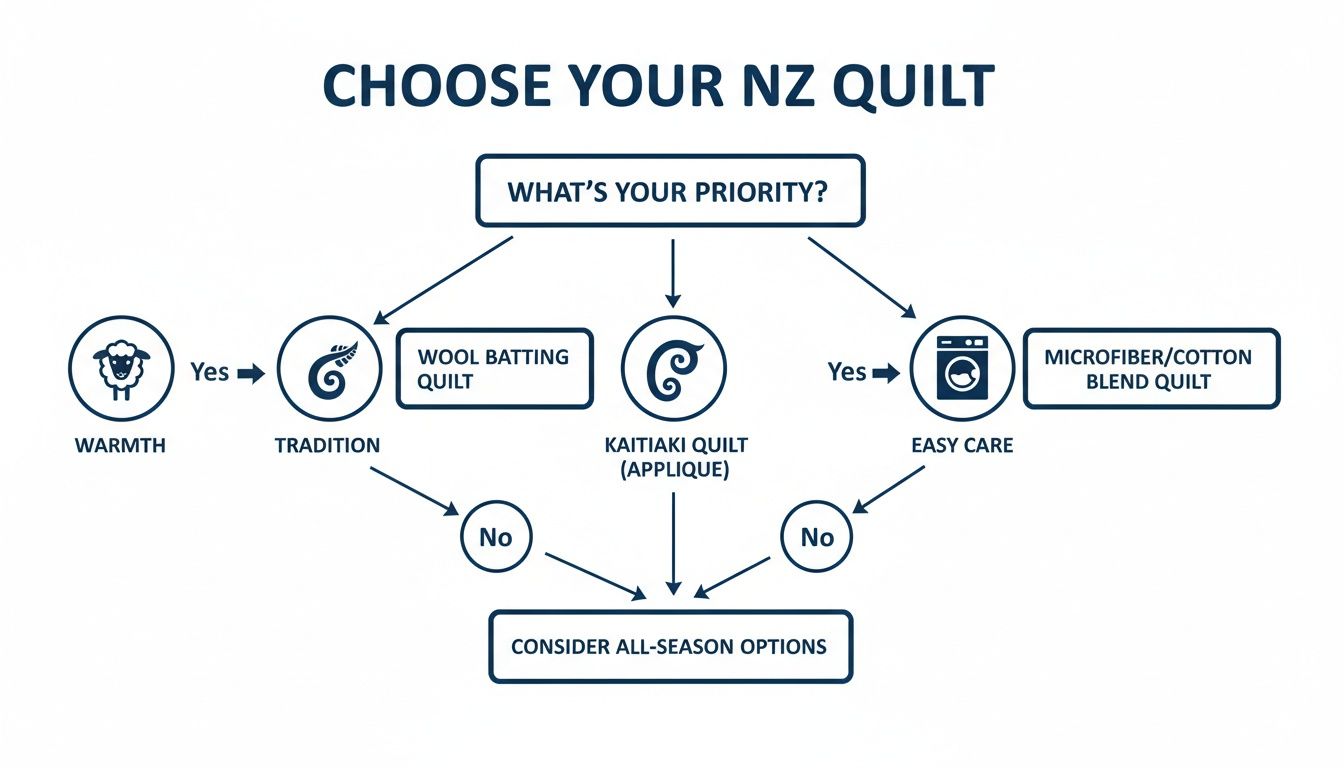
By focusing on your main priority, you can quickly see which material is likely the best fit for your home and lifestyle.
New Zealand Wool: The Natural All-Rounder
It’s no surprise that wool is the classic Kiwi choice for quilt filling. It’s a brilliant natural insulator that’s also incredibly breathable. This magic combination means it traps warm air to keep you snug when a southerly hits but also wicks moisture away, so you don’t overheat on milder nights.
This natural temperature regulation makes a wool quilt perfect for New Zealand's famously changeable climate. It's a true all-season workhorse.
Wool's unique ability to manage both temperature and moisture creates a balanced microclimate while you sleep. Many Kiwis swear by it, finding it helps them get a deeper, more restorative rest.
The quilt scene in New Zealand reflects global trends but with our own spin, driven by our world-class wool industry. Data from Aotearoa Quilters shows its 8,500 active members in 2025 produce around 50,000 quilts a year. A massive 65% of these use NZ merino wool—sourced from our 28 million sheep—celebrated for its natural temperature regulation. You can get a broader view of the industry by exploring the global quilt market.
Down and Feather: Lightweight Luxury
Down quilts, filled with the soft, fluffy under-plumage of ducks or geese, are the definition of luxury. They are famous for their incredible warmth-to-weight ratio, providing amazing insulation without feeling heavy at all.
If you love that feeling of being cocooned in a soft, lofty cloud, then a down quilt is hard to beat. Just keep in mind that they are often a bigger investment and may need professional cleaning to keep them in top condition. They also don't manage moisture as effectively as wool.
Synthetic Fibres: The Practical and Allergy-Friendly Choice
Synthetic quilts, usually filled with polyester microfibres, are a fantastic, practical, and often more affordable option. They are hypoallergenic, which makes them the go-to choice for anyone with allergies or asthma.
Modern synthetic fillings have improved hugely and now do a great job of mimicking the plush feel of down. They’re also incredibly easy to look after—most can be tossed right into the washing machine at home. While they don't have the same breathability as wool, they provide reliable warmth and are built to last. For instance, our Ortho Woolfit bedding shows how natural fibres can be combined with practical design for everyday comfort.
Quilt Material Comparison for NZ Homes
To make things even clearer, here’s a straightforward comparison of the key features for each quilt type. This table breaks down the pros and cons to help you see at a glance which one best suits your sleep style and home environment.
| Feature | Wool Quilt | Down/Feather Quilt | Synthetic Quilt |
|---|---|---|---|
| Warmth | Excellent, breathable warmth. Adjusts to body temperature. | Highest warmth-to-weight ratio. Very insulating. | Good, consistent warmth. Less breathable than natural fibres. |
| Breathability | Excellent. Wicks moisture away to prevent overheating. | Moderate. Can sometimes trap moisture. | Low. Can feel clammy for hot sleepers. |
| Weight | Heavier and flatter feel, provides a comforting pressure. | Very lightweight and lofty. | Lightweight, can mimic the feel of down. |
| Allergies | Naturally hypoallergenic and resistant to dust mites. | Can trigger allergies unless specifically treated. | Best option for allergy sufferers (hypoallergenic). |
| Care | Often requires professional cleaning or gentle spot cleaning. | Typically needs professional cleaning to protect loft. | Easiest to care for. Usually machine washable. |
| Cost | Mid to high-range, great long-term value. | Highest price point, a true luxury investment. | Most affordable option. |
| Best For | Couples, people who get hot and cold, and NZ's four seasons in one night. | Cold sleepers who love a lightweight, cloud-like feel. | Kids, allergy sufferers, and anyone wanting easy maintenance. |
Ultimately, the best quilt is the one that helps you sleep soundly. Whether you prioritise the natural intelligence of wool, the airy luxury of down, or the no-fuss practicality of synthetics, there’s a perfect match waiting for you.
How to Match a Quilt to Your NZ Bed Size
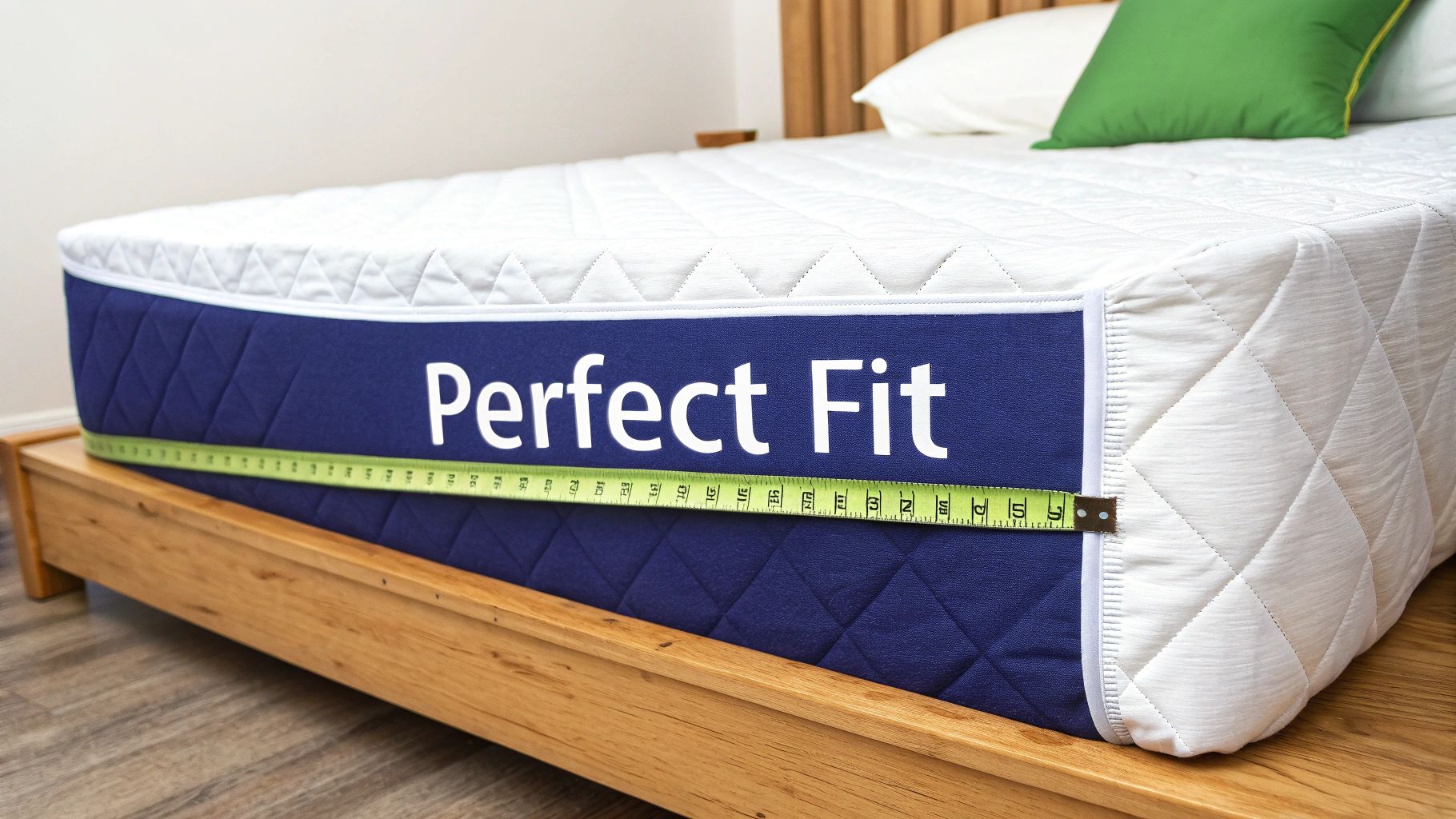
We’ve all been there. You find the perfect quilt, get it home, and discover it just doesn't sit right on the bed. A quilt that's too small leaves you in a nightly tug-of-war, fighting off chilly drafts. One that’s too big will drag on the floor, collecting dust bunnies.
The secret to getting that plush, inviting bed you see in magazines is all about the dimensions. A well-fitting quilt should drape elegantly over the sides, covering the mattress completely and giving you plenty of snug coverage.
New Zealand Bed and Quilt Sizing Guide
Luckily, figuring out the right size isn't a dark art. While it’s always a good idea to measure your own mattress just in case, this quick reference table lays out the standard New Zealand bed sizes and the quilt dimensions that work best with them.
It's designed to give you that perfect drape, making sure you can confidently choose from the best New Zealand quilts out there.
| Bed Size | Mattress Dimensions (cm) | Recommended Quilt Size (cm) |
|---|---|---|
| Single | 91 x 188 cm | 140 x 210 cm |
| King Single | 107 x 203 cm | 180 x 210 cm |
| Double | 137 x 188 cm | 210 x 210 cm |
| Queen | 153 x 203 cm | 210 x 210 cm |
| King | 167 x 203 cm | 245 x 210 cm |
| Super King | 183 x 203 cm | 265 x 210 cm |
| California King | 203 x 203 cm | 285 x 210 cm |
Having these numbers handy makes shopping so much easier. If you want to dive deeper into the specifics, check out this comprehensive NZ bed size guide.
Tips for the Perfect Fit
The chart is a fantastic starting point, but a couple of other things can affect how a quilt fits.
- Check Your Mattress Depth: Modern mattresses have gotten taller, especially pillow-top ones. If your mattress is thicker than 30 cm, seriously consider going up one quilt size. This ensures you still have enough overhang to cover the sides properly.
- Think About Your Style: How much drape do you want? Some people love a dramatic, luxurious look where the quilt nearly skims the floor. Others prefer a neater finish that just covers the mattress. There's no right answer—it’s all about the look you're going for.
Getting the size right transforms your bed from just a place to sleep into a stunning centrepiece for your bedroom. It’s a small detail that makes a huge difference to both comfort and style.
Caring for Your Quilt so It Lasts for Years
A great quilt is an investment in your comfort. Look after it properly, and it will give you years of cosy nights. A little care goes a long way in protecting the filling, keeping it lofty and warm, and ensuring it remains a welcome part of your bedroom.
Before you do anything, the golden rule is to always check the manufacturer’s care label. Wool, down, and synthetic fillings all have different needs, so following those specific instructions is the only surefire way to avoid any mishaps.
Routine Care and Cleaning
One of the easiest things you can do to keep your quilt fresh is to air it out. Pick a dry, breezy day and hang it outside in the shade for a few hours. This lets air circulate through the fibres, whisking away any trapped moisture and odours without a full wash.
For those little spills and accidents, spot-cleaning is your best friend.
- Gently blot the spill with a clean, dry cloth to soak up as much liquid as you can.
- Mix up a mild, diluted detergent and use a damp cloth to lightly dab the stain, working from the outside edge inwards.
- Rinse the area by blotting it with another cloth dampened with just plain water.
- Let the spot air dry completely before putting it back on the bed.
This targeted method is much gentler on the quilt than a full machine wash and works a treat for all types of New Zealand quilts, especially those with delicate natural fibres. If you're looking for more tips on keeping your whole sleep environment fresh, check out our guide on how to clean your bed and bedding.
When it comes to a full clean, remember that less is often more. Over-washing can break down the natural fibres in a wool quilt or cause down to clump, reducing its performance and shortening its lifespan.
Storing Your Quilt Properly
When the seasons change and it’s time to pack away your winter quilt, how you store it really matters. First, make sure it’s completely clean and dry to avoid any chance of mould setting in.
The best way to store it is in a breathable cotton or linen storage bag. Steer clear of plastic bags, as they trap moisture and can lead to mildew. A cool, dark, and dry spot—like the top of a wardrobe—is the perfect place to keep your quilt safe until you need it again.
Your Top Questions About New Zealand Quilts Answered
Let's face it, wading through bedding jargon can be a bit of a headache. To cut through the confusion, we've pulled together answers to the questions we hear most often from Kiwis just like you.
What’s the Difference Between a Quilt and a Duvet in New Zealand?
Here in New Zealand, you’ll hear ‘quilt’ and ‘duvet’ used for the same thing. While a traditional quilt was a stitched, decorative bedspread, these days we use both words to mean the soft, filled inner that goes inside a duvet cover.
Honestly, don't get too hung up on the name. What really matters is what's inside – the filling, its weight, and how it’s made. That’s what will determine how comfortable you are at night.
I’m a Hot Sleeper – What’s the Best Quilt for Me?
If you often wake up too hot, breathability is your best friend. A lightweight New Zealand wool quilt is a brilliant choice. Wool is a natural wonder; it regulates temperature by wicking moisture away from your body, keeping you dry and preventing that clammy, overheated feeling.
When you're shopping, look for a quilt with a lower GSM (grams per square metre) rating or one that’s labelled as a ‘summer’ or ‘all-seasons’ weight. They give you that cosy feeling without trapping too much heat.
How Often Should I Be Replacing My Quilt?
A good quality quilt is a real investment in your sleep and should see you through for 5 to 15 years, as long as you look after it properly. But even the best quilt has a lifespan.
You’ll know it’s time for a replacement when you notice a few key things:
- It’s gone flat: The quilt has lost its lovely loft and doesn't feel as fluffy as it used to.
- You're getting cold spots: The filling has started to clump or shift, leaving patches with no insulation.
- It smells a bit musty: Even after a good wash and a thorough airing, it has a lingering, stale smell.
Basically, if your quilt isn't giving you the same comfort it once did, it's probably time to start looking for a new one.
Can I Use a Quilt if I Have Allergies?
Yes, definitely! You just need to choose a hypoallergenic option. New Zealand wool is a fantastic natural choice because it’s inherently resistant to dust mites, mould, and mildew, which helps create a much healthier bed.
High-quality synthetic microfibre quilts are another great bet, as they are specifically made to be hypoallergenic. A big plus is that you can wash them often at high temperatures to get rid of any sneaky allergens. Just keep an eye out for terms like ‘hypoallergenic’ or ‘anti-allergy’ on the label for extra confidence.
At New Zealand Bed Company, we're all about helping Kiwis get a better night's sleep. To find your perfect match, explore our full range of quality quilts and bedding online at https://nzbeds.co.nz.