

If you're a side sleeper in New Zealand, the golden rule for a great pillow is a high loft (that's the height) combined with medium-to-firm support. This specific combination is the secret to bridging that big gap between your head and the mattress, keeping your spine perfectly straight and your neck happy. It’s a small choice that makes a massive difference to your sleep.
Your Guide to Waking Up Without Neck Pain
Ever wake up with a stiff neck, sore shoulders, or even a dull headache? Your pillow is almost certainly the culprit. Since most Kiwis are side sleepers, the wrong pillow isn't just uncomfortable—it actively misaligns your body, leading to aches that can stick with you all day long.
When you sleep on your side, your shoulder creates a significant space between your head and the mattress. Your pillow's one and only job is to fill that gap perfectly. It needs to act like a supportive bridge, holding your head, neck, and spine in a single, straight line.
If your pillow is too soft or low, your head slumps down, straining the muscles on the high side of your neck. On the flip side, a pillow that’s too firm or high pushes your head upwards, bending your neck at an awkward angle. Neither is a recipe for a good morning.
The Two Keys to Pillow Success
Forget all the confusing marketing jargon for a second. To find the right pillow, you only need to understand two simple things:
-
Loft (Height): This is just a fancy word for how thick your pillow is. Because your shoulder holds you up, side sleepers need a much higher loft than people who sleep on their back or stomach.
-
Firmness (Support): This is all about how much your pillow pushes back. You need something in the medium-to-firm range that won’t flatten out like a pancake by 3 AM. It has to maintain its shape and support right through the night.
Here's a simple way to think about it: your spine should look the same lying down as it does when you're standing tall with good posture. The right pillow is what makes that happen.
More Than Just a Place to Rest Your Head
Choosing a pillow isn't just about comfort; it's a core component of your entire sleep setup. Your pillow and mattress have to work together as a team to support your whole body. Even the world's best mattress can't save you from a bad neck if your head is out of alignment.
As you look for the best pillow for side sleepers in NZ, remember you're making an investment in your daily well-being. The right pillow can be the difference between waking up feeling refreshed and starting your day already in pain. And if you're dealing with more than just a sore neck, figuring out the best mattress for back pain in NZ can be another game-changer.
How to Choose the Right Pillow Loft and Firmness
Let's cut through the jargon. When you're on the hunt for the perfect pillow for side sleepers in NZ, you'll see the words "loft" and "firmness" pop up everywhere. Getting these two things right is the secret to waking up refreshed versus starting your day with a sore, stiff neck.
Think about what happens when you’re watching TV on the sofa and rest your head on the armrest. That awkward angle quickly becomes uncomfortable. An unsuitable pillow does the exact same thing to your neck, but it holds it in that stressful position for eight hours straight.
The goal is simple: your pillow should keep your head and neck aligned with your spine, forming a nice, straight line. For side sleepers, this nearly always points to a pillow with a higher loft (that’s the height) and a medium-to-firm feel. This combo is the magic formula for filling the gap between your ear and the mattress, giving your head the support it needs.
Your Body Shape Matters
The first piece of the puzzle is your own unique body shape. The distance from your neck to the edge of your shoulder is what determines how much of a gap your pillow needs to fill.
-
Broad Shoulders: If you have a wider frame, there's a larger space between your head and the mattress. You'll need a pillow with a higher loft to keep your head from drooping downwards and straining your neck.
-
Narrow Shoulders: On the other hand, if you have a smaller build, a pillow with a medium loft might be all you need to get that perfect alignment without cranking your head up too high.
This decision tree gives you a simple way to figure out your starting point for loft and firmness when you’re ready to choose a new pillow.
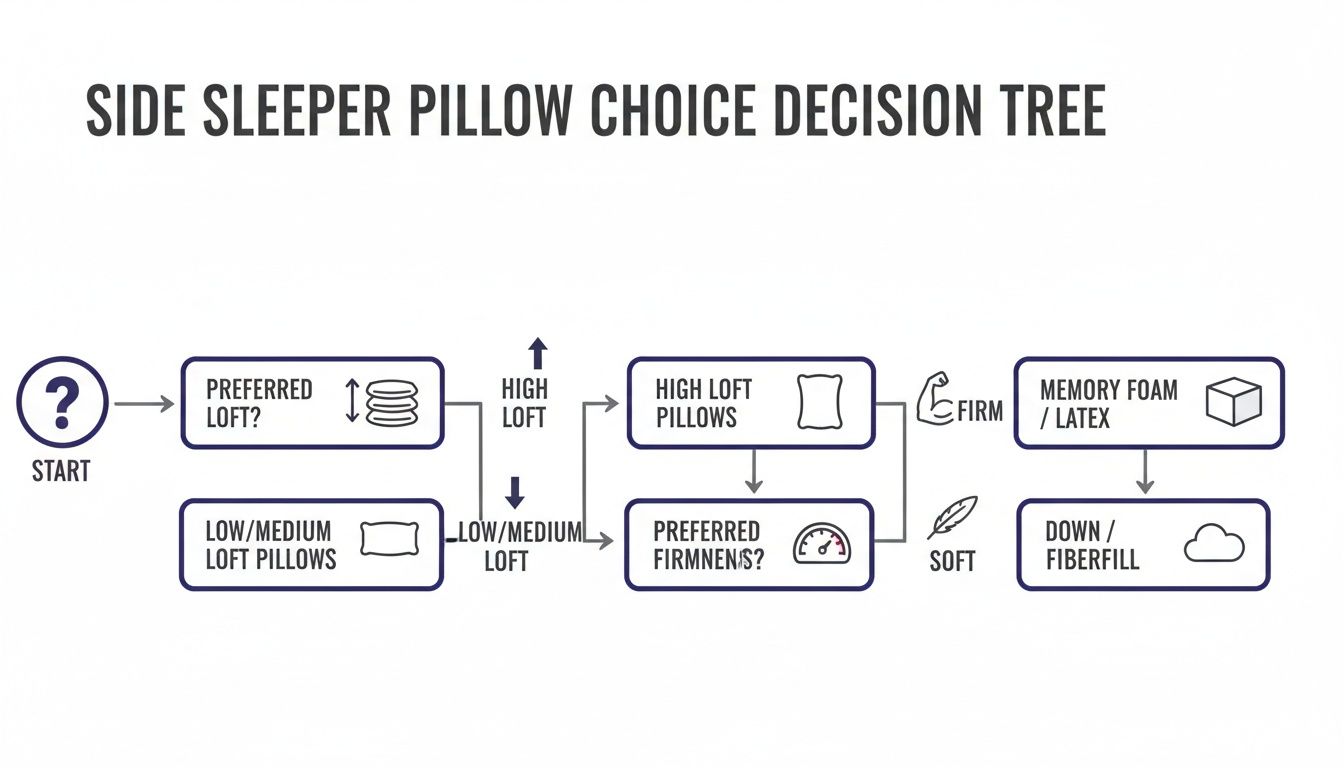
The key takeaway is to think about loft first, then find a firmness level that will maintain that height and support you all night long.
How Your Mattress Changes the Equation
Your pillow and mattress are a team—they have to work together. The firmness of your bed has a huge impact on how high your pillow needs to be, a detail that’s easy to overlook but makes all the difference.
Here’s a simple way to think about it: when you lie on a soft mattress, your shoulder sinks in. This actually makes the gap between your head and the mattress smaller. Because of this, you’ll probably need a pillow with a slightly lower loft than someone on a firm bed.
A soft, plush mattress allows your body to sink in, reducing the space your pillow needs to fill. A firm mattress offers less give, so your pillow has to do all the work to bridge a much larger gap.
If you sleep on a very firm mattress where your shoulder barely sinks in at all, you'll need a higher loft pillow to close that bigger distance. Getting this relationship wrong is why a pillow can feel amazing in the store but totally off once you get it home.
To help you get started, here's a quick chart matching your build and mattress to the right pillow specs.
Quick Guide to Pillow Loft and Firmness for Side Sleepers
Use this chart to match your body frame and mattress type to the ideal pillow specifications for better spinal alignment.
| Shoulder Width | Mattress Firmness | Recommended Pillow Loft | Recommended Pillow Firmness |
|---|---|---|---|
| Narrow/Small | Soft | Low (approx. 7 cm) | Soft to Medium |
| Narrow/Small | Firm | Medium (approx. 10 cm) | Medium |
| Average | Soft | Medium (approx. 10 cm) | Medium |
| Average | Firm | High (approx. 12+ cm) | Medium to Firm |
| Broad/Large | Soft | High (approx. 12 cm) | Medium to Firm |
| Broad/Large | Firm | Extra High (approx. 15+) | Firm |
Remember, this is a starting point. Your personal comfort is what truly matters, so use this as a guide to narrow down your options.
For those curious about specific materials, our guide on the benefits of a memory foam pillow in NZ takes a closer look at contouring support. To get an even broader understanding, this article on how to choose the right pillow for luxury sleep is a great resource. Nailing these basics will give you the confidence to assess your whole sleep setup and find exactly what you need for a pain-free morning.
Finding the Best Pillow Material for Kiwi Sleepers
Now that you’ve got a handle on loft and firmness, it’s time to look at what’s inside the pillow. The fill is the heart of it all—it dictates the feel, support, breathability, and how long it’ll last. For side sleepers here in New Zealand, getting the fill right is a massive deal for keeping our spines happy and staying comfy through our unpredictable seasons.
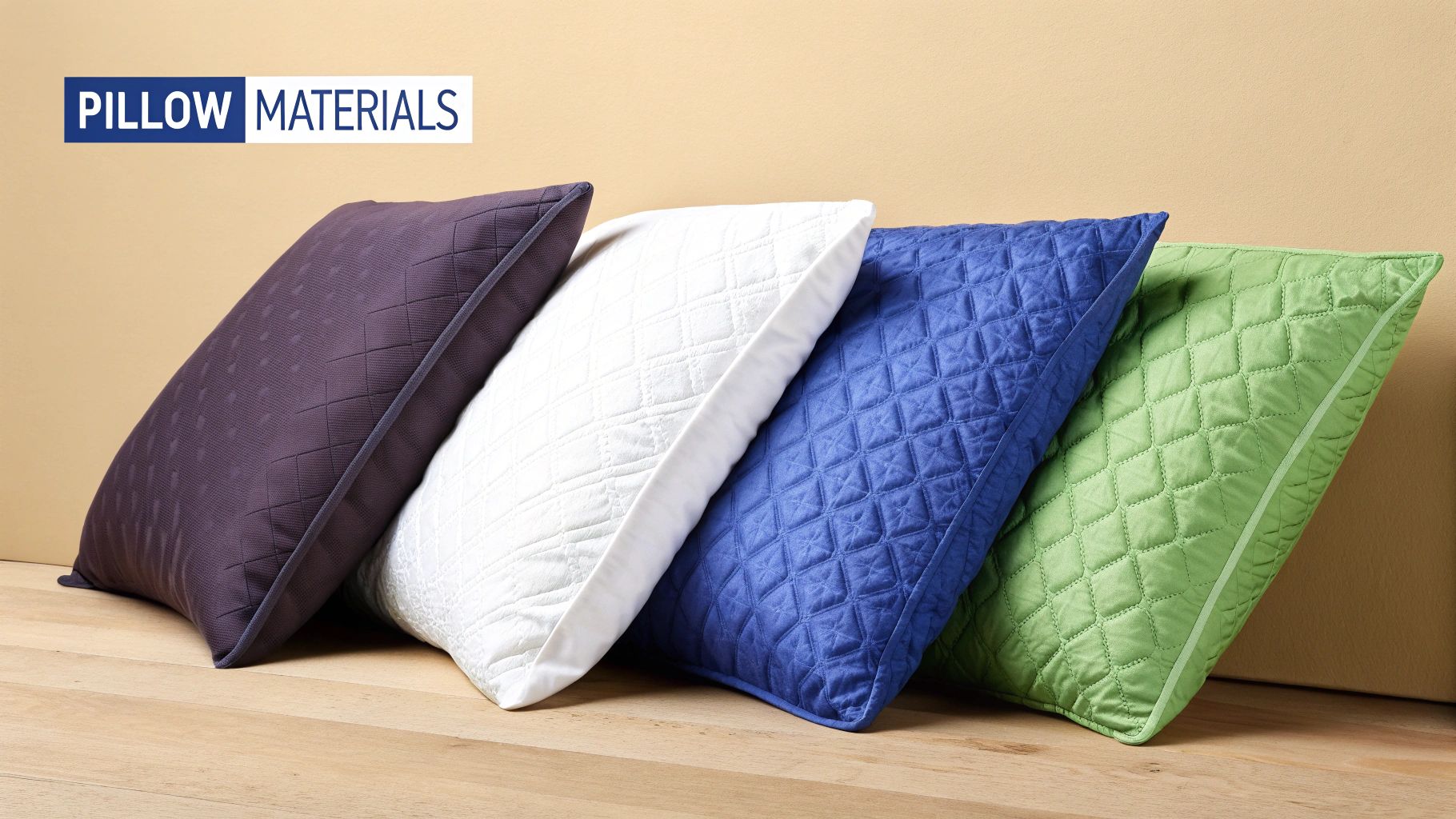
Let's dive into the most common options you'll find in Kiwi stores—memory foam, latex, down, and microfibre—and see how they actually perform for side sleeping. We'll focus on what matters in the real world, like which materials won't leave you sweating on a humid summer night or which ones provide that solid, dependable support for nagging aches and pains.
Memory Foam: Unmatched Contouring Support
Memory foam is famous for one thing: it moulds perfectly to the shape of your head and neck. It uses your body heat and pressure to create a custom-fit cradle, which is brilliant for side sleepers because it completely fills that gap between your head and the mattress. No empty space means no strain.
The classic knock on memory foam is that it can trap heat, which isn't ideal during a sticky Auckland summer. Thankfully, technology has moved on. Look for modern versions like gel-infused or open-cell memory foam, which are specifically designed to let air flow through and keep things cooler.
Natural Latex: Responsive and Breathable
If memory foam gives you a slow, sinking hug, then natural latex is more like a gentle, bouncy spring. Latex pillows feel much more responsive, instantly adjusting as you shift positions during the night. This is a huge plus for side sleepers who tend to toss and turn a bit.
Better yet, latex is naturally breathable. Its open-cell structure is fantastic for air circulation, helping you stay cool and dry. It's also inherently hypoallergenic and resistant to dust mites and mould, making it a dream for anyone with allergies. The supportive but yielding feel of a Puro Latex Classic Pillow makes it a really popular choice for Kiwis after long-lasting, cool comfort.
Down and Feathers: Traditional Softness
There's no denying the classic, luxurious softness of a down and feather pillow. For side sleepers, the trick is to find a blend with a higher ratio of feathers to down. The feathers provide the structure and firmness needed to keep the pillow from collapsing under the weight of your head.
These pillows are wonderfully malleable—you can punch, fluff, and shape them to get the support just right under your neck. The downside? They often need a good fluff-up every morning to get their loft back, and some side sleepers find they can compress too much overnight, which can throw your spine out of alignment.
Microfibre: The Versatile and Affordable Choice
Microfibre, often called a down-alternative, does a great job of mimicking that soft, airy feel of real down, but without the premium price tag. These pillows are lightweight, a breeze to look after, and usually hypoallergenic, making them a super practical option for many Kiwi families.
While microfibre is a solid all-rounder, it might not provide the specialised, firm support that some side sleepers get from memory foam or latex. If you go this route, be sure to pick a high-loft, firm-density microfibre pillow to make sure you're getting the height and resilience needed to keep your spine straight.
Your Ideal Pillow Fill: A Quick Comparison
- For Maximum Support & Pressure Relief: Memory Foam
- For Cool, Responsive & Hypoallergenic Support: Natural Latex
- For Plush, Malleable Comfort: Down & Feather Blend
- For Affordable, Easy-Care Softness: Microfibre
While specific data on our pillow preferences is a bit thin on the ground, the bigger picture shows we’re serious about our sleep. The local mattress market alone is projected to hit US$80.77 million in revenue by 2025, which shows just how much Kiwis are willing to invest in a good night's rest. You can see more on this trend over at Statista. Finding the right pillow for side sleepers in NZ is a critical piece of that puzzle, ensuring your whole sleep setup works together for your well-being.
Finding Your Perfect Pillow Match With Our Experts
Knowing the difference between loft, firmness, and fill materials is a great start, but turning that theory into the right purchase shouldn't feel like a final exam. At New Zealand Bed Company, we make finding the right pillow for side sleepers in NZ a straightforward and genuinely helpful experience. Think of us as your sleep partner, not just a retailer.
Whether you pop into one of our stores or have a browse online, our sleep experts are ready to help. They take the very concepts we've talked about in this guide and use them to ask the right questions about your sleep habits, mattress firmness, and any aches you're dealing with. It's all about narrowing down the options to what will actually work for you.
Our Curated Pillow Selection
We’ve done the hard yards for you by hand-picking a range of pillows specifically suited to the needs of side sleepers. You won't have to wade through dozens of pillows that just won't cut it. Instead, our collection focuses on materials that are proven to deliver the goods when it comes to support and comfort.
- Advanced Memory Foam: Absolutely brilliant for anyone needing that precise, moulding support to take the pressure off the neck and shoulders.
- Cooling Natural Latex: Perfect for Kiwis who tend to sleep warm. It’s responsive, breathable, and a fantastic hypoallergenic choice.
By keeping our selection focused, we make sure every pillow we recommend has earned its place. It’s all about providing lasting support and encouraging that all-important straight spine. While we're here to offer expert guidance for your perfect pillow match, feel free to explore a range of pillows to see all the options out there.
Making Better Sleep Accessible for All Kiwis
We're firm believers that a pain-free night's sleep isn't a luxury—it’s essential for your health. That's why we've built our entire business around making quality bedding accessible to every New Zealander. Our commitment is about more than just selling a great product.
We know how overwhelming it can be to choose. If you're not sure where to begin, our interactive Sleep Selector quiz is a fantastic tool. It gives you a personalised recommendation in just a few clicks, all based on how you sleep.
A great pillow is an investment in your well-being. Our mission is to remove the barriers that stand between you and the restorative sleep you deserve, offering practical solutions that fit your life and budget.
While it’s tricky to find hard data on Kiwi pillow preferences, we see the bigger picture. The huge investment in the mattress industry shows that New Zealanders care deeply about creating a supportive sleep environment. We see the right pillow as a crucial piece of that puzzle.
Services Designed for Your Convenience
To help you on your journey to better sleep, we’ve put together a range of services designed with real Kiwi households in mind.
- Nationwide Delivery: No matter where you are in Aotearoa, we'll get your new pillow to your door.
- Interest-Free Finance: Spread out the cost so you can invest in quality without the big upfront hit to your wallet.
- WINZ Quotations: We are proud to provide official quotes for Work and Income clients, helping ensure everyone has access to the supportive bedding they need.
From the moment you start looking to your first night's sleep on your new pillow, our team is here with the expertise and support you need. We’re dedicated to helping you achieve restful, pain-free sleep, one pillow at a time.
Pillow Care and Knowing When It's Time for an Upgrade
A great pillow is a genuine investment in your health, and like any good investment, it needs a bit of looking after. Treating it well doesn't just keep it hygienic; it makes sure you get the supportive, pain-free sleep you paid for, night after night.
Taking care of your pillow isn't a chore. In fact, a few simple habits can make a huge difference, especially with modern materials like memory foam or latex that have their own set of rules.
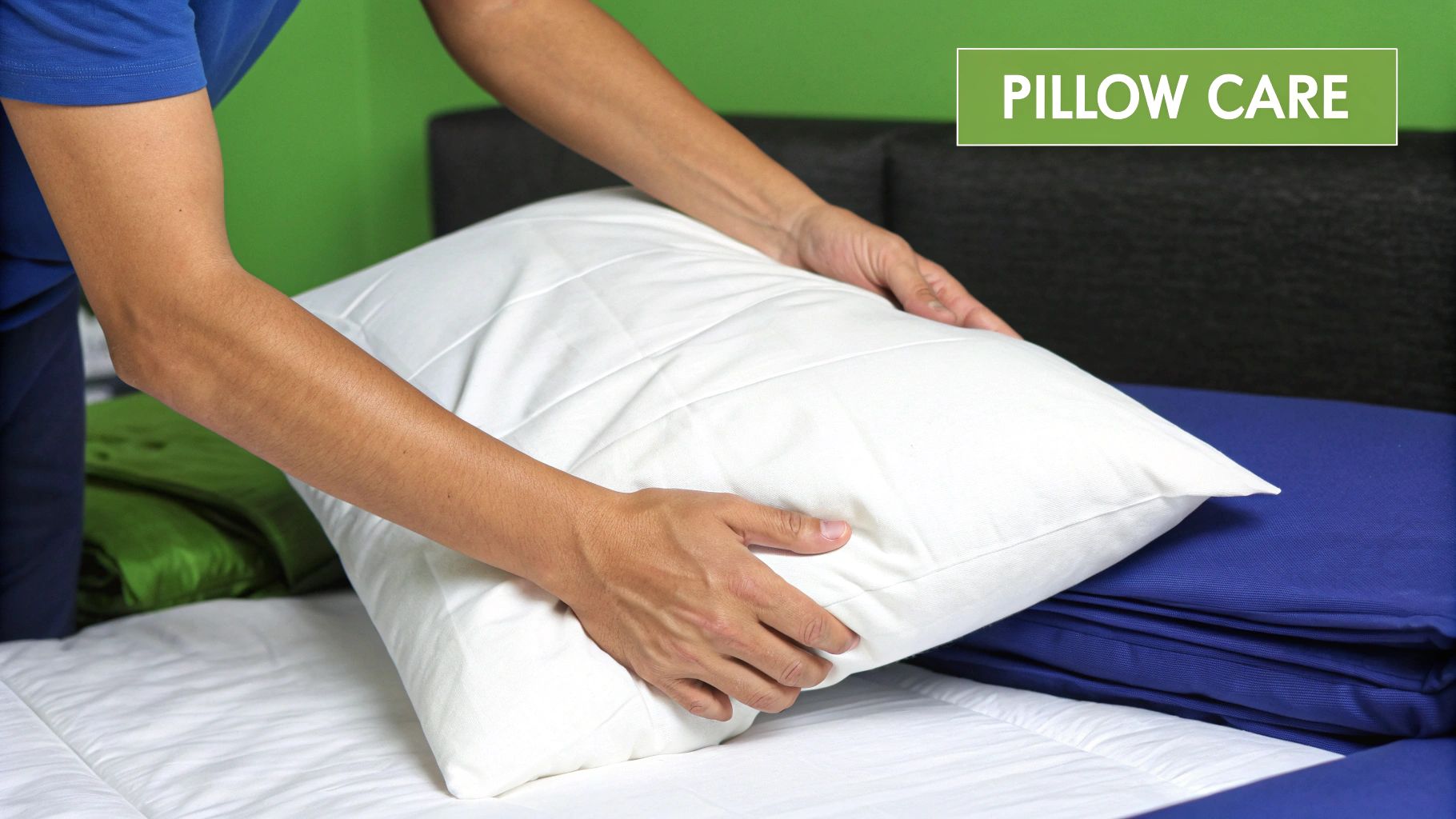
Simple Steps to Extend Your Pillow's Life
Giving your pillow a bit of regular attention will go a long way. Your first line of defence is a high-quality pillow protector. Think of it as a crucial barrier against sweat, body oils, and allergens, keeping the pillow's inner core clean and fresh. To see why this is a non-negotiable accessory, have a look at our guide to pillow protectors in NZ.
From there, it’s all about following the care instructions for your pillow’s specific material:
- Memory Foam & Latex: Keep these materials far away from your washing machine. Instead, just spot-clean any spills with a mild detergent and let the pillow air-dry completely before putting it back on the bed.
- Microfibre & Down: Most of these can be popped in the washing machine on a gentle cycle. Use a mild detergent and make sure they get thoroughly dry to prevent clumping. A great trick is to toss a couple of tennis balls in the dryer with them to help fluff them back up and restore that lovely loft.
Telltale Signs Your Pillow Needs Replacing
Even the most well-cared-for pillow has a finite lifespan. Eventually, it loses the structure and support a side sleeper desperately needs. If that old familiar neck pain starts creeping back in, or you find yourself waking up with a headache, your pillow should be the first thing you blame.
A pillow has one primary job: to keep your spine aligned while you sleep. When it can no longer hold its shape and properly support your head, it’s not just uncomfortable—it’s actively working against you. Replacing it isn’t a luxury; it’s essential for your sleep quality.
Keep an eye out for these dead giveaways that it’s time for a new one:
- It’s Lumpy or Flat: Run your hands over the pillow. If you feel lumps, bumps, or flattened areas where the filling has given up, you're getting uneven support—a one-way ticket to neck strain.
- Persistent Stains: Yellowish stains that just won't wash out are a clear sign of buildup from sweat and oils. That’s not a very hygienic environment to be resting your face on every night.
- It Fails the Fold Test: This is the classic test for a reason. Fold your pillow in half. If it just lies there limply instead of springing back to its original shape, its supportive core is officially shot.
As a general rule, you should look at replacing your pillow every 1-2 years. This ensures the pillow for side sleepers in NZ you rely on is actually doing its job—giving you that firm, high-loft support you need for a truly restorative night’s sleep.
Your Journey to Pain-Free Sleep Starts Tonight
So, there you have it. You're now armed with everything you need to know to find a genuinely game-changing pillow. Choosing the right pillow for side sleepers in NZ isn't rocket science, but it does come down to a few key things you've learned here.
The goal is simple: find a pillow with the right height (loft) and firmness to perfectly fill that space between your shoulder and head, keeping your spine straight. Whether you go for the deep contouring of memory foam or the responsive bounce of natural latex, the material should feel right for you and keep you comfortable all night.
Taking the First Step
Knowing what to look for means you can finally stop accepting neck pain and stiff shoulders as just a part of your morning routine. The power to drastically improve your sleep is literally in your hands. Don't put it off – another night spent tossing and turning on a worn-out, unsupportive pillow is a night you can't get back.
Think of this less as just buying a new pillow and more as a direct investment in your daily health and happiness. It’s a small change that makes a huge difference. We're seeing this trend across the country, with Kiwis projected to spend NZ$1.5 billion on furniture by 2026 as we all focus more on creating comfortable, healthy home environments. You can dive deeper into these New Zealand furniture market trends on polarismarketresearch.com.
Your journey to waking up refreshed and pain-free starts with a single decision. Use what you've learned here to choose a pillow that actively supports your health, rather than works against it.
Here at New Zealand Bed Company, our team is ready to help you put all this knowledge into action. We’re passionate about matching Kiwis with sleep solutions that are a perfect fit for their body, their mattress, and their budget.
Let us help you find your ideal pillow and finally transform your sleep for good.
Still Have a Few Questions?
Even with all the info, choosing the right pillow can feel like a big decision. To help you feel completely confident, we’ve answered some of the most common questions we get from Kiwi side sleepers. These are the practical, real-world answers that should clear up any last doubts.
Think of this as the final piece of the puzzle to making a great choice.
What’s the Best Pillow Material if I Get Hot at Night?
If you’re a hot sleeper, especially during those sticky summer nights, breathability is non-negotiable. Hands down, the best material for staying cool is natural latex. Its open-cell structure lets air flow freely, so heat doesn't get trapped around your head and neck.
Another fantastic option is gel-infused memory foam. This clever material is designed to actively pull heat away from your body, giving you a cooler surface to sleep on. While microfibre can be okay, it just doesn't have the active cooling power of latex or specialised gel foams. If you really struggle with overheating, it's best to steer clear of traditional, dense memory foam.
I’m a Side Sleeper, but I Toss and Turn a Lot
Sound familiar? If you favour your side but still move around, you need a pillow that can keep up. A medium-loft pillow is often the perfect compromise—it’s high enough to support you on your side but not so high that it’ll crank your neck if you roll onto your back.
The real key, though, is a material that bounces back quickly. Think natural latex or shredded memory foam. These fills adjust almost instantly as you shift, so you get constant support without having to wake up and punch your pillow back into shape. That means a much more settled night's sleep.
Is It Okay to Use Two Pillows for Side Sleeping?
We get this one a lot, and our advice is simple: please don't. Stacking two pillows is a common habit, but it’s a recipe for an unstable and inconsistent night. The pillows inevitably shift, creating a gap for your head to fall into. The result? The exact opposite of good alignment and a one-way ticket to neck pain.
It's so much better to invest in a single, high-quality pillow for side sleepers in NZ that’s the right loft and firmness for you from the get-go. That way, you get reliable, consistent support you can count on, night after night.
A single, well-chosen pillow is engineered to hold a specific height and firmness. Stacking pillows is just an unpredictable workaround that rarely gives a side sleeper the stable spinal alignment they need for truly restorative rest.
How Will I Know if My New Pillow Is Actually Working?
Switching to a new pillow always comes with a bit of an adjustment period—it could be a few nights, or even up to a week. Your body needs a little time to adapt to proper support, especially if your old pillow was doing more harm than good.
The most obvious sign you've found 'the one' is how you feel in the morning.
- Good Signs: You're waking up with less stiffness, no new aches in your neck or shoulders, and you just feel more rested. Your head should feel comfortably supported, not like it’s being pushed up or sinking into a hole.
- Warning Signs: If that stiffness, discomfort, or pain is still hanging around after a week, it's a strong hint that the pillow's loft or firmness isn't right for your body and mattress combo.
Listen to what your body is telling you. The whole point is to wake up feeling refreshed and pain-free, and the right pillow will get you there. If it’s not working after a fair go, it’s time to try something else.
At New Zealand Bed Company, our sleep experts are here to help you navigate these questions and find the perfect pillow to finally put that neck pain to bed. Check out our curated selection of supportive pillows designed for Kiwi sleepers at https://nzbeds.co.nz.