

Think of a waterproof mattress protector as the ultimate insurance policy for your bed. It’s not just another layer of bedding; it's a silent guardian, an invisible shield standing between life's little spills and your valuable mattress.
This simple addition is the single most important thing you can buy to actively preserve the life and hygiene of your bed.
Why Your Mattress Needs a Waterproof Shield
Buying a new mattress is a big deal. You’ve invested time and money into finding the perfect one for your comfort and health. The best way to make sure that investment lasts for years to come is with a quality protector. This is especially true here in New Zealand, where our homes can often feel a bit damp.
It does so much more than just stop a spilled cup of coffee from becoming a disaster. A waterproof protector creates a complete barrier, preventing any liquid from soaking deep into the foam and fabrics. Once moisture gets in there, it can lead to permanent stains, stubborn odours, and even mould.
It's More Than Just Spill Protection
While stopping accidents is the most obvious job, the real magic happens in the day-to-day protection. Every single night, we all perspire and release natural body oils as we sleep. Without a barrier, all that moisture sinks slowly but surely into your mattress.
Over time, this turns your bed into a perfect home for bacteria and allergens like dust mites, which thrive in damp, warm environments. A waterproof protector puts a full stop to that. It keeps the core of your mattress as fresh and dry as the day you brought it home.
This is a game-changer for so many people:
- Families with young kids: Makes toilet-training mishaps and sippy cup spills a complete non-issue.
- Pet lovers: A must-have for protecting your bed from muddy paws, dander, and other pet-related messes.
- Anyone with allergies: It forms a physical shield against dust mites and other allergens that love to live in mattresses.
- Everyone who values a clean bed: Your mattress stays hygienic, fresh, and free from any dampness or musty smells.
A Savvy Financial Move
Imagine having to replace a top-quality mattress just because of one bad spill. An irreversible stain can cost you thousands. For a small, one-off cost, a good protector can save you a huge amount of money and stress down the road.
It's also worth knowing that almost all mattress warranties are instantly voided if there are any stains or signs of liquid damage.
A waterproof mattress protector isn't just about keeping things clean. It’s about protecting your warranty and making sure you get every last year of life out of your mattress. It's the essential final piece of your sleep setup.
Here at New Zealand Bed Company, we see it all the time. A protector isn't an optional extra; it's a fundamental part of any new bed. It's a simple, affordable tool that brings peace of mind, better hygiene, and protects your wallet in the long run.
Understanding Protector Materials for Kiwi Homes
When you’re choosing a water proof mattress protector, it’s about more than just getting the size right. The material it’s made from has a huge impact on how you sleep every single night, especially with New Zealand's famously unpredictable climate.
Let’s be honest, nobody wants to sleep on something that feels like a plastic bag. The wrong material can be noisy, make you sweat, or just feel plain uncomfortable. We’ve all been there.
The magic behind a good modern protector is a specialised waterproof membrane. This is a super-thin, high-tech layer that stops liquids dead in their tracks. It’s bonded to a softer fabric on top, so you get the best of both worlds: serious protection and a comfortable, cosy feel. Getting your head around the different combinations is the key to finding your perfect sleep setup.
Modern Waterproof Membranes
Thankfully, we've moved on from those stiff, crinkly plastic sheets that sounded like you were sleeping on a packet of chips. Today’s protectors use advanced materials that are silent, effective, and surprisingly breathable.
You'll generally come across two main types:
- Polyurethane (PU): Think of this as a flexible, waterproof barrier that still lets air through. It’s a bit like the fabric in a good raincoat—it keeps the water out but allows sweat and moisture vapour to escape, so you don't feel clammy.
- Thermoplastic Polyurethane (TPU): This is essentially an upgraded version of PU. TPU is incredibly soft, quiet, and tough. It's also a healthier choice as it’s made without the plasticisers found in old-school vinyl.
These modern membranes are what make it possible to have a protector that’s 100% waterproof but doesn't make you overheat.
Natural Fibre Surfaces For Comfort
While the membrane is doing the hard work of waterproofing, the top layer is what your body actually feels. This is where comfort, moisture absorption, and that lovely soft touch come into play. For Kiwis who prefer a more natural feel, materials like cotton and bamboo are brilliant choices.
Cotton Terry
You know that soft, loopy texture of a good quality towel? That's cotton terry. Its looped pile is fantastic at soaking up moisture quickly, pulling it away from your body. It’s a durable, reliable option that feels both soft and familiar.
Bamboo Fabric
Bamboo is another fantastic option, loved for its silky-smooth feel and natural properties. It’s often blended with other fibres to create a really luxurious and absorbent surface. Many people find bamboo fabric feels cooler against the skin, which is a massive plus during those warmer Kiwi summer nights.
The best waterproof protectors combine a silent, breathable TPU membrane on the bottom with a soft, absorbent natural fibre like cotton or bamboo on top. This fusion provides complete protection without you even noticing it’s there.
To help you decide, here’s a quick breakdown of the most common materials.
Waterproof Mattress Protector Material Comparison
This table compares common waterproof protector materials to help you choose the best option for your needs.
| Material Type | Key Benefit | Best For | Potential Drawback |
|---|---|---|---|
| Polyurethane (PU/TPU) | Silent, breathable, waterproof barrier | All-round protection, hot sleepers | Can feel less natural than uncovered fibres |
| Vinyl (PVC) | Inexpensive and completely waterproof | Budget-conscious or temporary use | Not breathable, can be noisy and crinkly |
| Cotton Terry Surface | Highly absorbent and soft | Families, everyday comfort | Slower to dry than synthetic materials |
| Bamboo Surface | Silky-soft, cool, and naturally antibacterial | Sensitive skin, eco-conscious buyers | Can be slightly more expensive |
Ultimately, weighing up the pros and cons against your own needs—whether that's breathability for a hot sleeper or softness for a child—is the best way forward.
This simple flowchart helps frame the decision to protect your mattress as a smart move to safeguard a major household purchase.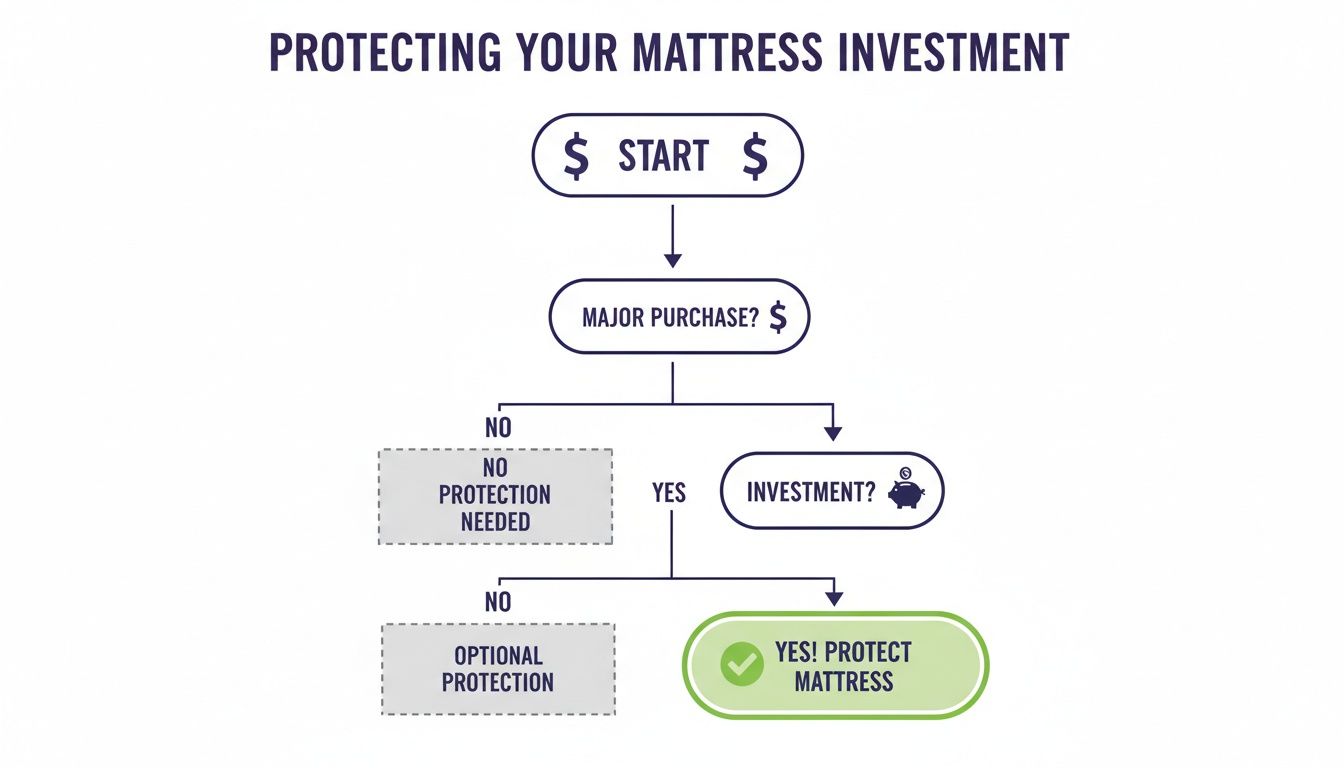
The visual makes it clear: when you treat your mattress like the long-term investment it is, protecting it becomes a no-brainer.
Here in New Zealand, where our homes can get pretty damp, these protectors are almost essential. Experts have found that up to 70% of Kiwi homes deal with high humidity in winter, which leads to a staggering 40% higher risk of mattress mould if you don't have protection.
In fact, sales of waterproof protectors shot up by 25% in 2024 alone, as more people become aware of moisture-related health issues that affect around 15% of the population each year.
The goal is to find a material that works with your mattress, not against it. Whether you've got a firm orthopaedic bed or a plush super king, the right protector will do its job silently in the background. If you're looking for tips specifically for larger beds, have a look at our guide on finding the perfect super king mattress protector.
The Hidden Health and Hygiene Benefits You Can't See
Most people think a water proof mattress protector is just for stopping spills. And while that's true, its most crucial work happens quietly, every single night, protecting you from things you can’t even see. This simple layer is one of the best things you can buy to create a genuinely healthier and more hygienic place to sleep.
Your mattress is basically a giant sponge. Without a barrier, it slowly soaks up everything – sweat, body oils, and the millions of skin cells we naturally shed. This creates a warm, damp environment deep inside the mattress fibres, which is the perfect breeding ground for bacteria, mould, and mildew. Before you know it, you’ve got a musty smell that’s impossible to get rid of.
A good waterproof protector stops all of that in its tracks. It acts as an impermeable shield, keeping your mattress core completely dry and fresh for years. It’s a small upfront investment that prevents the premature ageing of your bed and stops nasty hygiene issues before they even begin.
Creating an Allergy-Free Sanctuary
If you’re one of the thousands of Kiwis who battle allergies, a waterproof protector isn't just nice to have; it's essential. One of the biggest culprits for indoor allergies is the dust mite – a microscopic pest that absolutely loves the warm, humid conditions of an unprotected mattress.
A single mattress can become home to millions of dust mites that feast on dead skin cells. It's actually their waste particles that trigger allergic reactions, leading to sneezing, itchy eyes, and even asthma. A protector creates a physical barrier they simply can't get through.
This simple shield offers huge relief by:
- Blocking Dust Mites: It stops them from burrowing deep into your mattress to breed.
- Stopping Pet Dander: It keeps pet fur and dander on the surface, where it can be easily washed away.
- Reducing Pollen: It prevents outdoor allergens from getting trapped in the mattress fibres.
By sealing off the mattress, a waterproof protector turns your bed from an allergen hotspot into a clean, hypoallergenic sanctuary. For anyone wanting a truly restful and sniffle-free night's sleep, it’s a total game-changer.
And don't forget your pillows! Just like your mattress, they need protection too. You can find out more in our guide on the importance of pillow protectors.
Essential Protection for Every Kind of Bed
The health benefits of a mattress protector aren't just for one type of bed or person—they’re for everyone, at every stage of life. But they become even more critical in certain situations.
Take kids who are potty training. A protector gives parents peace of mind, turning a nighttime accident into a simple cleanup job instead of a mattress-ruining disaster.
This protection is also vital for modern adjustable beds. These incredible sleep systems have delicate electronic parts and motors inside that can be permanently damaged by the smallest spill. A waterproof protector is the non-negotiable insurance policy that safeguards this complex machinery, helping you avoid costly repairs or a full replacement.
Here in New Zealand, we value things that last. The growing demand for protective bedding shows just how much we want to look after our homes. In fact, of the NZ bedding market – set to be worth US$122.72 million in 2025 – waterproof mattress protectors are expected to make up a growing 18-22% share for home users. This trend is all about a smart, long-term approach to protecting our investments. You can read more about Kiwi bedding trends on Sleepyhead.co.nz.
How to Find the Perfect Fit for Your Bed
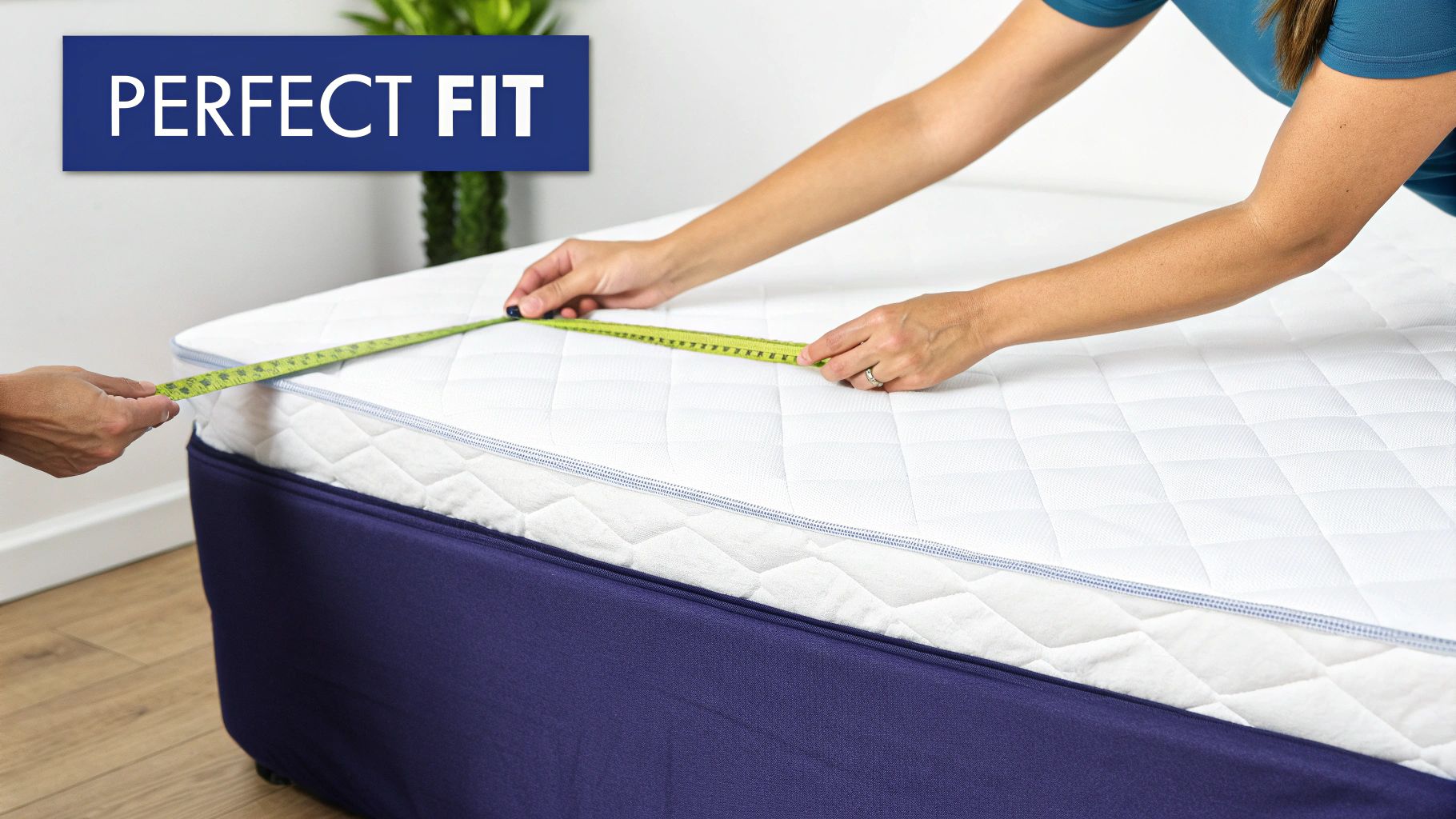
You can have the most advanced water proof mattress protector in the world, but if it doesn't fit your bed properly, it's not doing its job. A protector that’s too loose will bunch and shift under your sheets, creating uncomfortable lumps and making that annoying crinkly noise every time you move. On the flip side, one that’s too tight can be a real struggle to get on, straining the elastic until it pings off the corners. It can even compress the comfort layers of your mattress, changing the feel you paid good money for.
Getting the fit right is about more than just comfort—it’s about making sure that protective barrier stays exactly where it’s meant to be. A snug, secure fit means your protector is silent, unnoticeable, and doing its job flawlessly.
Measure Your Mattress Depth
First things first: forget about standard bed size labels for a moment and find a tape measure. While you probably know if you have a Queen or a King, the measurement people almost always forget is the mattress depth. This is absolutely crucial, especially with today's pillow-top, memory foam, and hybrid mattresses, which are often much deeper than older styles.
Simply measure from the bottom edge of your mattress straight up to the top surface. A standard protector might only have a skirt depth of 30cm, which just won't cut it for many modern Kiwi beds. If your mattress is 40cm deep, you need to find a protector with a skirt designed to comfortably stretch over that height without a struggle.
A common mistake is buying a protector based only on the bed size (e.g., Queen). Always check the maximum mattress depth the protector can handle to guarantee a smooth, bunch-free fit that won't slip off during the night.
If you are unsure of your bed’s dimensions, our guide can help you understand what size is a queen mattress and other standard NZ sizes.
Fitted vs Fully Encased Protectors
Once you've got your measurements, it's time to pick a style. There are two main types to consider, and each one offers a different level of defence.
-
Fitted Sheet Style: This is the most popular and practical choice for most homes in New Zealand. It goes on just like a fitted sheet, with an elasticated skirt that tucks securely around the sides of your mattress. It’s perfect for protecting the top and sides from everyday spills and allergens, and it's incredibly easy to whip off for washing.
-
Fully Encased Zippered Protector: Think of this as the ultimate 360-degree shield for your mattress. It completely seals the mattress inside with a zipper, offering total protection against bed bugs and severe dust mite allergies. While it takes a bit more effort to put on, its complete, impenetrable barrier is the gold standard for anyone with serious allergy concerns or worries about pests.
For most of us, the fitted style protector strikes the perfect balance between great protection and everyday convenience. It guards against all the usual suspects while being incredibly simple to live with and look after.
Taking a few minutes to ensure your protector fits perfectly makes all the difference. A good fit means it stays quiet, stays put, and keeps your mattress shielded from whatever life throws at it.
Keeping Your Protector Clean and Effective
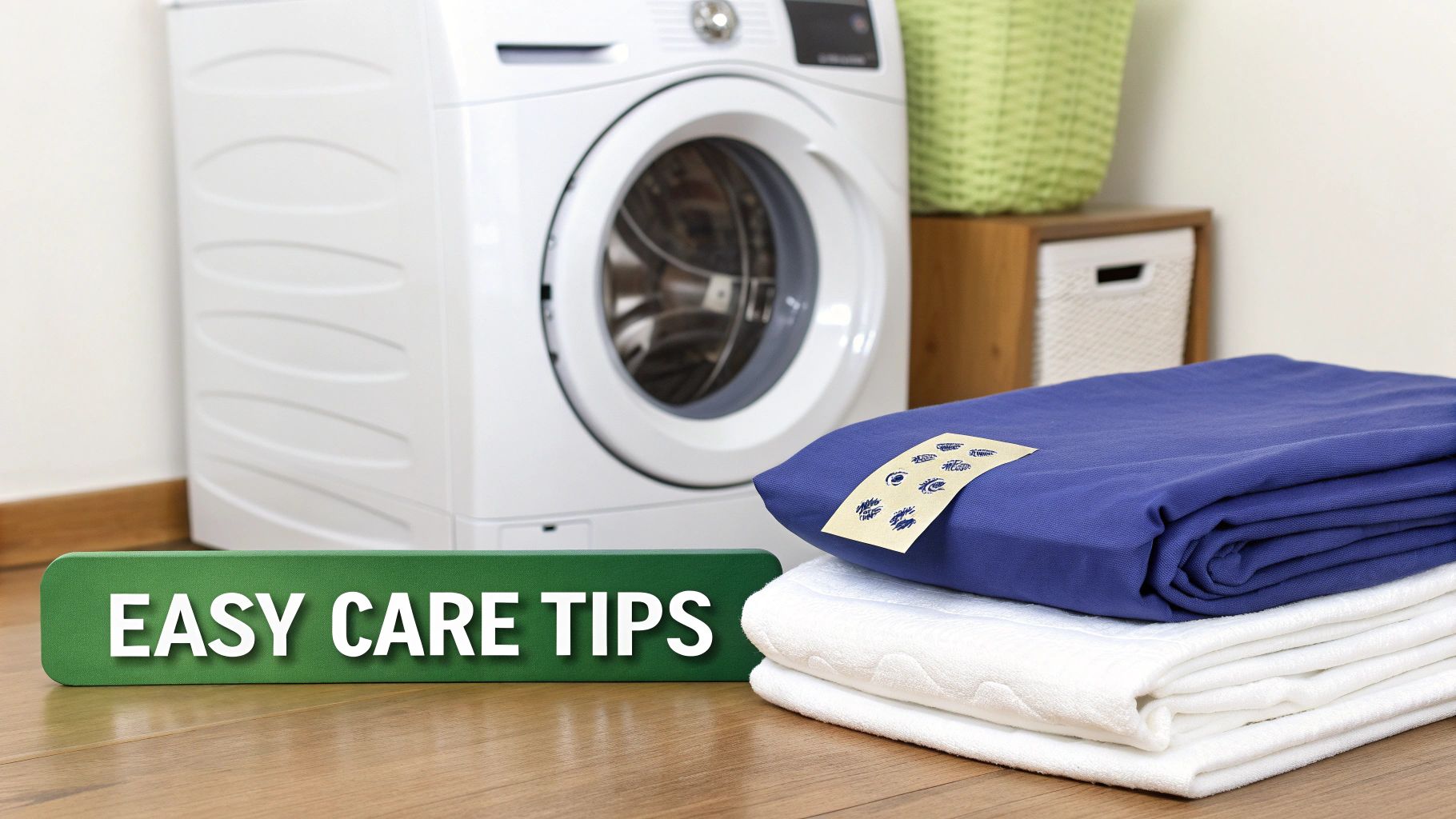
You’ve made a smart move by investing in a quality waterproof mattress protector. But to get the most out of it, proper care is non-negotiable. How you wash and dry it will directly impact its effectiveness and how long it lasts.
Think of the protector's waterproof layer like a high-tech raincoat. You wouldn't throw a performance jacket in a hot wash with harsh chemicals, as that would strip away its protective coating. Your protector deserves that same gentle handling to keep it doing its job for years to come.
Washing Your Protector: A Gentle Approach
Washing your protector is simple, but there are a few golden rules you need to follow to avoid damaging that all-important waterproof membrane.
Here’s the best way to do it:
- Prep for the Wash: Strip the protector off the bed. It’s a good idea to wash it by itself or with other light items like sheets. Avoid washing it with anything that has zippers or buttons, which could snag the fabric.
- Choose Your Settings: Always opt for a gentle or delicate cycle using cold water. Hot water is the enemy here—it can cause the polyurethane layer to blister, crack, or peel away, completely ruining its ability to stop liquids.
- Pick the Right Detergent: A mild, liquid detergent is your best bet. Powdered detergents sometimes don't dissolve properly and can leave a residue. Definitely steer clear of fabric softeners, as they can break down the waterproof barrier.
- Say No to Chemicals: Never use bleach or other harsh chemicals. They are far too aggressive and will destroy the membrane, which inevitably leads to leaks.
For those times you need a deeper sanitisation after someone's been unwell, you might find some useful information in this definitive guide on what kills viruses on surfaces.
How to Dry Your Protector Safely
Drying your protector correctly is just as crucial as washing it. High heat can cause the protective layer to shrink, melt, or become brittle and crack.
These are the safest ways to get it dry:
- Tumble Dry on Low: If you're using a dryer, make sure it’s on the lowest heat setting or a dedicated 'air dry' cycle. Tossing in a couple of clean tennis balls or dryer balls can help it dry more evenly and stop it from clumping up.
- Line Dry for a Longer Life: Honestly, the best method is to hang it on the line outside. Letting it dry in the fresh air eliminates any risk of heat damage and is the gentlest option by far, helping to extend its lifespan.
To give you a quick cheat sheet, here's a simple breakdown of what to do and what to avoid.
Mattress Protector Care Do's and Don'ts
| Action | Do | Don't |
|---|---|---|
| Washing Cycle | Use a gentle or delicate cycle. | Use a heavy-duty or normal cycle. |
| Water Temperature | Wash in cold water only. | Ever use hot or warm water. |
| Detergent | Choose a mild, liquid detergent. | Use powdered detergents, bleach, or fabric softeners. |
| Drying Method | Line dry or tumble dry on the lowest heat/air-only setting. | Use high heat in the dryer or iron the protector. |
| Washing Companions | Wash with light items like sheets. | Wash with heavy items like jeans or towels with zippers. |
Following these simple tips will ensure your protector remains a trusty guardian for your mattress.
Knowing When It's Time for a Replacement
Even with the best care in the world, a mattress protector won’t last forever. A high-quality one should give you several years of service, but daily use and regular washing will eventually take their toll.
Keep an eye out for signs that it’s ready to be retired. This could be visible cracks or peeling on the waterproof backing, or the obvious sign—it’s no longer stopping spills from getting through.
And while you’re giving your protector some attention, it might be the perfect opportunity to give your mattress a good clean. For some great tips on how to do that, check out our guide on cleaning a mattress to keep your entire sleep space feeling fresh and hygienic.
Making the Smart Choice for Your Home
So, where do you go from here? Picking the right water proof mattress protector really boils down to matching your household’s needs with the best features on the market. It’s not just about getting the size right; it’s about making a smart investment in the comfort and lifespan of your mattress. You're now armed with the knowledge to look beyond the packaging—from understanding breathable materials to knowing why a snug fit is non-negotiable.
This last step is all about applying what you've learned. Take a moment to think about who you’re buying for. Is it for a child’s bed to guard against the inevitable nighttime accident? Or perhaps you’re after a completely silent, breathable layer for your own bed that won’t make you feel hot and bothered. Your day-to-day life is the best guide to finding that perfect protector.
Your Checklist for the Perfect Protector
To pull it all together, here’s a quick mental checklist to run through before you make a final decision:
- Material Match: Look for a waterproof but breathable membrane like TPU. For the top layer, think about comfort—cotton terry is a great absorbent classic, while bamboo offers a cooler, smoother touch.
- The Right Fit: Don't guess! Measure the depth of your mattress. For most beds here in NZ, a fitted style with a deep, stretchy skirt is the way to go. It’ll hug the mattress properly and won’t bunch up under your sheets.
- Lifestyle Needs: Who is this for? If you're tackling severe allergies, a fully encased protector might be the best bet. For general family use, a high-quality fitted protector is usually the perfect all-rounder.
The New Zealand Bed Company Difference
Here at New Zealand Bed Company, we’ve done a lot of the homework for you. We’ve handpicked a range of protectors that tick all these boxes, specifically for Kiwi homes. As a 100% Kiwi-owned business that’s been helping families sleep better since 1986, we’ve learned a thing or two about what really works. Our protectors are made from durable, quiet materials that deliver breathable and dependable protection, night after night.
When you choose one of our protectors, you’re not just buying a product; you’re investing in better sleep. Making this choice for your home means thinking about the long run, much like appreciating the value of reusable and long-term protective solutions in other parts of our lives.
Choosing the right protector is the final, crucial step in safeguarding your sleep investment. It's a decision backed by local expertise and a commitment to quality that ensures a cleaner, healthier, and more comfortable rest for years to come.
We’re committed to making it easy for every New Zealander to get the mattress protection they need. That’s why we offer nationwide delivery, flexible payment options, and can even provide official WINZ quotes.
Ready to find the perfect shield for your mattress? Take a look at our curated selection by browsing our full range of waterproof mattress protectors.
Your Questions Answered
Even when you know the basics of a waterproof mattress protector, a few practical questions always come up. We get these all the time from Kiwis trying to make the right choice, so here are some straight-up answers to help you feel confident in your purchase.
Think of this as the nitty-gritty—the small details that turn a good buy into a great one.
Will a Waterproof Protector Make Me Overheat?
Not if you choose a modern one. The old-school plastic-y vinyl covers were notorious for trapping heat, but technology has come a long way. High-quality protectors, like the ones we stock at New Zealand Bed Company, use advanced, breathable membranes (often TPU) that let air flow freely.
These clever materials are designed to block liquids but allow water vapour—like sweat—to escape. The result? You stay dry and comfortable all night, without that hot, sticky feeling.
How Often Should I Wash My Protector?
As a rule of thumb, pop it in the wash every one to two months along with your other bedding. However, the golden rule is to wash it immediately after any spills or accidents. This stops stains and odours from having a chance to settle in.
If allergies are a concern in your household, washing it every couple of weeks can make a real difference by keeping dust mites and pet dander at bay. Always have a quick look at the care label, just in case.
Regular, gentle washing is the key to keeping your protector fresh and doing its job properly. Just treat it like another part of your bedding rotation, with a few extra washes thrown in when life happens.
It’s a simple habit that keeps your whole sleep setup clean and healthy.
Can I Use a Waterproof Protector on an Adjustable Bed?
Absolutely—in fact, we strongly recommend it. The motors and electronics inside an adjustable bed are really susceptible to liquid damage. A protector isn't just a good idea; it's essential insurance for your investment.
Look for a fitted-sheet style protector with a deep skirt and sturdy elastic. This design is a game-changer for adjustable beds because it hugs the mattress and moves with it, so it won’t bunch up or slip off as you change positions.
Does a Protector Change How My Mattress Feels?
A good one shouldn't. The best protectors are designed to be almost invisible under your fitted sheet. They use thin, silent waterproof layers with soft fabric surfaces, so you get all the protection without changing the feel of the mattress you carefully chose.
If you’ve invested in a memory foam or latex mattress and love that specific feel, steer clear of thick, quilted protectors. Go for a slim, high-performance model, like the ones we offer. You get maximum protection without adding a bulky layer on top.
Ready to give your mattress the protection it deserves? At New Zealand Bed Company, we offer a curated range of high-quality waterproof protectors designed for Kiwi homes. Explore our collection online or visit us in-store for expert advice.