

A wooden bed frame is more than just a place to put your mattress. It's an investment in natural warmth, serious durability, and a style that never goes out of fashion. A quality timber frame acts as the heart of a Kiwi bedroom, setting the tone for the whole space and promising years of solid, comfortable sleep.
Why Choose a Wooden Bed Frame for Your Kiwi Home
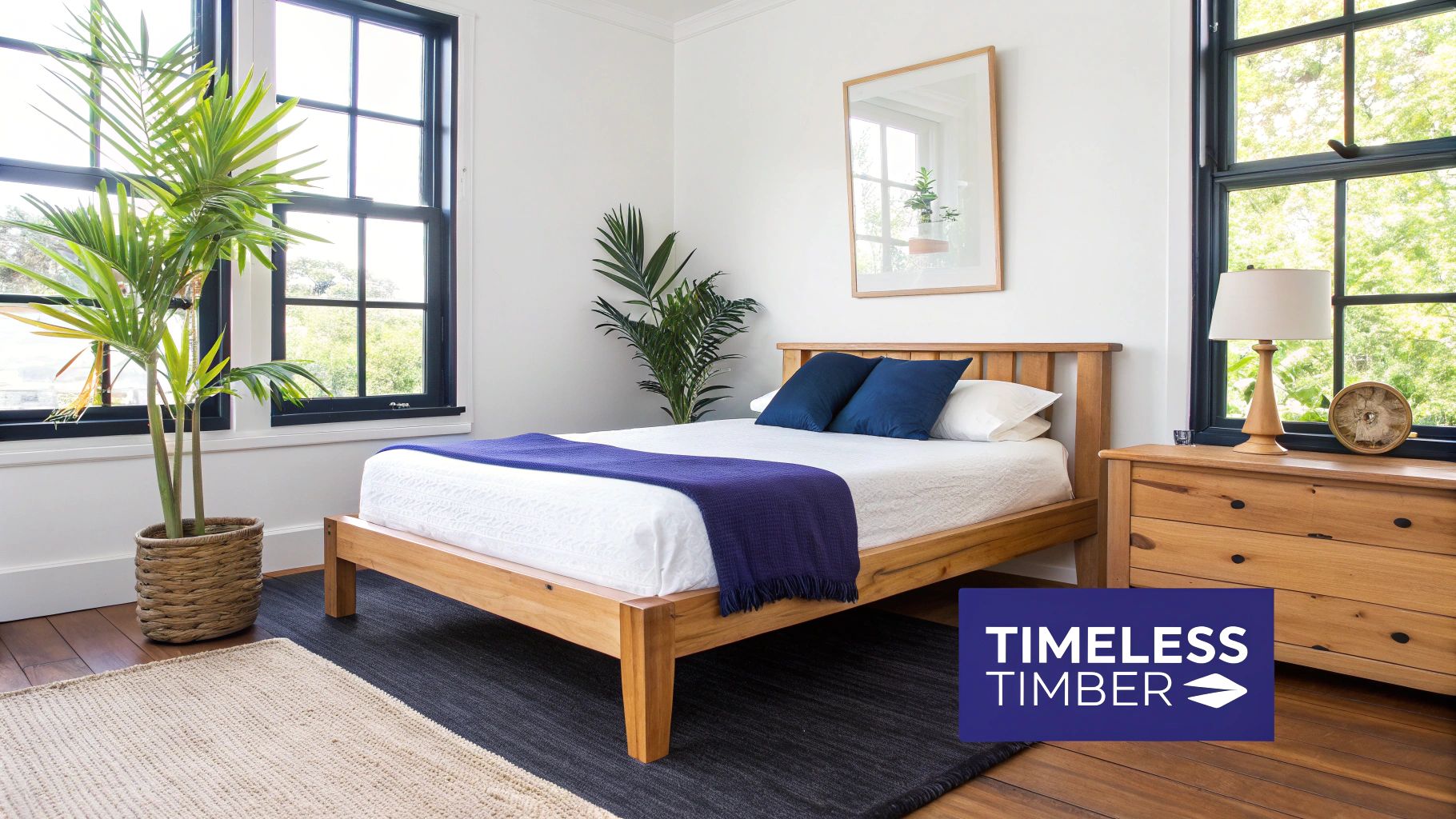
When you're setting up your sleep sanctuary, the bed frame is the foundation. Here in New Zealand, wooden frames have always been a favourite, and it's easy to see why. They bring a touch of nature inside, creating a calm, grounded feeling that you just don't get with metal or upholstery.
Think of it this way: you wouldn't build a house on a shaky foundation. Your bed is no different. A solid, well-crafted wooden frame gives your mattress the stable, supportive base it needs to do its job properly, ensuring you get a great night's sleep, every single night.
More Than Just Good Looks
Looks are one thing, but wooden bed frames deliver on a practical level, too. They’re a perfect match for the Kiwi lifestyle. Wood's natural strength means these frames are built to last, standing firm for years without the creaks and wobbles you often get from cheaper alternatives. This isn't just a purchase; it's a long-term investment in your home.
And if you’re thinking about your home's environmental footprint, it’s worth looking into sustainable interior design materials. Many of the best wooden frames are made from responsibly sourced timber, making them a choice you can feel good about.
A well-chosen wooden bed frame doesn’t just hold your mattress; it elevates your entire bedroom. It’s a functional centrepiece that combines natural beauty with the strength needed to support restorative sleep for years to come.
Setting the Stage for Better Sleep
Choosing the right bed frame is genuinely the first step towards a better night's sleep. Once you know what separates a good frame from a great one, you can make a decision you'll be happy with for the long haul.
As we dive into the different types of wood, construction details, and features, you'll get a clear picture of what to look for. By the end, you'll know exactly how to find the perfect wooden bed frame nz for your room. You can also learn more about putting together the perfect space in our guide to bedroom furniture in NZ.
Getting to Grips with Wood and Build Quality
Choosing a wooden bed frame is a bit like buying a good coat. Some are designed for hard-wearing, everyday use, while others are all about refined style. Knowing the difference is crucial if you want a frame that not only looks fantastic but will also see you through years of good sleep.
Here in New Zealand, you'll find plenty of frames made from solid pine. It's a softwood, which makes it a popular and affordable choice with a lovely rustic feel. But for something with more heft, look for hardwoods like oak, ash, or our native rimu. These are denser and tougher, meaning they'll stand up better to the knocks and scrapes of daily life.
It's not just Kiwis leaning towards natural, long-lasting furniture. The global market for wooden bed frames hit USD 25.5 billion in 2023 and is on track to reach USD 37.9 billion by 2032. It’s clear people everywhere want furniture that looks good, lasts for ages, and feels a bit kinder to the planet. You can dive deeper into these market trends over at Introspective Market Research.
What Really Makes a Bed Frame Solid?
The type of wood is only half the story. The real secret to a bed that doesn't wobble or squeak is how it’s put together. It all comes down to the joinery – the techniques used to connect each piece of timber. This is the skeleton of your bed, and it needs to be strong.
Keep an eye out for frames that use time-tested, proper woodworking joints. These are the methods craftspeople have relied on for centuries for a reason: they work.
- Mortise-and-Tenon Joints: A classic for a reason. A projecting piece of wood (the tenon) slots snugly into a hole (the mortise) in another. This creates a powerful, interlocking joint that’s incredibly resistant to twisting and movement.
- Dovetail Joints: You’ll often spot these beautiful interlocking 'pins' and 'tails' on high-quality drawers. They provide immense strength, particularly against any pulling forces.
- Reinforced Corners: A well-made frame won’t just be screwed together at the corners. Look for extra blocks of wood or sturdy metal brackets that are bolted right into the frame. This adds serious stability where it's needed most.
Pro Tip: If a bed frame is held together mainly with screws, take it as a warning sign. The movement and weight a bed endures will eventually work those screws loose, leading to that dreaded midnight squeak.
The Unsung Hero: A Sturdy Centre Rail
If you're buying a Queen bed or anything larger, a solid centre rail is an absolute must-have. Think of it as the spine of your bed. It runs from the headboard to the footboard, providing essential support right down the middle for your slats and mattress. Without it, you're pretty much guaranteed to get that dreaded mattress sag over time.
A proper centre rail should have at least one support leg touching the floor, but two is even better. This stops the rail itself from bowing under years of pressure and ensures your mattress gets the even, consistent support it needs from edge to edge. It's a small detail that makes a massive difference to your comfort and how long your mattress lasts. Next time you're looking at a wooden bed frame nz, don't forget to peek underneath – it’s worth it.
Decoding Slats, Storage, And Smart Features
So you've thought about the wood and the joinery, which are the backbone of a sturdy frame. But what really elevates a bed from just a piece of furniture to the centrepiece of a great night's sleep is the design inside the frame. I’m talking about the unsung heroes: the slats and any clever storage solutions. These aren't just bonus features; they’re fundamental to support, comfort, and keeping your bedroom the sanctuary it should be.
Think of your bed slats as the suspension for your mattress. Their primary job is to provide a solid, level platform, but they also play a massive role in ventilation. In New Zealand's climate, which can get pretty humid, airflow is non-negotiable. A good slat system allows your mattress to breathe, preventing moisture buildup that could lead to mould and mildew. It’s a simple feature that dramatically extends the life of your mattress and keeps things fresh and healthy.
This flowchart really highlights how the wood, joinery, and slats all work together to define the overall quality of a wooden bed frame.
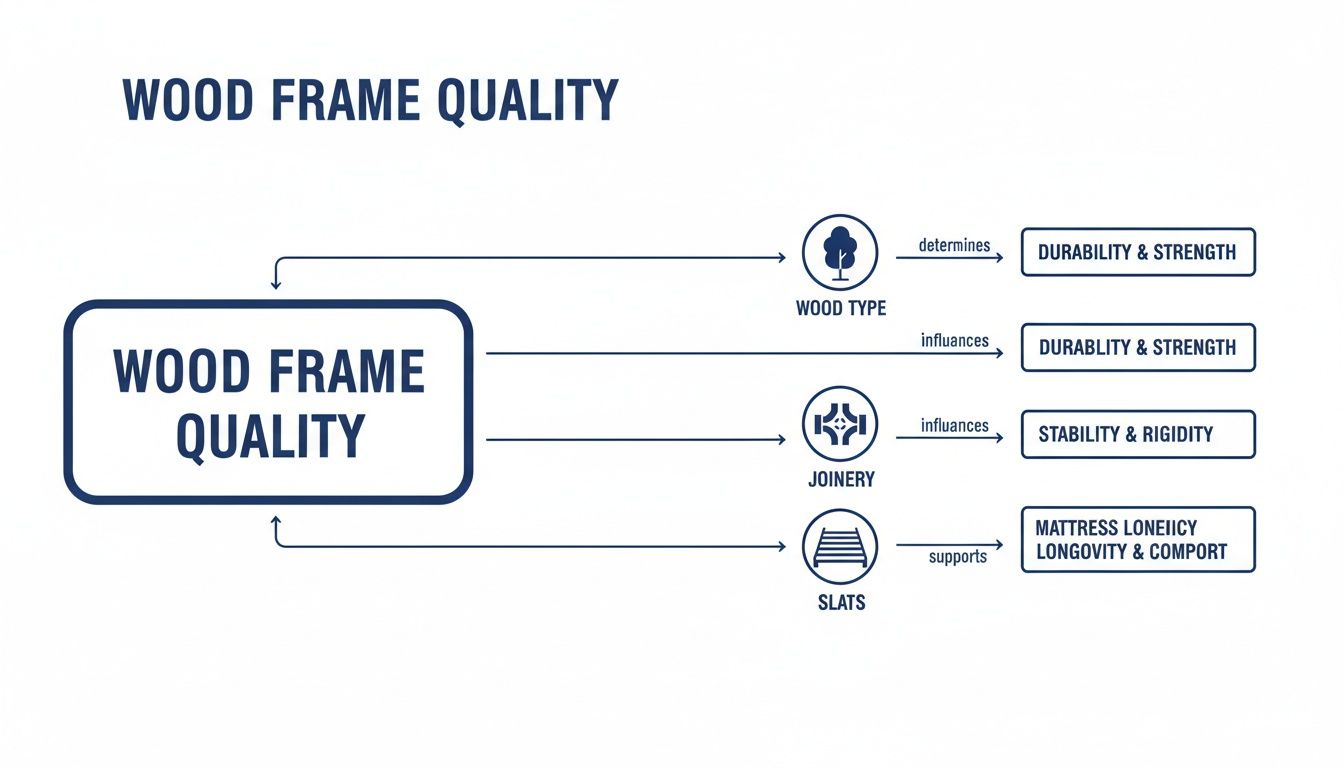
As you can see, it's a three-part harmony. Each element needs to be strong for the entire bed to perform well.
Choosing The Right Slats For Your Mattress
Here’s something many people overlook: not all slats are the same, and pairing the right kind with your mattress is crucial. Get this wrong, and you won't get the support you need, which can even affect your mattress warranty.
To help you figure it out, here's a quick breakdown of the common types you'll find.
Choosing the Right Slats for Your Mattress
| Slat Type | Description | Best For | Consideration |
|---|---|---|---|
| Solid Slats | Rigid, flat planks of wood (often pine) that create an unyielding base. | Heavier mattresses like memory foam, latex, or hybrid models that need maximum support. | Offers a very firm feel. If you prefer a softer sleep, this might not be the best choice. |
| Sprung Slats | Curved slats, usually made from a flexible wood like birch, that bow upwards. | Lighter mattresses, such as traditional innerspring models. They add a bit of bounce. | The extra "give" may not be supportive enough for heavy foam mattresses, causing them to sag. |
| Posture Slats | A premium system often with adjustable tension zones, especially around the lumbar area. | Anyone wanting customisable support, particularly those with back pain. | These are typically found on higher-end frames and come with a corresponding price tag. |
Matching the slat type to your mattress ensures you get the comfort and support you paid for. It's a small detail that makes a big difference in the long run.
Beyond the type of slat, the spacing is just as critical. Most modern mattresses sold in New Zealand require the gap between slats to be no more than 8 cm. Any wider, and you risk the mattress sagging into the gaps, which creates uncomfortable dips and could void your warranty. To get a deeper understanding, check out our guide on bed slats in NZ.
Smart Storage Solutions
Let’s be honest, in many Kiwi homes, every square metre counts. A wooden bed with built-in storage is a fantastic way to reclaim precious floor space and banish clutter for good. Looking into different bed with storage options is a smart move to make your bedroom more functional.
The most common solution is classic under-bed drawers. They’re brilliant for stashing away extra linens, blankets, or off-season clothes, keeping everything organised and dust-free but still easy to get to. For those who need to store bulkier items like suitcases or spare duvets, a gas-lift frame is a game-changer. The entire mattress platform lifts effortlessly, revealing a massive, hidden compartment underneath.
Matching Your Frame to NZ Mattress Sizes
Before you fall in love with a particular wood grain or joinery style, let's lock in the most important detail: getting the size right. It sounds obvious, but you’d be surprised how easy it is to get wrong. A mismatch between your frame and mattress can lead to everything from an uncomfortable sleep to a voided mattress warranty.
Here in New Zealand, our mattress sizes are unique – they aren't the same as in the US or UK. That means you need a frame specifically designed for our local dimensions.
Think of it this way: your mattress and frame are a team. If the frame is too small, your mattress will hang over the edges, leading to sagging and poor support. Too big, and you’ll have your mattress sliding around, creating awkward and annoying gaps. The right fit is everything for ensuring your mattress feels and performs exactly as it should.
It’s this sort of quality and attention to detail that Kiwis are looking for. In fact, the New Zealand bedroom furniture market is on track to hit around US$311.22 million by 2025, with beds making up a huge slice of that pie. We’re clearly a nation that values a good night’s sleep.
Standard NZ Bed Sizes at a Glance
Getting your head around bed sizes is thankfully pretty straightforward. Here are the standard dimensions you’ll find across New Zealand, which should make shopping for the right frame a whole lot easier.
- Single: 91 cm x 188 cm
- King Single: 107 cm x 203 cm
- Double: 137 cm x 188 cm
- Queen: 153 cm x 203 cm
- King: 167 cm x 203 cm
- Super King: 183 cm x 203 cm
When you're looking at a frame, always confirm that its internal dimensions match these mattress sizes. For a full breakdown, feel free to check out our detailed NZ Bed Size Guide.
Measuring Your Room for the Perfect Fit
Okay, so you’ve matched your frame to your mattress. The next big question is: will it actually fit in your room? A bed frame that overpowers the space can make even a decent-sized bedroom feel cramped and cluttered.
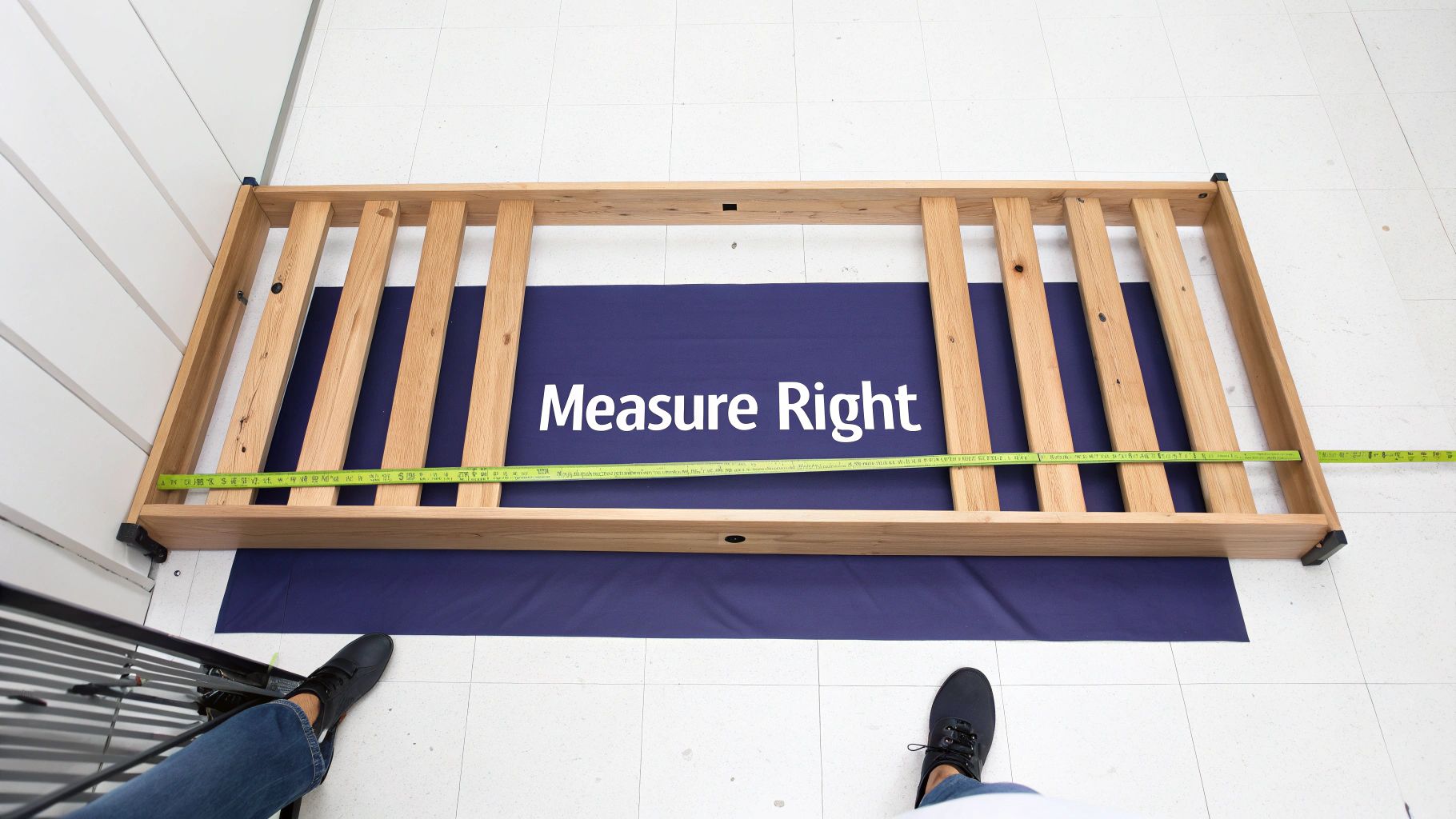
Try this tip: Before you commit, grab a tape measure and use painter's tape to mark out the bed frame's total footprint on your floor. This gives you a brilliant visual of how much real estate it will take up and whether you'll still have enough room to move around, open wardrobe doors, or pull out drawers.
Don't forget to measure the frame's external dimensions, as a chunky headboard or a statement footboard can add quite a bit to the overall length and width. As a rule of thumb, try to leave at least 60-70 cm of clear space around the sides and foot of the bed. A bit of planning now will make sure your new bed is a beautiful addition, not a bulky obstacle.
7. Price, Warranty, and Getting It Home in NZ
You've found the perfect style, picked your wood, and checked the construction. Now for the practical stuff: turning that dream bed into a reality. Thinking through the price, warranty, and delivery isn't the most exciting part, but getting it right ensures your purchase is smooth, confident, and free of headaches. It’s about more than just the price tag; it's about securing real value and peace of mind for years to come.
The cost of a wooden bed frame here in New Zealand can vary quite a bit. What's behind the price difference? It usually comes down to the type of wood, the skill involved in the joinery, and the overall level of craftsmanship. It helps to think about pricing in tiers, with each level offering a different blend of materials and durability. Knowing where your budget sits helps you find the absolute best quality for what you're ready to invest.
Kiwis have a real appreciation for quality wooden furniture. In fact, New Zealand's wooden bedroom furniture market hit a value of around $58 million, showing a strong, ongoing demand for natural, long-lasting materials in our homes. You can discover more insights about NZ's furniture market trends here.
What to Look for in Warranties and Delivery
A company's warranty is basically a statement of how much they believe in their own product. For a wooden bed frame, a good warranty should cover any structural problems with the frame and slats for at least a few years. It's always worth reading the fine print to see exactly what’s covered – keep an eye out for specifics on the joinery, the timber itself, and any hardware. Think of a solid warranty as a promise that protects your investment long after you’ve set the bed up.
Then there’s the final hurdle: getting your new bed home. Most Kiwi retailers will deliver nationwide, but it’s smart to get the details sorted beforehand.
- Delivery Costs: Is delivery included, or is it an extra charge depending on where you live?
- Assembly: Will the delivery team put it together for you, or is that a job for your weekend?
- Timing: Can you schedule a delivery time that actually works for you?
Getting clear answers to these questions avoids any nasty surprises on delivery day. To see how we handle things, you can review our shipping and delivery information.
True value isn't found in the lowest price, but in the combination of fair cost, a strong warranty, and dependable service. This ensures your new bed frame is a source of comfort, not complications.
Making a Great Bed More Affordable
Let's be honest, a high-quality wooden bed is a considered purchase. But that doesn't mean it has to be out of reach. Many New Zealand retailers offer interest-free finance options, which let you spread the cost over several months or even a couple of years. This can make it much easier to invest in a well-made, durable frame that will last, meaning you don't have to settle for less than the quality you really want.
Wrapping It Up: Finding Your Perfect Bed
Feeling confident about choosing your new wooden bed frame nz? Let's quickly recap the essentials. Think of this as your final checklist before you start shopping, making sure you're armed with all the right knowledge to make a great decision.
The goal is simple: find a bed frame that combines strength, style, and a great night's sleep. To get there, you need to zero in on three key areas: the wood itself, how it's put together, and the support system underneath. Start by looking at the timber – solid hardwoods are always going to give you the best long-term durability.
Next, get a good look at the joinery.
Keep an eye out for classic, strong joints like mortise-and-tenon. And for any Queen bed or larger, a solid centre rail isn't just a nice-to-have, it's the absolute backbone of a sturdy, long-lasting frame.
Finally, think about the slats. Solid slats offer a firmer, more rigid base that's brilliant for heavier foam mattresses, while sprung slats have a bit more flex. Just make sure the gap between slats is no more than 8 cm – this is vital for proper mattress support and to keep your warranty valid.
With these things in mind, you’re not just buying a nice piece of furniture; you're making a real investment in your sleep and comfort for years to come. Of course, the perfect frame needs the perfect partner. If you're also on the hunt for a mattress, our guide to finding a good mattress in NZ is a great place to start.
Got Questions About Wooden Beds? We've Got Answers
Choosing the right wooden bed frame can bring up a few questions. It’s a big decision, after all! To make sure you feel totally confident, we’ve put together answers to some of the most common queries we hear from Kiwis just like you.
How Do I Stop My Wooden Bed From Squeaking?
That dreaded squeak! It’s almost always caused by tiny movements where the joints meet. The best way to avoid it from the start is to choose a well-built frame with solid, tight-fitting joinery, like a mortise-and-tenon construction.
If a squeak does develop over time, the first thing to do is grab a screwdriver or spanner and tighten all the bolts. They can sometimes work themselves a little loose with everyday use. If that doesn't solve it, placing small felt or rubber pads between the slats and the frame can often absorb those little vibrations and quiet things down.
What's the Best Wood for a Bed Frame in New Zealand?
Given our often-humid climate, hardwoods are a fantastic choice. Timbers like oak or ash are naturally dense and much less likely to warp or absorb moisture from the air, which makes them incredibly durable for the long haul.
Solid pine is another popular and more budget-friendly option, but as a softwood, it’s a bit more prone to dents and scratches. Whatever you choose, the most important thing is that the timber has been properly kiln-dried and sealed with a quality finish. That’s your best defence against our changeable weather.
For Kiwi buyers, the main takeaway is this: look for materials that can handle humidity. A well-sealed hardwood frame is your best bet for preventing warping and ensuring your bed stays solid for years to come.
Will Any Mattress Work on a Wooden Slat Bed?
Most modern mattresses get on just fine with a slatted base, but there's one crucial detail you can't overlook: the slat spacing. The vast majority of mattress brands in New Zealand recommend the gap between slats should be no wider than 8 cm.
This is particularly important for foam, latex, and hybrid mattresses. Wider gaps don't provide enough support, causing the mattress to sag into the spaces. Not only is this uncomfortable, but it could also void your mattress warranty. Always double-check the mattress requirements before you commit to a frame.
How Much Upkeep Does a Wooden Bed Frame Need?
You’ll be happy to hear they are wonderfully low-maintenance. A quick dust with a soft, dry cloth is usually all you need to keep it looking pristine. For a more thorough clean, just use a slightly damp cloth and be sure to wipe it dry straight away.
To really protect your investment, especially if it’s solid wood, you could apply a good quality furniture wax or polish about once a year. This nourishes the timber and adds an extra layer of protection against moisture and minor scuffs, keeping it beautiful for a lifetime.
Ready to find a bed frame that combines timeless style with lasting quality? The team at New Zealand Bed Company has the expertise to help you choose the perfect wooden bed for your home. Explore our collection and find your foundation for better sleep at https://nzbeds.co.nz.