

When you start hunting for wooden bed frames in NZ, you'll quickly discover a huge range of choices, from affordable, solid pine to stunning native hardwoods. A quality wooden frame is more than just a purchase; it's a long-term investment in your bedroom's style and, more importantly, your sleep. It’s the silent, sturdy foundation you need for a truly restorative night.
Why a Wooden Bed Frame Is a Smart Investment
Choosing a new bed frame is about so much more than just finding a platform for your mattress. You're picking the centrepiece of your bedroom—the very foundation of your rest and relaxation. A solid timber bed frame brings a natural warmth and character that other materials just can't match.
Think about metal or particleboard frames; they can feel cold or look dated after just a few years. A good wooden frame, on the other hand, has a timeless appeal that only gets better with age. Whether your style is rustic, minimalist, or classic, there's a type of wood and a finish that will fit right into your home.
Durability You Can Count On
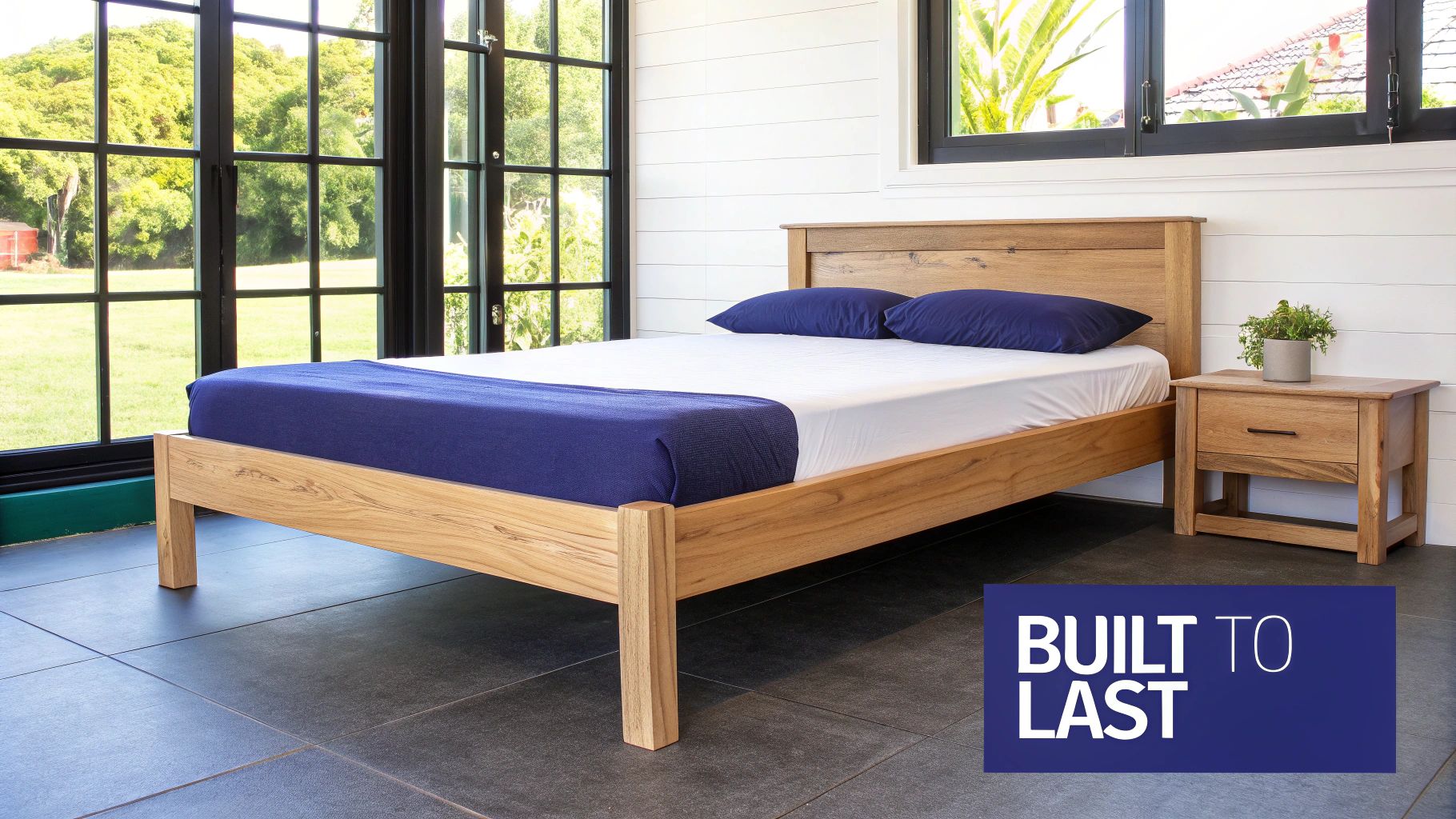
The real payoff with a wooden frame is its sheer durability. A well-built frame made from quality timber is engineered to last, giving you a stable, squeak-free base for your mattress for decades. This longevity makes it a smart financial move, saving you from the hassle and cost of replacing flimsier alternatives every few years.
This desire for solid, lasting furniture is clear in our spending habits. Here in New Zealand, the bedroom furniture market is projected to pull in around US$311.22 million in 2025, with beds making up a huge slice of that. It shows just how much Kiwis value putting their money into quality pieces for their homes. You can explore more furniture market insights from Statista if you're curious.
A solid timber bed frame isn’t just furniture; it’s a long-term commitment to better sleep and enduring style. It provides the silent, unwavering support your body needs, night after night.
A Healthier, More Natural Choice
Bringing natural materials like wood into your bedroom helps create a calmer, more restorative space. Wood is inherently non-toxic, and when it’s treated with low-VOC (Volatile Organic Compound) stains or oils, it actually helps improve your home's indoor air quality.
To really complete your sleep sanctuary, think about pairing your new frame with high-quality bedding. Check out our guide on the benefits of breathable bamboo sheets in New Zealand to learn more. The combination of a solid, natural frame and soft, comfortable bedding is the perfect recipe for a great night's sleep.
Finding Your Perfect Wooden Bed Frame Style
Once you've decided that a wooden bed is the way to go, the fun really begins: finding a style that clicks with your space and sleep habits. In New Zealand, you'll find wooden bed frames generally fall into a few distinct designs. Each one has its own personality and brings something different to the table, affecting not just the look of your room but how your mattress feels night after night.
Think of it like choosing the suspension for a car. Some styles offer a bit of flex and breathability, while others provide a firm, solid foundation. Let's break down the main contenders you'll find across NZ: slatted frames, platform beds, and divan-style bases.
The Classic Slatted Bed Frame
The slatted frame is probably what you picture when you think of a classic wooden bed. It’s built with a series of timber planks, or slats, that span the width of the frame to support your mattress. This design is incredibly popular for a very good reason—it’s a fantastic blend of support and breathability.
The gaps between the slats are a game-changer, especially in New Zealand’s often-humid climate. They let air circulate freely right under your mattress, which helps keep things cool and prevents moisture build-up. This keeps your mattress feeling fresh for years to come. Plus, the slats have a natural bit of give, working with your mattress to absorb movement and spread weight evenly.
The Minimalist Platform Bed
If you're after a clean, modern, and often lower-profile look, a platform bed is right up your alley. Instead of flexible slats, it provides a solid, flat surface for the mattress. This creates a really firm, unyielding foundation, which is exactly what some sleepers prefer.
With their simple, straight lines, platform beds are a perfect fit for minimalist or contemporary bedrooms. They look streamlined because you don't need a separate base or foundation for your mattress. This style is an especially great choice if you have a memory foam or latex mattress, as they perform at their best on a completely solid, uniform surface.
Key Takeaway: The base of your bed frame directly influences how your mattress feels. A slatted base offers flexible, breathable support that adapts to movement, while a solid platform base provides a firmer, more rigid foundation.
The Practical Divan-Style Base
While you might not see many all-wood divans, most are built around a strong timber frame. At its heart, a divan is a sturdy wooden box (often covered in fabric) that your mattress sits on. Their biggest selling point is sheer practicality. They almost always come with built-in drawers, which is a fantastic solution for under-bed storage.
This makes them a brilliant choice for smaller bedrooms where every square centimetre counts. The solid top gives you that same firm, consistent support you'd get from a platform bed, ensuring your mattress has a perfectly stable base. Keep in mind that with a divan, the headboard is often sold separately, which gives you more freedom to mix and match. You can learn more about pairing the right frame with a stylish headboard by reading our guide on choosing a queen bed and headboard.
When looking at different styles for your home, many families also love the minimalist vibe and safety of low-profile designs. If you're decorating a kid's room or just prefer sleeping closer to the ground, you can explore the unique appeal of wooden floor bed frames for some fresh ideas. Each style brings a unique feel to a room, so it's worth thinking about both looks and function.
Comparing Timber Types for Durability and Style
When you start shopping for a wooden bed frame, you'll quickly realise not all wood is created equal. The type of timber you choose has a huge impact on everything—the look, the feel, how long it will last, and of course, the price.
Think of it like this: choosing the timber for your bed is a bit like choosing the engine for a car. Some are built for reliable, everyday performance, while others are engineered for pure, long-lasting power. Let's break down the common timbers you'll find here in New Zealand so you can make a choice that's right for your bedroom and your budget.
Pine: The Reliable All-Rounder
Pine is without a doubt one of the most popular choices for bed frames in NZ, and for very good reason. It’s a softwood that grows relatively quickly, which keeps it affordable and makes it a more sustainable option.
But don't let the term "softwood" put you off. A well-constructed, solid pine frame is more than sturdy enough to give you a solid night's sleep for many years to come. Its light, natural colour and subtle grain also make it a fantastic blank canvas. You can stain it to mimic a darker, richer wood like walnut or keep it light and natural to suit a coastal or Scandi vibe. This makes it a brilliant, budget-friendly choice for a kid's room, a guest bed, or anyone who wants durability without the hefty price tag of hardwood.
Oak and Rimu: The Premium Hardwoods
If you’re looking for a true "buy it once, buy it for life" piece, then you’re stepping into the world of hardwoods like Oak and our very own native Rimu. These are the heavyweights. They're dense, incredibly strong, and built to last for generations.
Oak is famous for its striking grain patterns and its sheer resilience against scratches and dents. Rimu, a treasured NZ native, is sought after for its deep, warm colouring and unique, beautiful character. Choosing a hardwood bed frame is an investment. It’s a statement of quality and craftsmanship that will become a timeless, dependable centrepiece in your bedroom.
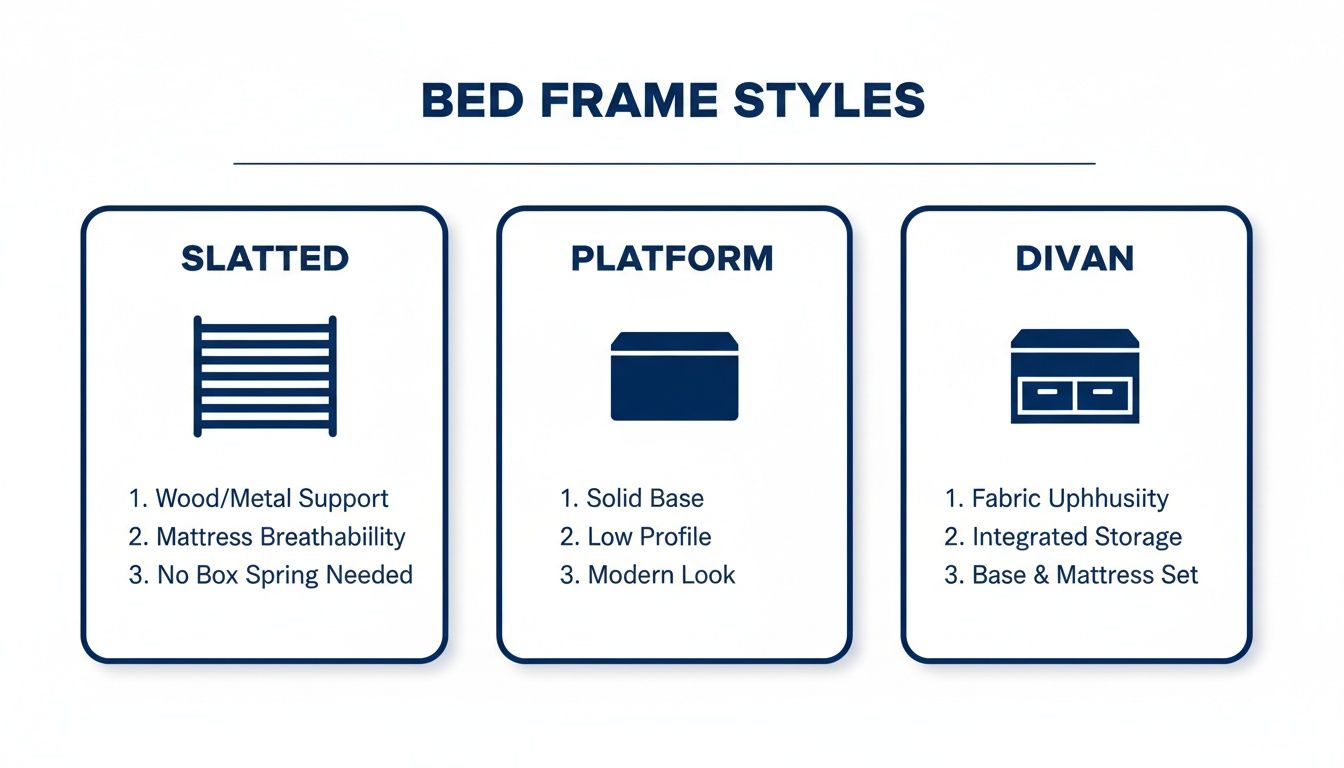
This quick comparison gives you a feel for how different bed frame styles suit different needs, whether you're focused on mattress ventilation, solid support, or extra storage.
To help you see the differences at a glance, here’s a quick rundown of the common timbers used for bed frames in New Zealand.
Comparing Common Timbers for Bed Frames in NZ
| Timber Type | Key Characteristics | Best For | Price Guide |
|---|---|---|---|
| Pine | Lightweight, affordable, versatile for staining. A softwood, but durable when solid. | Kids' rooms, guest rooms, first homes, budget-conscious buyers. | $ - $$ |
| Oak | Extremely durable, heavy, prominent grain. Resists scratches and wear. A hardwood. | Master bedrooms, "forever furniture" investment pieces. | $$$ - $$$$ |
| Rimu | Rich, warm colour, unique grain. A prized NZ native hardwood. Strong and durable. | Statement pieces, lovers of native NZ timbers, long-term investment. | $$$ - $$$$ |
| Acacia | Very hard and durable, often has a rustic look with varied grain patterns. | Those wanting a unique, character-filled look with high durability. | $$ - $$$ |
This table shows there’s a great timber option for every style and budget, from the practical and affordable to the truly luxurious.
Making a Smart and Sustainable Choice
These days, Kiwi shoppers are looking for more than just a good deal. We want furniture that is built to last and made responsibly. It's clear that sustainability and longevity are now major factors when we choose a bed frame.
In fact, there's a growing demand for modern, solid timber frames made from eco-friendly sources, especially among people who expect their bed to last 10–20 years. It's about balancing your budget with your long-term vision for your home. You can get more familiar with the best types of wood for furniture to better understand what makes each timber special.
A great example of a robust hardwood design is the locally-made Marlborough Bed Frame. It really highlights the strong construction and beautiful simplicity that makes solid timber so popular.
Ultimately, whether you go for the excellent value of pine or invest in a premium hardwood, choosing a well-made wooden frame is an investment in a healthy, durable, and stylish foundation for a great night's sleep.
How to Spot Quality Construction and Support
It’s easy to get drawn in by a beautiful design or a rich timber stain, but the real test of a great wooden bed frame is in the details you can't always see at first glance. The quality of the construction is what separates a frame that will serve you silently for decades from one that starts squeaking and sagging within a year.
Let's pull back the curtain on what really matters. We'll look at the non-negotiables, like sturdy joints and a rock-solid centre rail, so you can walk into a showroom with the confidence to spot a frame that’s genuinely built to last.
The Importance of Strong Joints
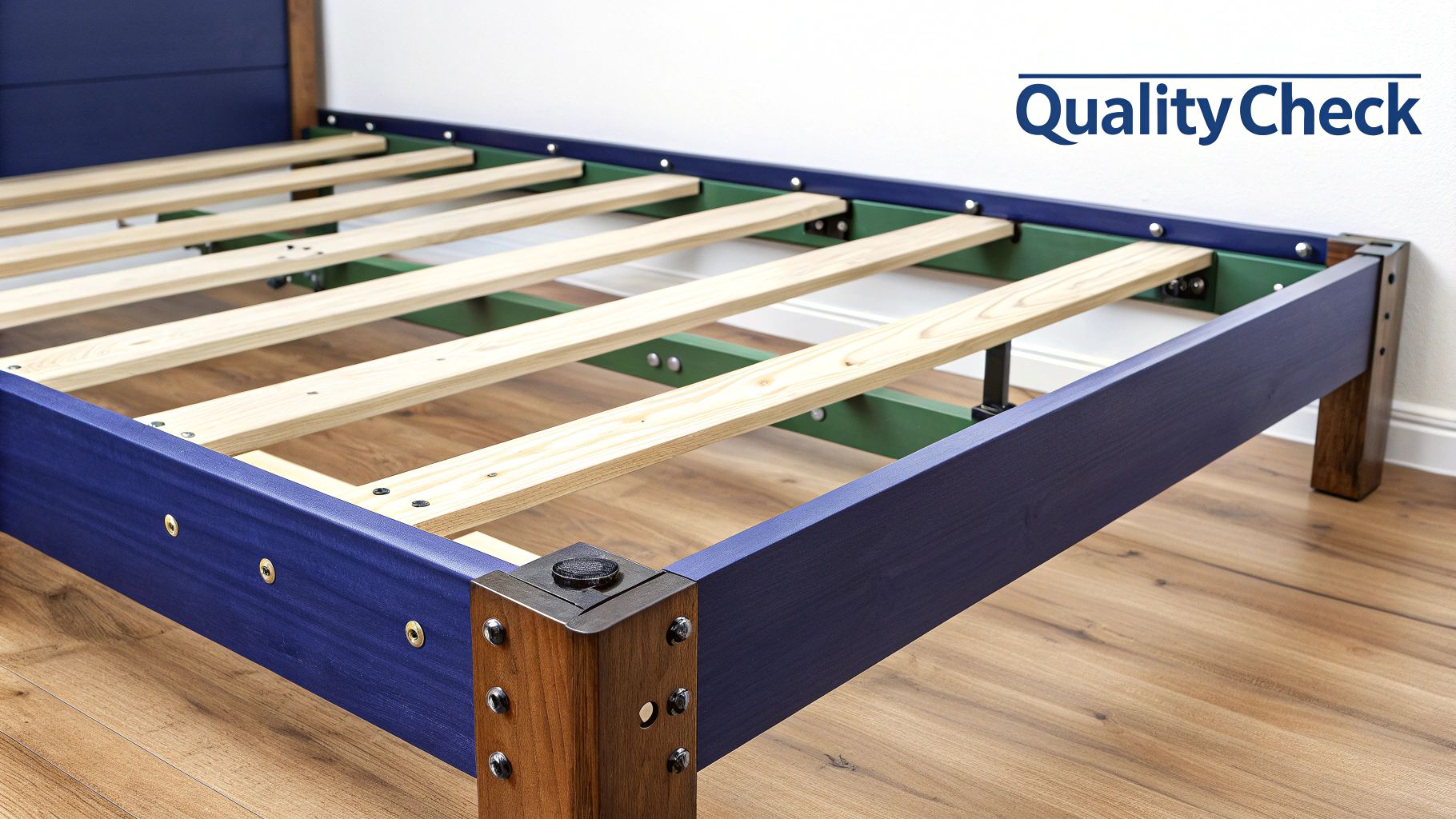
Think of the joints as the skeleton holding your bed frame together. If they're weak, the whole structure will feel wobbly and, before you know it, start making noise. That annoying squeak that develops over time? It’s almost never the wood itself, but low-quality hardware or poorly fitted joints loosening up.
When you’re out shopping, get up close and have a good look at how the frame is held together. You’re looking for robust, well-engineered connections.
- Bolts and Brackets: A high-quality frame will use substantial metal brackets and thick bolts that clamp the joints together tightly. Thin screws or flimsy corner blocks are a definite red flag.
- Mortise and Tenon Joints: This is a classic woodworking technique where one piece of timber slots perfectly into another. It creates an incredibly strong, interlocking connection that resists twisting and movement.
Don’t be shy about giving a floor model a gentle shake at the corners. A quality frame will feel completely solid and rigid, with no give or wobble.
Understanding the Centre Support Rail
For any bed size from a double upwards, a centre support rail is non-negotiable. This is the beam running down the middle of the frame from head to foot, providing crucial reinforcement right where your body weight is concentrated.
Without this central spine, the slats will inevitably start to bow downwards in the middle. This doesn't just compromise support and cause your mattress to sag prematurely; it also puts a huge amount of strain on the side rails of the frame itself.
A strong centre support rail with its own legs is the single most important feature for ensuring the long-term structural integrity of any Queen, King, or Super King bed frame. It prevents mattress sag and protects your investment.
When you're inspecting a frame, check that the centre rail is a solid piece of timber—not flimsy plywood—and that it’s supported by at least one or two legs that touch the floor. This provides a direct, unyielding transfer of weight and guarantees a stable, level surface for your mattress.
Why Bed Slats Are the Foundation of Your Comfort
If the frame is the skeleton, then the slats are the foundation your mattress rests on. Their quality, thickness, and spacing have a massive impact on both your comfort and your mattress's lifespan. In fact, poorly designed slats can even void a mattress warranty and lead to a terrible night’s sleep.
Think of slats like the floor joists in a house. If they're too thin or spaced too far apart, the floor will feel bouncy and unstable. It’s the same principle for your bed. For a really deep dive, we've put together a complete guide that explores everything you need to know about bed slats in NZ and how they affect your sleep.
Here’s what to keep an eye out for when inspecting the slats on any wooden bed frame:
- Material: Look for slats made from solid wood (like pine) or laminated veneer lumber (LVL). You'll want to avoid thin, brittle plywood.
- Spacing: Most mattress manufacturers recommend that slats be no more than 7-8 cm apart. Any wider, and your mattress can start to dip between them, causing uneven wear.
- Thickness: The slats need to be thick enough to resist bowing under pressure. A good, solid slat should be around 1.5-2 cm thick.
When you're in the store, press down firmly on the slats to check their flex. They should feel strong and supportive, not flimsy. A well-built slat system is the key to ensuring your mattress gets the ventilation it needs while providing the even, consistent support that’s essential for a restorative sleep.
Supporting Local and Sustainable Craftsmanship
Choosing a new wooden bed frame is a big deal, and for a lot of Kiwis, it’s about more than just finding the right style at the right price. It’s a chance to back our own communities and make a choice that’s a bit kinder to the planet. When you opt for a locally made or sustainably sourced bed frame, you’re not just buying furniture; you’re buying into a story of quality craftsmanship and responsible manufacturing right here in Aotearoa.
This isn’t just about feeling good, either. Buying NZ-made has real, tangible benefits. You're investing in our local economy, supporting skilled artisans and their families. It often means you're getting a product with a higher level of quality control, and sometimes, you even get the flexibility to have a piece made just for you.
Why Buying NZ-Made Matters
New Zealand's furniture scene is a little different. While there are plenty of imported options out there, there's still a strong heartland of local manufacturing. Kiwi makers often produce a whole range of furniture, from wooden to upholstered, giving them a really deep well of expertise to draw from.
This local knowledge is a huge advantage. It allows companies that both build and sell their own furniture—like us here at New Zealand Bed Company—to offer great value and even custom options. Want a taller headboard or a specific stain? A local workshop can often make that happen, turning a standard bed into your bed. There’s nothing quite like popping into a showroom to see the craftsmanship up close and chat about what you need.
Feel free to visit a local showroom to get a real sense of the quality and possibilities.
Identifying Sustainable and Ethical Timber
A beautiful hardwood bed frame feels even better when you know the timber came from a responsibly managed forest. It’s about making sure that the wood was harvested in a way that protects biodiversity and our natural habitats for generations to come.
So, how do you know if the timber is genuinely sustainable? The easiest way is to look for globally recognised certifications on the product.
- Forest Stewardship Council (FSC): This is the big one. If you see the FSC logo, it's a guarantee that the wood comes from a forest managed to rigorous environmental, social, and economic standards.
- Programme for the Endorsement of Forest Certification (PEFC): This is another leading global certification. Like the FSC, it promotes sustainable forest management and ensures the timber supply chain is ethical from start to finish.
When you choose a bed frame made from certified timber, you are actively supporting the protection of the world’s forests. It's a simple way to ensure your purchase aligns with your values.
The Best of Both Worlds: A Balanced Approach
Let's be realistic—for most of us, the final decision comes down to a balance of values, budget, and quality. While a solid, NZ-made hardwood frame is an incredible long-term investment, there are also some fantastic, high-quality imported frames made from sustainably sourced timber that offer great value and style.
The most important thing is transparency. A good retailer will always be upfront about where their frames are made and where their timber comes from. By offering a thoughtful selection of both locally crafted wooden bed frames in NZ and carefully chosen imports, you get the freedom to find a beautiful, durable bed that fits your home and your budget, without having to compromise on your principles.
Your Smart Shopper's Checklist for Buying in NZ
Alright, you’re now up to speed on what separates a great wooden bed frame from a mediocre one. Let's bring it all together with a practical checklist to guide you through the final purchase. This is where we get into the nitty-gritty—the simple but crucial details that ensure the bed you’ve chosen fits perfectly into your home and your life.
Measure Twice, Buy Once
Before you even think about adding a frame to your cart, it’s time to grab the tape measure. It’s a common mistake to forget that the bed frame itself is always bigger than the mattress it’s designed for. You need to account for its entire footprint.
Go and measure the length and width of the spot where you plan to put the bed. Make sure you leave enough space to walk around it without shuffling sideways—aim for at least 70-80 cm of clearance on the sides and at the foot. And don't forget to measure upwards! Check the height of the headboard to make sure it won’t awkwardly cover a window or clash with artwork on the wall.
Nail Down the Logistics
Once you've confirmed the frame will actually fit, it’s time to ask some practical questions. Getting these details sorted upfront can save you a world of headaches later on.
- Delivery Costs and Times: Are you in Auckland or Invercargill? Delivery fees and timelines can vary hugely across New Zealand, especially if you’re out in the wop-wops. Always get a clear quote and an estimated delivery date before you commit.
- Assembly Requirements: Is it coming flat-packed? Or is assembly included in the delivery service? If it's a DIY job, be honest with yourself about your skills and ask how complex the assembly is and what tools you'll need.
- Warranty and Returns: What does the warranty actually cover? Look for clear terms that distinguish between structural defects and just normal wear and tear. It’s also smart to check the store's return policy, just in case the frame doesn't look or feel right once it's in your space.
Takeaway Tip: Always confirm the total dimensions of the wooden bed frame nz, not just the mattress size. A chunky Super King frame can easily overwhelm a room that perfectly fits a Super King mattress.
Understanding Pricing and Payment
In New Zealand, wooden bed frames run the gamut from budget-friendly pine models to beautiful, locally crafted hardwood pieces. It’s a good idea to set a realistic budget, but try to see it as a long-term investment in your sleep. A solid frame is something you'll have for years, if not decades.
To make things easier, many Kiwi retailers offer flexible payment options. Keep an eye out for interest-free finance deals that let you spread the cost over several months or even a couple of years. This can make a higher-quality, more durable frame feel much more accessible, letting you get the bed you really want without the immediate financial hit. After all, a good night's sleep is priceless.
A Few Final Questions Answered
Even after covering all the details, you might have one or two questions still circling. That’s completely normal when you’re about to invest in something as important as your bed. Let’s tackle some of the most common queries we get from Kiwis to help you make that final decision with total confidence.
How Long Should a Solid Wooden Bed Frame Last?
Think of a well-made solid wood bed frame as a true long-term investment. Unlike its particleboard or MDF cousins that might start to give up the ghost after a few years, a solid timber frame will easily see you through 15-20 years of service, and often much, much longer if you look after it.
Hardwoods like oak or our native rimu are incredibly tough and can easily become family heirlooms. That said, a quality solid pine frame is no slouch either—it offers fantastic longevity for its price, making it a smart, durable choice for any Kiwi home.
Are Wooden Bed Frames Noisy?
This is a big one, but the short answer is no—a high-quality wooden bed frame should be whisper-quiet. Any squeaking or creaking you’ve experienced is almost always down to poor construction, not the wood itself. The real culprits are loose joints and flimsy hardware that just can't keep the frame rigid when you move.
When you’re looking at different frames, pay close attention to the joinery. You want to see robust, tight-fitting joints and solid bolts and brackets. A well-engineered frame is built for silent, stable, and unwavering support. It simply won't make a peep.
The Bottom Line: A squeaky bed isn't a wood problem; it's an engineering problem. Sturdy joints and quality hardware are the secret to a silent, solid night's sleep.
What’s the Best Type of Wood for a Bed Frame?
Honestly, the "best" wood really depends on your budget and what you're looking for in terms of style and durability. Each timber has its own unique character and benefits.
Here’s a simple breakdown:
- For ultimate durability and a premium feel: Hardwoods are king. Oak, ash, or our beautiful native rimu are top-tier choices. They’re dense, incredibly strong, and built to last generations.
- For a great all-rounder: You can't go wrong with high-quality solid pine. It’s a hugely popular option here in New Zealand for a reason—it’s strong, reliable, and can be finished in a way that suits any bedroom style.
Do I Need a Box Spring with a Wooden Bed Frame?
For the vast majority of modern wooden bed frames nz, you can skip the box spring. Most designs you’ll see today, particularly platform and slatted styles, are specifically built to support a mattress all on their own.
The slat system does the heavy lifting, providing both a solid foundation and essential airflow for your mattress. In fact, adding a box spring can sometimes make the bed uncomfortably high and might not be suitable for newer mattress types like memory foam. It's always a good idea to double-check the mattress manufacturer's recommendations, just to be sure.
Ready to find the perfect foundation for your sleep? At New Zealand Bed Company, we offer a wide range of high-quality, durable wooden bed frames to suit every style and budget. Explore our collection online today.