

To clean a mattress, you can vacuum the surface, spot-treat stains with a mild detergent solution, and deodorise it by sprinkling baking soda over the surface before vacuuming it up again. This simple method removes dust, tackles spills, and neutralises odours without harsh chemicals.
Your Practical Guide To A Fresh And Hygienic Mattress
Keeping your mattress clean is one of the best things you can do for a healthy home and a fantastic night's sleep. Here in New Zealand, we appreciate a healthy living space, and knowing how to care for such a significant investment is a must.
This guide is all about simple, practical advice that any Kiwi household can follow. We'll walk you through the essential tools you likely already own, tried-and-true cleaning solutions you can make at home, and the basic routines that genuinely make a difference. Let's get your bed feeling fresh again.
Why A Clean Mattress Matters
A clean mattress goes far beyond just looking good; it has a real impact on your health and how long your bed lasts. Over time, things like dust mites, sweat, and other allergens build up, which can interfere with your sleep and even affect your breathing.
Considering Kiwis spend about one-third of their lives in bed, keeping our sleep space clean is a no-brainer. Regular cleaning is no longer just a chore—it’s a smart way to protect what is often a multi-thousand-dollar investment in your well-being.
A consistent cleaning routine can significantly extend the life of your mattress, preventing the premature breakdown of foams and fabrics while creating a more hygienic environment for rest.
We’re focusing on DIY methods here, and you’ll find that many of the same principles for how to clean sofas upholstery can be adapted for your mattress. But even the best-cared-for mattress has a lifespan. If yours is showing serious signs of wear and tear, it might be time for an upgrade.
What You'll Need: Your At-Home Cleaning Toolkit
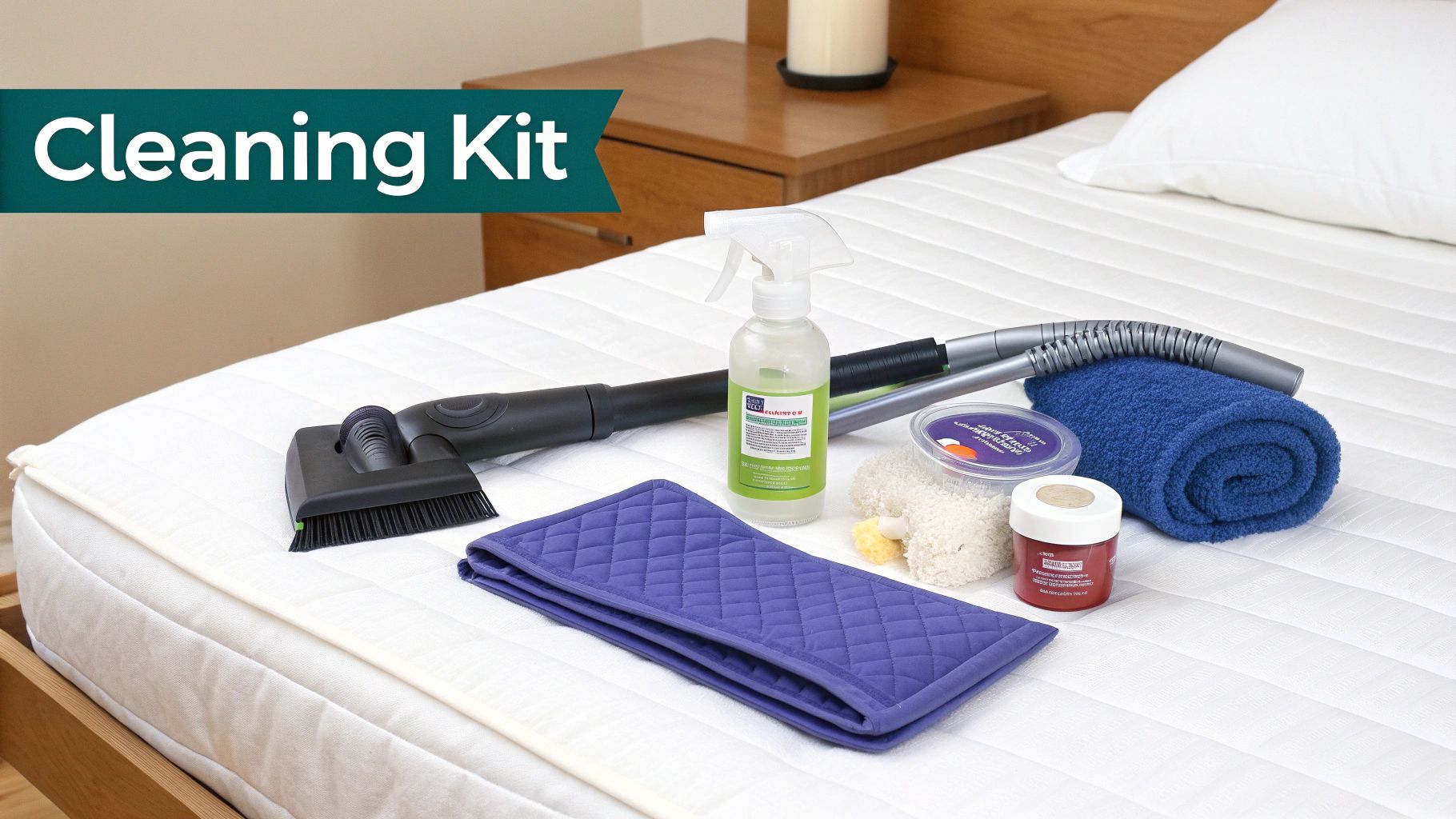
Before you start, let's get your supplies in order. The good news? You won't need to hunt down expensive, specialised products. Most of what you need for a deep mattress clean is probably already sitting in your pantry or laundry cupboard.
The most important tool in your kit is a good vacuum cleaner with an upholstery attachment. This is your first line of defence, perfect for sucking up all the dust, crumbs, pet hair, and dead skin cells that inevitably accumulate.
Next up is baking soda—the unsung hero of natural cleaning. It’s brilliant for lifting out moisture and absorbing nasty smells, leaving your mattress smelling fresh without any harsh chemicals. It's cheap, safe, and incredibly effective.
Simple Solutions for Spot-Cleaning
When it comes to tackling spills and stains, a few simple household items are all you need to get the job done.
- White Vinegar: When diluted with water, this acts as a fantastic natural disinfectant and stain lifter.
- Mild Dish Soap: A few drops in cold water can work wonders on everyday stains.
- Clean Cloths: Grab a few clean, dry cloths or towels for blotting and dabbing. Microfibre cloths are great for this.
- Spray Bottle: This is essential for applying your cleaning solution lightly and evenly, preventing you from soaking the mattress fabric.
Here’s a quick-reference table to pull everything together. You’ll find these simple, effective items are all you need to get your mattress fresh and clean right at home.
Your Essential Mattress Cleaning Toolkit
| Item | Primary Use | Pro Tip for Kiwis |
|---|---|---|
| Vacuum Cleaner | Removing surface dust, skin cells, and allergens | Use the upholstery or crevice tool for the best results. |
| Baking Soda | Deodorising and absorbing moisture | Grab a cheap sifter from The Warehouse to get a nice, even sprinkle. |
| White Vinegar | Disinfecting and breaking down organic stains | A 50/50 mix with water in a spray bottle is a go-to solution. |
| Mild Dish Soap | General spot-cleaning | Choose a clear, dye-free soap to avoid any potential colour transfer. |
| Cold Water | Rinsing and diluting solutions | Always use cold water, especially on protein stains like blood. |
| Clean Cloths | Blotting and applying solutions | Have at least 3 on hand: one for applying, one for blotting, one for drying. |
| Spray Bottle | Applying liquid sparingly | This helps control moisture, which is key to avoiding mould. |
With these items ready, you've got a complete kit for keeping your bed hygienic and fresh.
The Golden Rule: When cleaning a mattress, less liquid is always more. Gently dabbing a stain with a damp cloth is much better than pouring solution on it. Oversaturating your mattress can lead to mould and mildew deep inside, which is a much bigger problem to solve.
Of course, the best strategy is always prevention. Investing in a quality protector is the single best thing you can do for the life of your mattress. You can learn more about the benefits of using a waterproof mattress protector in NZ to shield your bed from spills and stains right from the start.
The Foundational Mattress Deep Clean Method
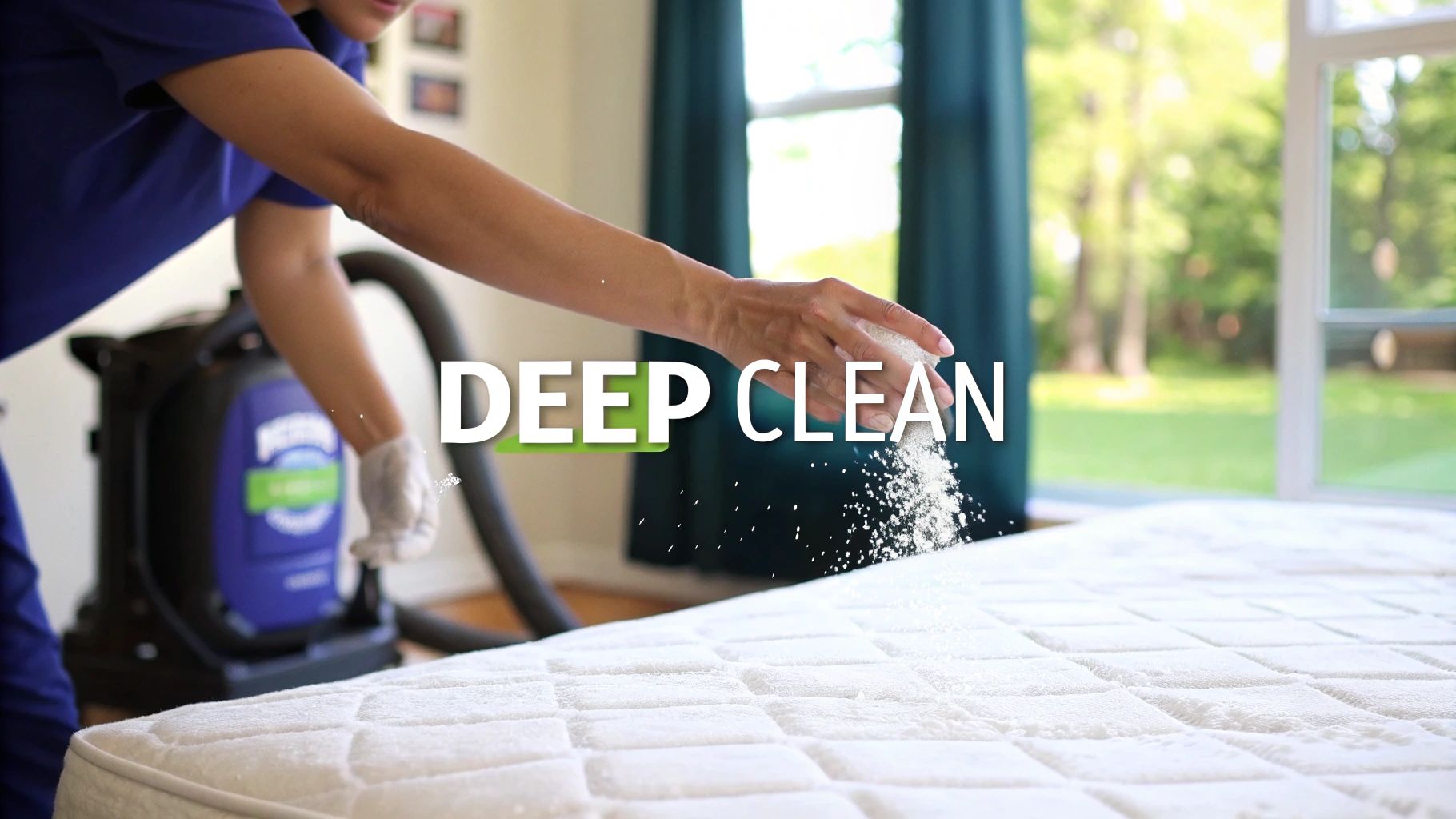
Alright, let's get hands-on with a deep cleaning method that will properly refresh your mattress and get rid of all that built-up dust and stale odours. Think of this as a six-monthly reset for your sleep space.
First things first: strip the bed completely. Get everything off—sheets, duvet cover, pillowcases, and any mattress protectors. Chuck it all in the wash on the hottest cycle the care labels will allow. This is your best weapon against dust mites and bacteria.
Preparing The Surface
With the mattress bare, it’s time to bring out the vacuum cleaner. Pop on the upholstery or crevice tool and go over every single inch of the surface. Don’t rush this part. Really get into the seams, corners, and any quilting dimples where dust and dead skin cells love to hide.
This initial vacuuming is more important than you might think. It lifts off all the surface-level gunk, which lets your cleaning solutions get deeper into the mattress fabric to tackle what’s really lurking underneath.
The Baking Soda Treatment
Now for the magic ingredient: baking soda. Grab a box and, if you have one, a sifter to help get a nice, even coating. Sprinkle a generous layer across the entire top of the mattress.
Don't be shy here; you’re looking for a fine, white blanket covering the whole thing.
Next, you need to let it work. For the best results, you'll want to leave the baking soda to sit for at least a few hours. If you can swing it, leaving it overnight is even better. This gives it plenty of time to draw out deep-seated moisture and absorb those stubborn odours from sweat and body oils.
The science behind this is pretty straightforward but incredibly effective. Baking soda is a mild alkali, which means it neutralises the acidic molecules that cause bad smells, rather than just covering them up.
Once the baking soda has done its job, it’s time to vacuum again, this time even more thoroughly. Go over the mattress slowly and methodically, making sure you suck up every last particle of powder and all the grime it's absorbed. You might need to pass over some spots two or three times to get it all.
Airing It Out
After the final vacuum, the last crucial step is to let your mattress breathe. If you can, open up the windows to get some fresh air and indirect sunlight into the room. A bit of sun is a great natural disinfectant and helps kill off any lingering bacteria.
Just be careful to avoid harsh, direct sunlight for too long, as it can damage certain materials like memory foam. A few hours of airing should be plenty to leave it feeling completely dry and fresh.
Flipping And Rotating
Before you remake the bed, give a thought to its position. Keeping up with a regular rotation schedule is one of the best things you can do to make your mattress wear evenly, stopping those annoying dips and sags from forming where you sleep.
- Rotate 180 Degrees: Simply turn the mattress so the head is now at the foot. Most modern, one-sided mattresses need this every 3-6 months.
- Flip and Rotate: If you have an older, double-sided innerspring, you’ll want to flip it over completely and then rotate it.
It’s a simple habit that makes a huge difference. If you're wondering about the ideal lifespan and care for your particular bed, you can learn more by checking out our guide on how long a mattress should last. Sticking to this deep clean routine every six months will keep your sleep environment hygienic and comfortable for years to come.
How To Remove Common Mattress Stains
Look, spills and accidents are just part of life. They happen. But they don't have to spell disaster for your mattress. The real secret to getting stains out is to act fast and use the right approach for the specific mess you're facing.
Before you do anything else, remember this: always blot, never rub. Rubbing a stain just grinds it deeper into the mattress fibres, which can damage the fabric and make your job ten times harder. And your second golden rule? Use as little liquid as possible. A damp cloth is your best friend here; a sopping wet one will only spread the problem.
Tackling Fresh Urine Stains
Whether it's from a potty-training toddler or a new puppy, urine stains are a common headache. The key is dealing with them immediately before that distinct odour has a chance to set in. Your main goal is to neutralise the acid that causes the lingering smell.
First, grab a clean, dry cloth and blot the area firmly to soak up as much of the liquid as you can. Next, mix up a 50/50 solution of white vinegar and water in a spray bottle and lightly spritz the stained area. Let it sit for about 10-15 minutes.
The acetic acid in the vinegar is fantastic because it actually breaks down the uric acid crystals in the urine. This is what properly eliminates that sharp smell, rather than just covering it up with another scent. It's a simple bit of chemistry that really works.
Once the vinegar solution has had time to work, blot the area again with a fresh dry cloth. To finish the job, sprinkle a generous layer of baking soda over the still-damp spot. Leave it for at least 8 hours—overnight is even better. The baking soda will draw out any remaining moisture and odour. Once it's bone dry, just vacuum it all up. For those really stubborn smells that just won't quit, you may need specialised techniques to permanently eliminate urine odor.
Removing Stubborn Blood Stains
With blood stains, there is one non-negotiable rule: use cold water only. Hot water will literally cook the proteins in the blood, setting the stain permanently into the fabric. You'll never get it out.
If the stain is fresh, you can often get away with just blotting it with a cloth dampened with cold water. If it’s had a chance to dry, you’ll need to step up your game.
- Make a Paste: Mix a bit of baking soda with a small amount of cold water until you have a thick, spreadable paste.
- Apply and Wait: Gently dab the paste directly onto the blood stain, making sure to cover it completely. Let it sit for at least 30 minutes, or until it's totally dry.
- Clear the Residue: Once it's dry, you can scrape off the hardened paste. Then, use a clean, damp cloth to blot away any leftover residue.
- Final Vacuum: Let the spot air-dry completely before giving it a final vacuum to finish up.
Getting Rid Of Yellow Sweat Stains
Over time, it's normal for sweat and body oils to build up, leaving behind those unsightly yellow patches on a mattress. These stains tend to be more spread out than a single spill, but they're definitely treatable.
A simple mix of hydrogen peroxide and mild dish soap works wonders here. In a spray bottle, combine one part hydrogen peroxide with one part water, and add just a couple of drops of clear dish soap. Lightly mist the yellowed areas—remember, don't saturate them.
Let that solution sit on the surface for about 20 minutes. Then, take a clean, damp cloth and gently blot the area to "rinse" it and lift the stain. For tougher, older stains, you might need to repeat the process. Afterwards, make sure the mattress dries completely by opening a window or pointing a fan at it for a few hours.
Of course, an ounce of prevention is worth a pound of cure. The single best way to protect your bed from any stain is to use a high-quality protector from day one. Investing in a good Terry Cotton Mattress Protector creates a waterproof barrier that stops spills in their tracks, making cleanup a simple matter of stripping it off and throwing it in the wash.
Tailoring Your Cleaning To Different Mattress Types
Not all mattresses are the same, and what works for a classic innerspring could spell disaster for a delicate memory foam model. To clean a mattress properly, you need to know what’s inside it. Your approach should be tweaked based on the materials to get a deep clean without causing any damage.
For a traditional innerspring mattress, your biggest enemy is moisture. The goal is to stop any liquid from soaking through to the metal coils. If moisture gets trapped, you’re looking at rust and mould—a fast track to a ruined bed. The golden rule? Use the least amount of liquid you can get away with and make absolutely sure it dries completely.
Cleaning Foam And Latex Mattresses
Memory foam, latex, and even hybrid mattresses need a much lighter touch. These materials are sensitive to harsh chemicals and too much water. Get it wrong, and you can cause the foam to break down, lose its supportive feel, and even start to crumble over time.
- Ditch the Harsh Cleaners: Stick with mild, natural solutions. Think diluted dish soap or a simple mix of vinegar and water. Strong chemical cleaners can literally destroy the foam's structure.
- Less is More with Water: Use a cloth that’s just lightly damp, not a soggy sponge. Gently blot at stains instead of scrubbing—scrubbing just forces moisture deeper into the mattress.
- Patience with Drying: Whatever you do, don't use direct heat like a hairdryer to speed things up. Just let the mattress air dry completely on its own. A fan or an open window will help get the air circulating and speed things along naturally.
For a deeper dive into foam care, have a look at our complete guide on looking after your memory foam mattress in New Zealand. Getting the care right means you’ll get years of comfort out of it.
Protecting Your Warranty And Investment
Cleaning your mattress the right way is also about protecting your wallet. Many mattresses sold here in New Zealand come with warranties averaging around 10 years, but a simple mistake—like using a harsh chemical or soaking the core—can void that warranty in an instant. Always, always check the manufacturer’s care tag first.
The rise of mattress-in-a-box brands has also changed the game a bit. Many of these now come with removable, machine-washable covers, which makes life a lot easier. You can just unzip the cover, pop it in the wash, and then do a light spot-clean on the mattress core itself if needed.
A Quick Tip: If your mattress has a plush pillow-top, treat that top layer with the same gentle care you would a foam mattress, even if the main body is innerspring. That soft layer is easily damaged by too much water.
This simple chart can help you figure out the best way to tackle common biological stains.
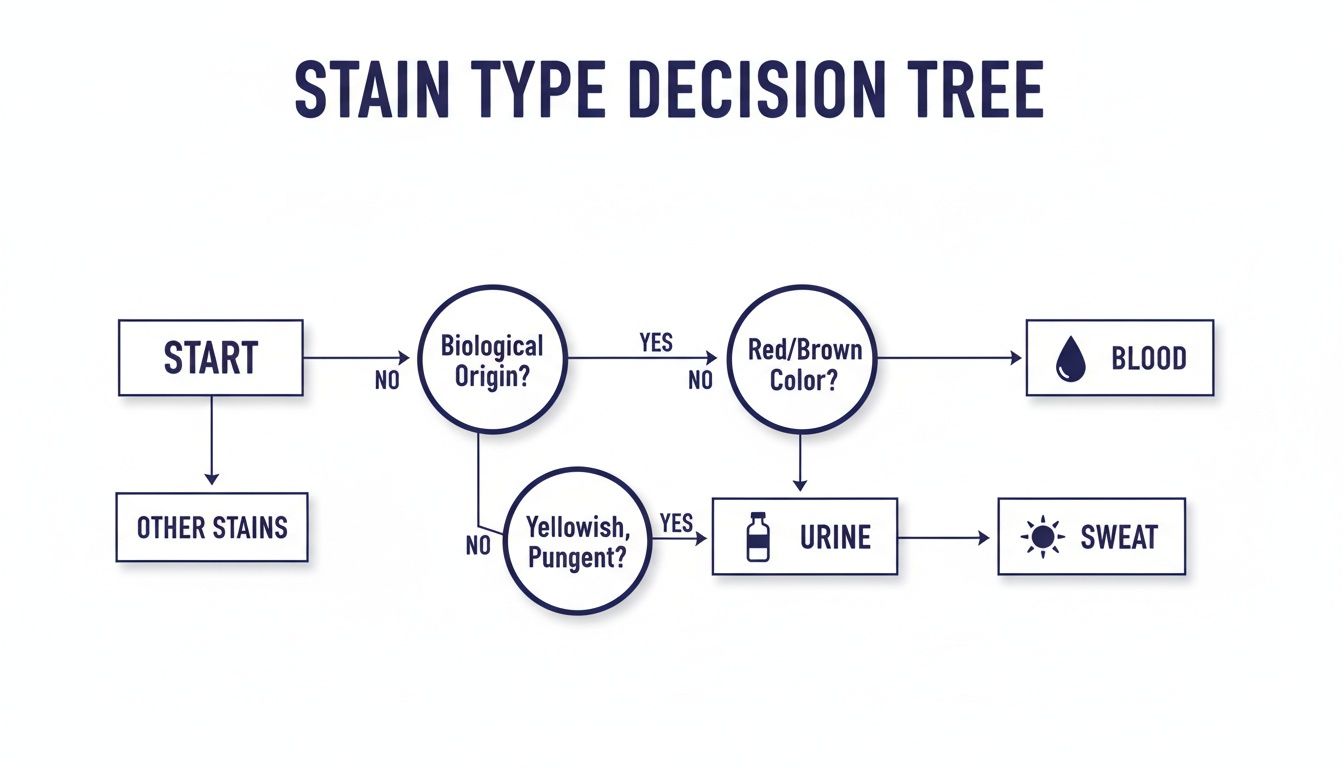
The main thing to remember is that different stains need different treatments—vinegar is your go-to for urine, cold water is essential for blood, and a mild detergent solution works best for sweat.
Smart Habits For Long-Term Mattress Care
While knowing how to rescue a mattress from a spill is a great skill to have, the real secret to a long-lasting bed is playing good defence. A few simple, smart habits can keep your mattress in top-notch condition for years, meaning you'll need to do those deep cleans far less often.
Think of it as proactive care for one of the most important pieces of furniture you own.
Your number one tool for this is a high-quality, waterproof mattress protector. Honestly, this is non-negotiable. It creates a bulletproof barrier against spills, sweat, allergens, and dust mites, stopping stains and odours before they even get a chance to set in.
Just get into the habit of tossing it in the wash with your sheets every one to two weeks. It's that simple.
Simple Daily And Monthly Routines
It’s the small, consistent things you do that make the biggest difference over time. These habits cost you nothing but a few moments and will pay dividends in the health and longevity of your mattress.
-
Air it out daily. Instead of making the bed the moment you get up, pull the duvet and blankets right back. Let the mattress breathe for at least 30 minutes. This allows any moisture from the night to evaporate, making it a much less inviting home for bacteria and dust mites.
-
Rotate it regularly. Most modern mattresses are one-sided, so you don't need to flip them. But you absolutely should rotate your mattress 180 degrees (head to foot) every three to six months. This ensures it wears evenly and prevents those annoying dips and sags from forming where you sleep every night.
Knowing When To Call The Professionals
Even with the best preventative care, sometimes a situation is just too big to handle on your own. If you've had a massive spill that has soaked deep into the mattress layers or you’re battling a persistent odour that just won't quit, it might be time to call in the experts.
Here in New Zealand, especially in more humid parts of the country like Auckland or Northland, a professional deep clean every couple of years can be a really smart move. It’s one of the best ways to combat the risk of hidden mould and keep dust mite populations under control. You can learn more about the growing popularity of professional mattress cleaning services.
For serious allergen problems or old, set-in stains, a professional clean is the way to go. They use low-moisture, high-extraction equipment that can deep-clean and sanitise your mattress in a way that’s impossible to replicate at home, all without risking damage to the internal foams and fibres.
At New Zealand Bed Company, we believe a great night's sleep starts with a clean and supportive mattress. From protectors that keep your bed pristine to a wide range of high-quality mattresses built to last, we have everything you need for a healthier sleep environment. Explore our collection at https://nzbeds.co.nz.