

Picking out a double bed frame feels like a simple task, but it's one of those decisions that quietly shapes your daily life. It's not just about what fits in your room; it's about building the foundation for great sleep and defining the look and feel of your personal space.
This guide is here to cut through the noise. We'll walk you through everything that matters—from understanding standard NZ sizing and different frame types to matching it with the perfect mattress. Let's make this an easy, confident choice.
Why Your Bed Frame Choice Matters More Than You Think
It’s easy to focus all your attention on the mattress, but the frame underneath is just as crucial. A good bed frame is the unsung hero of your bedroom, directly impacting your comfort, the lifespan of your mattress, and the overall vibe of your sanctuary. It provides the solid, stable base you need for truly restorative sleep, night after night.
Think of it like this: your mattress provides the comfort, but the bed frame is the suspension system. A cheap or poorly designed frame can squeak, sag, or shift, completely undermining the support your mattress is meant to give. Want to dive deeper into finding the perfect sleep surface? Our guide on how to choose a mattress is a great place to start.
More Than Just a Place to Sleep
Beyond its practical job, your bed frame is a huge piece of the design puzzle. It anchors the style of your entire bedroom, whether you're going for a cosy rustic look, sleek modern lines, or something in between.
Here in New Zealand, we're seeing a real shift towards bed frames that are not only stylish but also built to last from sustainable materials. It’s no surprise that the bedroom furniture market is on track to hit NZD US$311.22 million in 2025. Kiwis are clearly investing in quality for their homes, and you can explore more about these NZ furniture trends to see where things are heading.
A great bed frame does two things perfectly: it provides a stable, silent foundation for your mattress and sets the visual tone for your entire bedroom. Getting both right is the key to creating a space you love.
When you invest in the right double bed frame, you're really investing in:
- Better Sleep Quality: A solid base means consistent, even support for your mattress and, more importantly, for you.
- Long-Term Durability: A well-made frame isn't something you should have to replace every few years. It's a purchase that can easily last a decade or more.
- A Style You Love: It’s the centrepiece of your room's décor.
- Protecting Your Mattress: The right support prevents premature sagging and helps you get the most out of your mattress investment.
Getting the Right Fit for New Zealand Homes
It’s easy to get swept up in the excitement of choosing a beautiful new bed frame, but hold on a moment. Before you fall in love with a particular style, the single most important first step is to check if it will actually fit your room. It sounds simple, but getting this right from the start is the difference between a bedroom that feels like a peaceful sanctuary and one that's just plain awkward.
Think of your bed as the anchor piece of the room. Everything else—from your bedside tables and wardrobe to the path you walk to the door—needs to work around it. A frame that’s too large can quickly turn your bedroom into an obstacle course, while one that’s too small can look lost and out of place.
Understanding NZ Double Bed Dimensions
Here in New Zealand, the standard double bed frame is a classic for a reason. It's an incredibly versatile size that works perfectly in guest rooms, teenagers' bedrooms, or more compact master bedrooms. It's been a go-to for Kiwi homes for years, especially in character homes and city apartments where every square metre counts.
A standard New Zealand double bed is built to fit a mattress that is 137 cm wide and 190 cm long. It's a great size for couples who don't mind cosying up or for single sleepers who love to stretch out. As a rule of thumb, this size works best in a room that's at least 3.5 metres by 3.5 metres, which leaves enough space to move around comfortably.
But here’s something to keep in mind: the frame itself will always be bigger than the mattress. How much bigger depends entirely on the design. A slim, minimalist metal frame might only add a few centimetres to the overall footprint, whereas a chunky, solid timber frame with a headboard could add as much as 5 to 15 cm to both the width and length. For a closer look at the numbers, check out our detailed guide on double bed size in NZ (cm).
To put it all into perspective, here’s a quick comparison of the standard bed sizes you’ll find in New Zealand.
NZ Bed Size Comparison
This table gives you a quick reference for standard mattress dimensions, helping you see how a Double stacks up against other popular choices.
| Bed Size | Dimensions (cm) | Best Suited For |
|---|---|---|
| Single | 91 cm x 190 cm | Children, small guest rooms, bunk beds |
| King Single | 107 cm x 203 cm | Teenagers, taller individuals, single adults |
| Double | 137 cm x 190 cm | Single sleepers, couples in smaller rooms |
| Queen | 153 cm x 203 cm | Most couples, master bedrooms |
| King | 167 cm x 203 cm | Couples wanting extra space, larger rooms |
| Super King | 183 cm x 203 cm | Families, those who value maximum space |
Remember, these are mattress dimensions—always add a little extra for the frame itself when you're measuring your room.
Measuring Your Space Like a Pro
Ready to see what will work in your space? Grab a tape measure and let’s map it out properly. Taking a few minutes to do this now will save you a massive headache later.
- Get the Room's Core Measurements: First, measure the total length and width of your bedroom. Write these numbers down so you don't forget.
- Check for Obstacles: Next, think about anything that opens. How much space does your main bedroom door need to swing fully open? What about wardrobe doors or drawers on a chest? There's nothing worse than finding out your new bed blocks you from getting to your clothes.
- Map Out Your Walkways: You need room to breathe! Aim for at least 70-80 cm of clear space around two or three sides of the bed. This is crucial for making the bed easily and for walking around without feeling like you're squeezing past everything.
These three factors—Comfort, Style, and Space—are the pillars of a good bed choice.
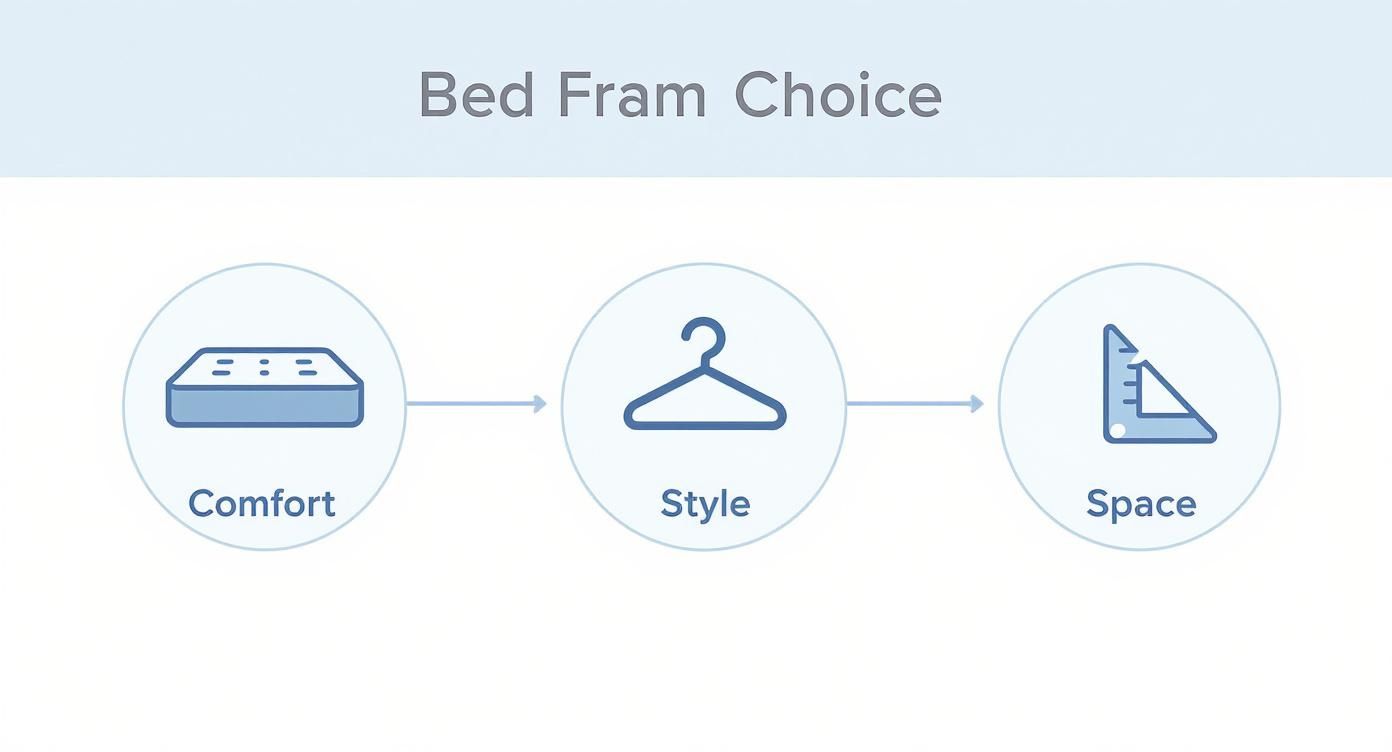
While your comfort and personal style are key, the physical space you have is the one non-negotiable you have to solve for first.
Pro Tip: Use masking tape or old newspapers to mark out the exact dimensions of the bed frame on your floor. This is a brilliant way to visualise how much room it will really take up. You can walk around it and get a true feel for the room's new layout before spending a dollar.
Comparing Frame Materials and Support Types
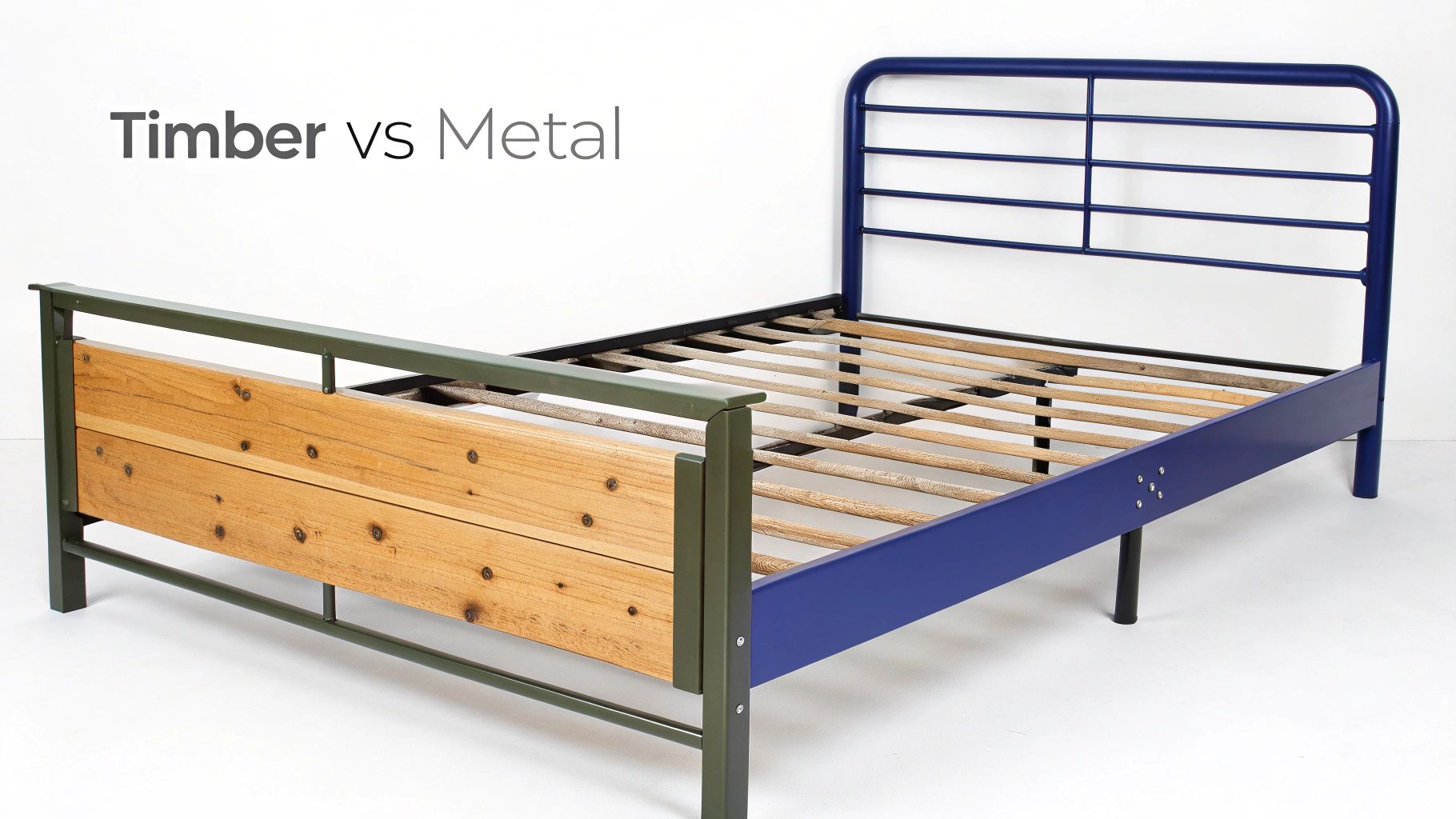
Once you've settled on the perfect size, the real fun begins: choosing the material and support system for your double bed frame. This decision is about more than just looks; it shapes the comfort, feel, and even the lifespan of your mattress. In New Zealand, the two main contenders are classic timber and sleek metal, each bringing its own distinct personality to a bedroom.
The material you choose is the first thing anyone will notice. A solid timber frame instantly adds a sense of warmth and natural charm, fitting in beautifully with everything from rustic farmhouse decor to minimalist Scandi styles. Metal frames, on the other hand, offer clean lines and slender profiles that are perfect for creating a modern, industrial, or contemporary vibe.
Beyond the style, the material is also a promise of durability. A well-crafted timber frame is built to last for years, offering robust support with timeless appeal. Likewise, quality metal frames provide incredible strength and resilience, often with a more budget-friendly price tag.
Timber Frames: The Natural Choice
There’s a reason timber bed frames are such a mainstay in Kiwi homes. They provide a classic, sturdy foundation that feels both inviting and grounded. Whether you prefer a rich, dark stain or a light, natural finish, wood offers a huge range of versatility to match your personal style.
It's no surprise the global wood bed frame market was valued at a massive USD 25.5 billion in 2023. With the double bed frame segment leading the way, its popularity continues to grow. This enduring appeal really speaks to its perfect blend of strength and style. If you're curious, you can discover more insights about the wood bed frame market and see why it remains a top pick around the world.
Metal Frames: Modern and Minimalist
If your taste leans more contemporary or industrial, a metal bed frame is a brilliant option. They’re generally lighter than timber frames, which makes them much easier to move and assemble. Plus, their slim design can help make a smaller room feel more open and spacious.
Metal frames are also incredibly durable and low-maintenance. You won't have to worry about the pests that can sometimes affect wood, and they are often a more affordable choice, giving you a strong, reliable base without breaking the bank.
A bed frame's structure is just as important as its material. Think of the support base as the unsung hero that works with your mattress to deliver a great night's sleep. The two main types you'll encounter are slatted bases and solid platform bases.
Each support type interacts with your mattress in a different way, so getting to know the difference is the key to creating your perfect sleep setup.
Slatted Bases for Breathability
Most timber and metal frames come with a slatted base, which is simply a series of wooden planks that run across the frame. The design has one massive advantage: airflow. The gaps between the slats let air circulate freely around the mattress, helping to regulate your temperature and prevent moisture from building up.
You’ll generally find two types of slats:
- Solid Slats: These are completely rigid, offering a very firm and unyielding foundation for your mattress.
- Sprung Slats: These have a gentle upward curve, which gives them a bit of flex. This creates a slightly softer, more cushioned feel and helps absorb movement when you shift during the night.
Platform and Divan Bases for Solid Support
A platform or divan base gives your mattress a solid, uniform surface to rest on. This kind of foundation provides a consistently firm feel from edge to edge, which many people find is better for spinal alignment.
Divan bases are particularly clever when it comes to saving space. They often come with built-in drawers or an ottoman-style lift-up top, turning the entire area under your bed into valuable storage. If you're looking to make the most of your room, our guide to bed frames with storage has some fantastic ideas. This solid base is also the ideal partner for heavier mattresses, like memory foam or latex, ensuring they get the even, all-over support they need.
Double Bed Frame Material and Type Showdown
Choosing between timber, metal, and a divan base comes down to balancing aesthetics, functionality, and budget. To make it easier, we've broken down the key differences in this handy table.
| Frame Feature | Timber Frame | Metal Frame | Divan Base |
|---|---|---|---|
| Aesthetics | Warm, natural, classic. Versatile styles from rustic to modern. | Sleek, modern, industrial. Can make a room feel more open. | Upholstered, streamlined look. Often coordinated with a headboard. |
| Durability | Very high, especially with solid wood. Can last a lifetime. | Excellent. Resistant to pests and warping. | High. Solid construction designed to support heavy mattresses. |
| Support Feel | Typically firm (solid slats) or cushioned (sprung slats). | Usually firm with solid slats, offering rigid support. | Consistently firm across the entire surface. |
| Maintenance | Requires occasional dusting. May need tightening over time. | Very low. Easy to wipe clean. | Low. Fabric may need occasional vacuuming or spot cleaning. |
| Key Advantage | Timeless style and natural warmth. | Lightweight, affordable, and modern appeal. | Excellent support and built-in storage potential. |
| Best For | Those wanting a classic, long-lasting centrepiece for their bedroom. | Modern aesthetics, smaller rooms, and budget-conscious buyers. | Anyone needing extra storage and a solid, firm mattress foundation. |
Ultimately, there's no single "best" option—only what's best for you. Whether you fall for the rustic charm of timber, the sleek lines of metal, or the practical brilliance of a divan, understanding these differences will help you invest in a bed frame that you'll love for years to come.
Pairing Your Frame with the Perfect Mattress
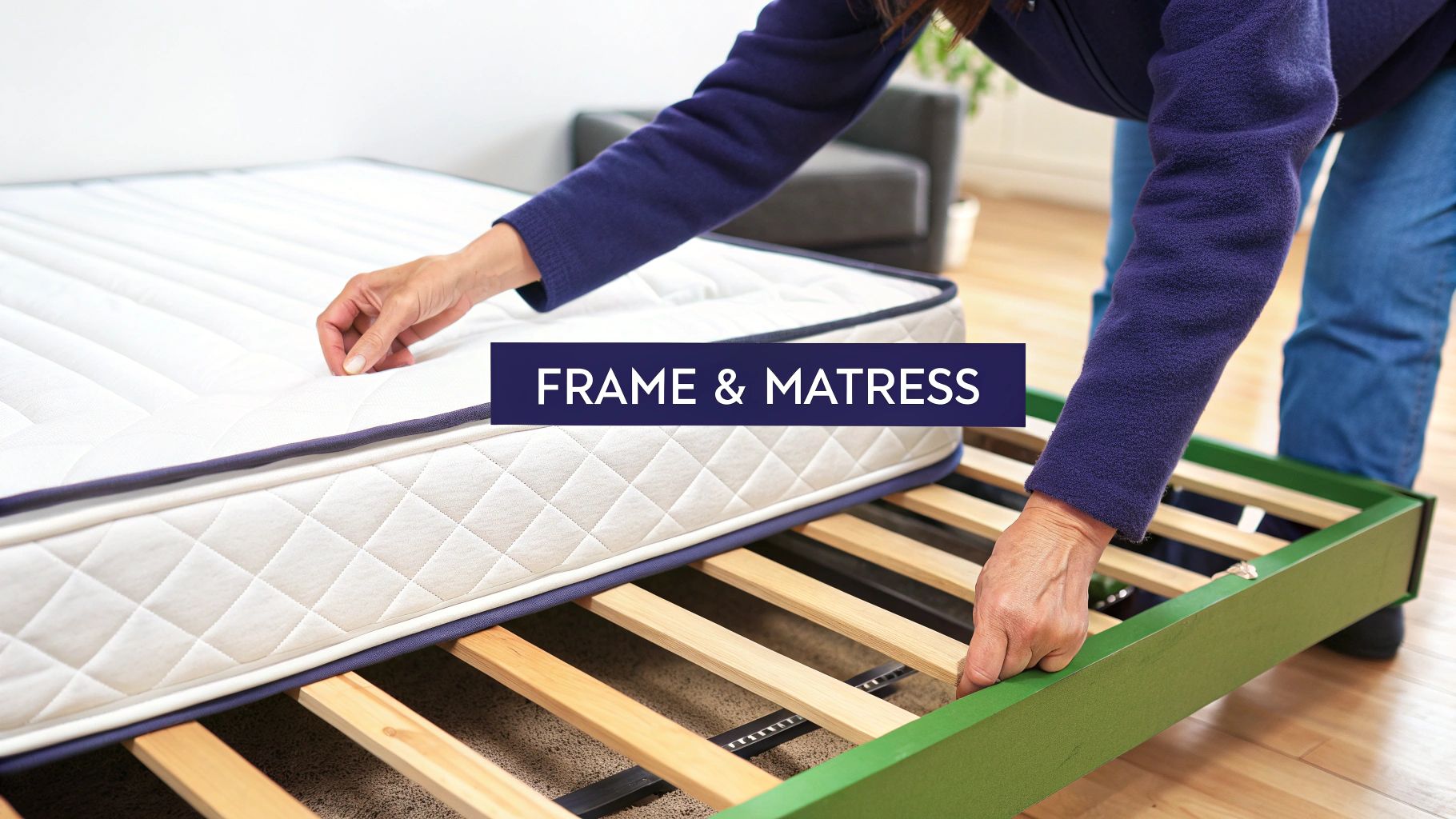
Getting a great double bed frame is a fantastic start, but it's only half the story. The real magic happens when you pair it with the right mattress. Think of them as a partnership: the frame provides the reliable foundation, while the mattress delivers the tailored comfort. When they work together in harmony, you get brilliant support and a bed that will last for years.
Get that partnership wrong, though, and you’ll run into trouble. A flimsy or unsuitable base can make a brand-new mattress sag, create uncomfortable pressure points while you sleep, and might even void your mattress warranty. The structure of your frame has a direct impact on how your mattress feels and performs, night after night.
Frame Types and Mattress Synergy
Not all mattresses are created equal, and they certainly have different support needs. It's crucial to match them with a frame that complements their design. Your traditional innerspring mattress is a pretty sturdy character and gets along with most bases, but modern memory foam and hybrid models can be a lot fussier.
Take memory foam, for instance. These mattresses are heavy and need a solid, even surface to do their job properly. If you put one on a slatted frame with gaps that are too wide, the foam can start to push through, leading to an uneven sleep surface and permanent damage to the mattress.
As a rule of thumb, if you have a foam or hybrid mattress, the slats on your double bed frame should be no more than 7-8 cm apart. This provides the consistent, solid base they need to keep you comfortable and maintain their shape.
Getting this synergy right is the key to a great night's sleep. If you want to dive deeper, our complete guide to choosing a good mattress in NZ is a great resource for breaking down all the options available.
Special Considerations for Advanced Mattresses
The relationship between frame and mattress becomes even more important when you're looking at specialised options, like adjustable beds or orthopaedic mattresses designed for back support. These are precision-built systems, and the wrong frame can completely undo all their clever engineering.
An adjustable mattress, for example, is designed to bend and flex with you. It absolutely must be paired with an adjustable base that moves along with it. Putting it on a rigid platform or divan frame would be like putting sports suspension on a horse-drawn cart – it just won't work, and you'll likely break the mattress's internal components.
Likewise, mattresses built for serious back support, including many in the Slumberzone line, give their best performance on a solid, unwavering foundation. Here's what to look for in a frame:
- Solid Platform or Divan Bases: These provide fantastic, edge-to-edge support, which is perfect for keeping your spine properly aligned.
- Closely Spaced Slats: If you prefer a slatted frame, make sure the slats are strong and positioned close together. This prevents any dipping that could undermine the mattress’s supportive core.
- A Centre Support Rail: For any double bed frame, this is a non-negotiable. A central rail with at least one leg gives vital reinforcement, stopping the bed from bowing in the middle over time.
When you understand this relationship, you stop just buying a bed and start creating a complete sleep system. A little thought here ensures every part works in harmony, giving you years of incredible comfort and support.
From Purchase to Placement: Your Buying Logistics
You’ve found the perfect double bed frame—fantastic! But getting it from the showroom or website into your bedroom is the next part of the adventure. This is where the practical side kicks in: delivery, assembly, and making sure your new investment is well-protected for the long haul.
Think of it as the final, crucial step. You've already done the hard work of picking the right style and material. A little bit of planning now will make sure the whole process is smooth sailing, so you can enjoy your new bed without any headaches.
Decoding Your Delivery Options
When you buy a new bed frame in New Zealand, you'll usually have a few delivery options to choose from. They each offer a different level of convenience and cost, so it’s worth thinking about what works best for you.
- Kerbside Drop-Off: This is your basic, most budget-friendly choice. The delivery team will leave the flat-packed boxes on your driveway or the footpath—the nearest accessible spot. From there, it's up to you to carry it inside.
- Room of Choice Delivery: A brilliant middle-ground option. The team will carry the boxes right into the bedroom for you. If you've got stairs or awkward hallways, this can be a real back-saver.
- Full-Service Installation: This is the ultimate hands-off experience. The service includes delivery to the room, professional assembly of the entire frame, and they’ll even take away all the cardboard and plastic packaging. It's the most hassle-free way to go.
Knowing exactly what’s included can save you a lot of heavy lifting. For a full rundown of our services across the country, check out our shipping and delivery page.
Budgeting for Your New Bed Frame
Double bed frame prices can vary widely depending on the materials, design, and brand. Here in New Zealand, a simple metal frame might start around a couple of hundred dollars, while a solid timber or upholstered frame can easily range from $500 to over $1,500.
It's worth remembering that a higher price often means better-quality materials and more solid construction. Spending a little more upfront can mean your frame lasts for many more years, which is better value in the long run.
If you need a bit of help, we can arrange a WINZ quote. At NZ Bed Company, we make this process simple by providing an official quote for the bed frame you need, which you can then submit as part of your application.
DIY Assembly: Your Essential Toolkit
Most bed frames show up flat-packed, ready for you to put together. While the idea might seem a bit intimidating, they're generally designed for straightforward home assembly. Having the right gear ready will make things a whole lot easier.
Before you open the box, try to have these on hand:
- The Allen key and spanner that come with the frame.
- A decent Phillips head screwdriver.
- A rubber mallet is great for gently tapping parts together without leaving a mark.
- A second pair of hands! Getting a friend to help hold the bigger pieces steady is almost essential.
When it comes to the actual setup, some good tips for moving heavy furniture can help prevent scratches on your floors or a pulled muscle. And a pro tip: always build the frame in the room it’s going to live in. It saves you the awkward puzzle of trying to manoeuvre it through a tight doorway later on.
Warranties and Returns: What to Ask
Before you make the final payment, get the details on what happens after the purchase. A good warranty is a clear sign that the manufacturer stands by its product.
Be sure to ask how long the warranty is and what it actually covers. Is it just for manufacturing faults, or does it include general wear and tear? Just as important is the returns policy. Find out how long you have to make a return and if there are any restocking fees. Getting this info upfront gives you confidence and protects your purchase.
Your Final Checklist for a Confident Purchase
Right, before you click 'buy', let’s run through a quick final check. This isn't just about ticking boxes; it's about making sure the bed you've chosen is genuinely the right one for you. A few minutes now can save a lot of hassle later and give you complete peace of mind, turning a good decision into a great investment.
Once your frame is assembled, a little care goes a long way. For timber and metal frames, a simple weekly dust with a soft cloth is usually enough to keep them looking sharp. If you spot smudges, a slightly damp cloth works wonders on both—just be sure to wipe it dry afterwards. It's also a great habit to check the bolts and fittings every six months or so and give them a quick tighten. This keeps the frame feeling solid and, most importantly, quiet.
A well-maintained bed frame isn't just about looks; it's about preserving the structural integrity that supports your mattress and ensures a quiet, stable night's sleep. A few minutes of care each month can add years to its life.
Your Pre-Purchase Walkthrough
Think of this as your final once-over before committing. This checklist pulls together all the key points to ensure nothing gets missed.
-
Room Measurements Confirmed: Have you double-checked your bedroom measurements against the frame's total footprint? Remember, the frame is always bigger than the mattress. You'll want at least 70 cm of clear walking space around the bed.
-
Access Route Checked: This is a big one. Will the flat-packed boxes actually make it through your front door, down the hallway, and up the stairs? A quick measure-up now can prevent a major headache on delivery day.
-
Mattress Compatibility Verified: Is the frame’s base right for your mattress? If you have a foam or hybrid mattress, you need slats that are no more than 7-8 cm apart. For an adjustable mattress, you absolutely need a compatible base.
-
Material and Style Match: Step back and picture it. Does the frame's material—the warmth of timber or the clean lines of metal—fit the look and feel of your bedroom? Does it match your personal style?
-
Warranty and Returns Understood: Do you know exactly what the warranty covers and for how long? Are you clear on the shop's return or exchange policy? Knowing this stuff upfront is your safety net.
By confidently ticking off each of these points, you know you’ve covered all your bases. The double bed frame you're about to buy is the perfect fit for your room, your mattress, and your life.
Still Have a Few Questions?
Even with all the details laid out, it’s completely normal to have a few last-minute questions before you commit to a new double bed frame. To help you feel completely confident in your choice, we've pulled together some of the most common queries we hear from Kiwis every day.
Is a Double Bed Big Enough for Two Adults in NZ?
Yes, a standard New Zealand double bed (137cm x 190cm) is designed to fit two adults. It’s a fantastic solution for guest rooms or smaller master bedrooms where you need to make every centimetre of floor space count.
That said, it is a snug fit. If you or your partner value a bit more elbow room, or if either of you are on the taller side, it’s often worth considering a Queen (153cm x 203cm). It all comes down to that classic trade-off: more sleeping space versus more living space in your room.
Do I Need a Box Spring with a Modern Bed Frame?
Almost certainly not. The vast majority of modern bed frames you’ll find in New Zealand today—especially the popular slat and platform styles—are built to support a mattress all on their own. They provide a perfectly flat, solid base without needing anything extra.
In fact, adding a box spring where it isn't needed can create more problems than it solves. It can raise the bed to an awkward height and might even conflict with the support guidelines in your mattress warranty, potentially voiding it. When in doubt, always check the recommendations for both your frame and your mattress.
How Long Does a Good Quality Double Bed Frame Last?
The lifespan of a double bed frame really boils down to what it's made of and how well it was put together. A solid timber or high-grade metal frame can easily see you through 10 to 20 years of good sleep, and sometimes even longer if you look after it.
Frames made from more budget-friendly materials like particleboard or lightweight metal alloys will naturally have a shorter life, typically around 5 to 8 years. The secret to longevity for any frame? A little bit of simple maintenance, like tightening bolts every now and then, goes a very long way.
How Can I Tell if My Mattress Will Work on a Slatted Bed Frame?
The key thing to check is the gap between the slats. For most modern mattresses—especially memory foam and hybrid types—that gap should be no more than 7-8cm. Any wider, and your mattress won't get the even support it needs, causing it to sag into the spaces and potentially leading to permanent damage.
While traditional innerspring mattresses can sometimes handle wider spacing, it’s always better to play it safe. Your mattress warranty booklet is the ultimate guide here; it will tell you the exact support requirements needed to keep your mattress performing well and your warranty intact.
Ready to find the perfect foundation for a great night's sleep? The team at New Zealand Bed Company has been helping Kiwis rest easy since 1986. Explore our collection of high-quality double bed frames and find the ideal match for your bedroom today.