

Thinking about a new bed? One of the first questions you'll have is: what exactly is a single bed size in New Zealand? The short answer is 91cm wide by 188cm long. But those numbers are just the beginning of finding a bed that perfectly suits your space and your sleep. Let's break down what that really means for you.
The Official NZ Single Bed Size Explained
Getting your head around the standard single bed size is your first step to buying with confidence. At 91cm x 188cm, this dimension has been the Kiwi standard for decades, and for a simple reason—it’s incredibly practical. It's perfectly proportioned for kids' rooms, small guest rooms, and apartments where every square metre is precious.
To get a better sense of its scale, picture a standard interior door laid flat. That's roughly the length you're working with. This compact footprint is what makes it such a versatile choice for almost any smaller room.
Why This Size Is the Standard
The 91cm by 188cm measurement wasn't just picked out of a hat. It became the benchmark in New Zealand decades ago, shaped by everything from typical bedroom sizes in Kiwi homes to manufacturing standards. Its staying power comes down to hitting that sweet spot between providing enough comfort and saving on floor space. You can learn more about how these sizes became common on industry sites like Sealy.co.nz.
The best part about having a standard size is that it makes shopping a breeze. When you buy single-size sheets, a new duvet, or a cool headboard from any NZ retailer, you can trust it’s all made to fit these exact dimensions.
A Quick Note on Manufacturing Tolerances
While 91cm x 188cm is the official size, it's good to know there can be tiny variations. Because mattresses are made from soft, flexible materials like foam and fabric, you might find one that's a centimetre or two off. This is totally normal and is known as a manufacturing tolerance.
These slight differences are nothing to worry about and won't affect how your sheets or bed frame fit. A tolerance of +/- 2cm is the accepted industry norm. It just means that while every mattress is made with precision, there's a practical allowance for the handmade nature of the product. Knowing this lets you shop with complete peace of mind.
Single vs King Single: What's the Difference?
Trying to figure out bed sizes can feel like you’re cracking a secret code, especially with names as similar as 'single' and 'king single'. It’s one of the most common questions we get, and for good reason. While both are designed for one person, the subtle differences in size can make a huge impact on a good night's sleep and how well the bed fits your room.
A standard single is a wonderfully compact and space-savvy choice. But a king single gives you a noticeable upgrade in both width and length, making it a fantastic option for anyone who needs a bit more room to stretch out. Understanding these differences is the key to avoiding a costly mistake and bringing home the perfect bed.
This is what a standard New Zealand single bed looks like in terms of size.
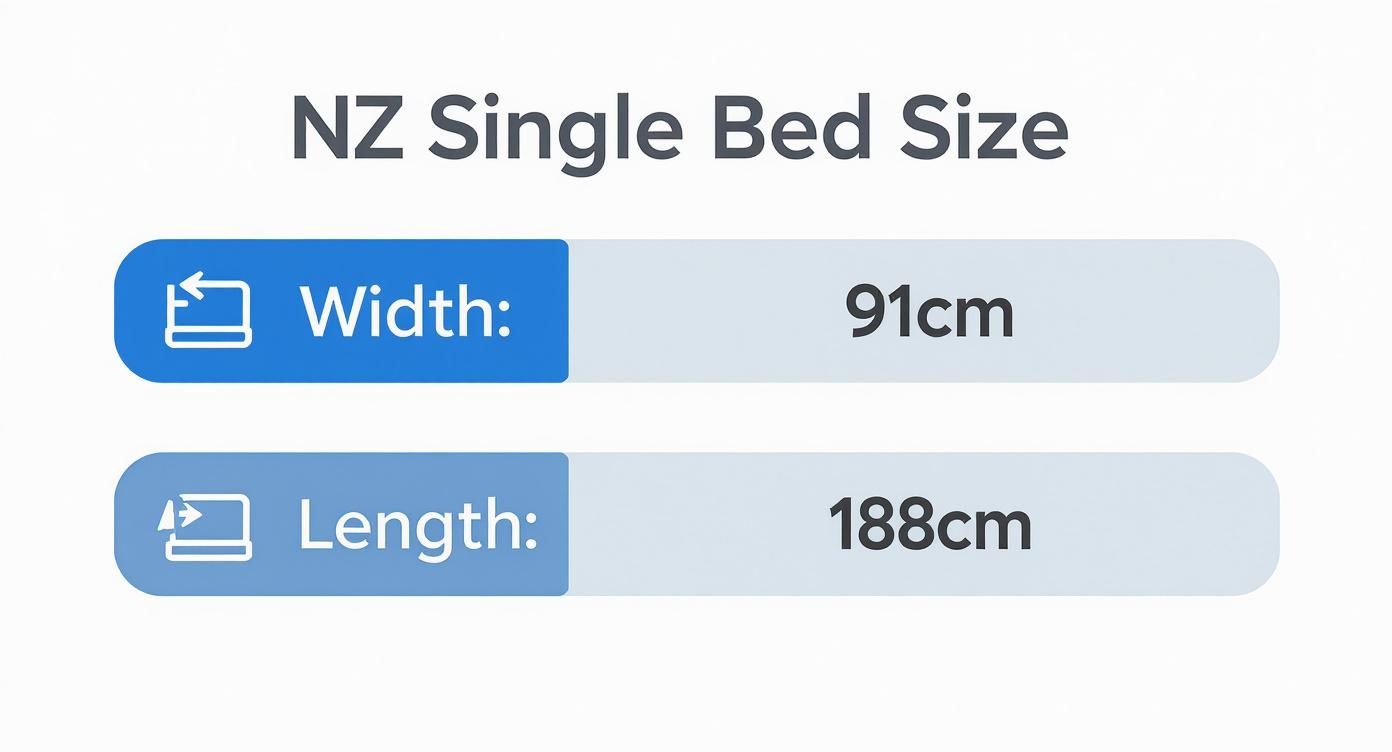
As you can see, it measures 91cm wide by 188cm long. These are the key numbers we'll use to compare it against other common sizes.
Comparing Common Bed Sizes
To really get a feel for which bed is the right fit, it helps to see the measurements side-by-side. The main sizes you'll likely weigh up are the single, the king single, and occasionally, the less common small single. Each one is designed with a particular person and room in mind.
A standard single is the go-to for a child's first "big kid" bed or for kitting out a small guest room. Its neat footprint leaves more precious floor space for desks, toys, and everything else. If you think a bit more room might be needed, it’s worth checking our guide on king single dimensions to see if that extra space is the right call for you.
A king single gives you an extra 16cm in width and a crucial 15cm in length compared to a standard single. That additional length is a total game-changer for growing teenagers and taller adults, finally putting an end to feet dangling off the edge!
Let's break down the exact measurements and who each size is best for in a simple comparison table.
Comparing NZ Single Beds to Other Common Sizes
| Bed Size | Dimensions (cm) | Width Difference (vs Single) | Length Difference (vs Single) | Best Suited For |
|---|---|---|---|---|
| Single | 91cm x 188cm | - | - | Young children, small guest rooms, and maximising floor space. |
| King Single | 107cm x 203cm | +16cm | +15cm | Teenagers, taller adults, and those wanting extra sleeping room. |
| Small Single | 75cm x 188cm | -16cm | No Difference | Toddlers transitioning from a cot or very tight, narrow spaces. |
As the table shows, a small single might save you some width, but you don't gain any length. The king single, on the other hand, gives you a generous boost in both directions. This makes it a much more comfortable and future-proof option for anyone who isn't a small child. Ultimately, choosing the right single bed size is about striking the perfect balance between the sleeper's needs and the space you have available.
How to Measure Your Room for a Single Bed
Knowing the exact single bed size is a great start, but it's only half the story. The real test is figuring out how that bed will actually fit in your space. A simple measurement mistake can quickly turn the excitement of a new bed into a frustrating puzzle.
Think of this as your quick-start guide to getting it right. Follow these steps, and you’ll be confident your new bed will make your room better, not just more crowded.
The Essential Measurements
First things first, grab a tape measure. Before you even start browsing, get the basic length and width of the entire room. Then, focus on the specific wall or area where you plan to put the bed. This gives you the actual footprint you have to work with.
Don't forget to look for the little things that get in the way. Radiators, built-in shelving, and even deep window sills can throw off your plans. These are the details that are easy to miss but can make or break your layout. For some extra tips on how to accurately measure for a perfect fit that apply to more than just beds, other home improvement guides can be a great resource.
Don't Forget Walking Space
A bed doesn't just take up its own space; it also claims the area around it. You need room to move. Think about the daily routine: making the bed, opening wardrobe doors, or just walking through the room without stubbing a toe.
As a rule of thumb, always aim to leave at least 60cm of clearance on one side of the bed, if possible. This provides enough room for comfortable movement and access.
This is especially critical in a kid's room where the floor is prime real estate for playing. Forgetting to factor in this "living space" is a classic mistake that can leave a room feeling cramped and unworkable.
A Pro Tip for Visualising the Fit
Sometimes, numbers on a tape measure don't give you the full picture. If you want to feel how the single bed will fit before you buy it, try this incredibly simple trick.
- Grab Some Masking Tape: Use a roll of tape that won't leave any marks on your floor.
- Mark Out the Dimensions: On the floor where the bed will go, tape out a 91cm x 188cm rectangle. This creates a real-world outline of the mattress.
- Check for Obstructions: Now, try opening and closing everything nearby. Can you get into the wardrobe? Do the drawers pull all the way out? Does the bedroom door swing open freely?
- Walk Around It: Leave the tape on the floor for a day or so. See how it feels to navigate around it. This is the best way to know if the room’s flow still works.
This hands-on approach is the ultimate way to catch any potential problems before the delivery truck arrives. It's a quick and foolproof method to guarantee your new bed is a perfect fit in every way.
Choosing the Right Mattress and Bedding
A great bed frame is just the start. What really makes for a good night's sleep is the mattress and bedding – that's where true comfort comes from. When you're fitting out a standard single bed, getting these details right means creating a sleep space that’s perfectly matched to the person using it, whether that’s a growing child or a guest.
From how deep the mattress is to how snug the sheets fit, every element matters.
Let's start with the most important part: the mattress. The right one gives you the support to keep your spine aligned and the comfort that lets you drift off without a second thought.
Selecting the Right Mattress Depth
You might think mattress thickness is just about looks, but it has a huge impact on comfort and support. For single beds, you'll find everything from slim, space-saving options to luxuriously deep ones.
- Slim Profile (15cm - 20cm): Perfect for bunk beds or trundlers where height is restricted. These tend to be on the firmer side and are a sensible, practical choice for young kids.
- Standard Profile (20cm - 25cm): This is the sweet spot and the most common depth you'll find. It strikes a fantastic balance of comfort and support for most people, from older kids and teens to adults using a guest bed.
- Plush Profile (25cm+): If you love a cloud-like feel, this is for you. These deeper mattresses often have extra comfort layers like pillow tops, giving you a much softer, more cushioned sleep.
Just a heads-up: a thicker mattress needs fitted sheets with deeper pockets to get that nice, snug fit. Always check your mattress height before you go shopping for new sheets.
Matching Firmness to the Sleeper
Firmness is personal, but there are a few rules of thumb that can help you decide. The main goal is to keep the spine in a neutral, straight alignment.
Think about who's going to be sleeping on it:
- For Children: A medium-firm mattress is usually the best bet. It gives their growing bodies the support they need without being uncomfortably hard.
- For Side Sleepers: If you sleep on your side, a medium to soft mattress helps cushion your shoulders and hips, taking the pressure off those key points.
- For Back or Stomach Sleepers: A medium-firm to firm mattress generally works better here. It stops your hips from sinking too far down, which can put a strain on your lower back.
It can feel like a lot to take in, but getting the basics right makes all the difference. For a deeper dive into this, our guide on how to choose a mattress is a great place to start.
Finding the Perfect Bedding
You've got the mattress sorted – now for the fun part. Dressing a standard NZ single bed (91cm x 188cm) is simple, as it’s a very common size. Still, there are a couple of things to watch out for.
One of the most common mistakes is buying a duvet that's the exact width of the mattress. For a much cosier feel and better coverage (no more fighting for the blankets!), go one size up. A double duvet on a single bed is a game-changer.
When you're shopping, here are the dimensions to look for:
- Fitted Sheet: Look for 91cm x 188cm. Don’t forget to check the pocket depth to make sure it’s deep enough for your mattress.
- Flat Sheet: These are usually around 180cm x 250cm, which gives you plenty of fabric to tuck in tightly.
- Duvet Cover: A standard single duvet is 140cm x 210cm. But if you take our advice, you'll grab a double, which is 180cm x 210cm, for that lovely overhang.
Finding the Perfect Bed Frame and Base
A new single mattress is a great start, but it needs a solid, supportive foundation. The right bed frame or base is more than just a stand for your mattress – it’s a crucial partner in delivering comfort, extending the life of your mattress, and pulling the whole look of your room together.
Choosing a base often comes down to balancing support with your own practical needs. A solid platform base provides an even, firm feel which some mattresses and sleepers love. A slatted base, on the other hand, is fantastic for airflow, helping to keep your mattress fresh and dry – a big plus in our sometimes-damp New Zealand climate.
Measuring for the Perfect Fit
Here’s the most important part: making sure your 91cm x 188cm single mattress fits snugly. When you're looking at bed frames, the number you really need to check is the internal dimension. This is the space where the mattress actually sits. Don't be fooled by the external measurements, as they include the thickness of the frame itself.
A classic mistake is getting a frame that's just a little too big or too small. Too much room leaves annoying gaps for pillows to disappear down, while a frame that’s too tight can pinch the mattress, making it wear out unevenly. You’re aiming for no more than a 2-3cm gap around the edges for a perfect fit.
Style and Practicality in Your Room
Of course, a bed frame is also a major piece of furniture that defines a room’s style. The headboard, especially, often becomes the centrepiece. You might go for a simple, low-profile frame for a clean, minimalist look, or an upholstered headboard to add a bit of cosy texture.
Practicality is just as important. In smaller rooms where every centimetre is precious, you need smart solutions. If you're keen to squeeze the most out of your floor space, our article on bed frames with storage is packed with great ideas. And if you're thinking about different design philosophies, like those for a child's first bed, this detailed Montessori bed frame guide is a fantastic resource.
Your Guide to Buying a Single Bed in NZ
So, you've decided that a single bed is the right fit for your space. Great! Now comes the fun part: choosing the perfect one. Let's move from measurements to making a decision you'll be happy with for years to come.
Browsing Our Collections
We've made finding the right bed easy. You can browse our collections to find exactly what you're after, whether that's a complete package or just the mattress itself.
-
Single Bed Collection: This is where you'll find our full range of single beds. It includes everything from stylish frames to sturdy bases, all designed to perfectly fit a standard 91cm x 188cm mattress.
-
Single Mattress Collection: If you've already got a base, dive into our mattress options. We have something for every preference, from firm mattresses that offer excellent back support to plush, cosy models you can sink into.
Delivery and Payment Options
We're committed to helping every Kiwi get a great night's sleep, which is why we deliver our beds safely and efficiently all across the country. We also offer a range of payment and finance options to make your purchase as easy as possible.
We are an approved WINZ supplier and can provide official quotes for bedding. Just get in touch with our team, and we'll walk you through the simple process to ensure you get the support you need.
Want to learn more? For a complete overview of how a single bed NZ can be the perfect fit for your home, our detailed article offers even more insights. Making an informed decision has never been easier.
A Few More Common Questions About Single Beds
Even with all the details covered, a few questions often pop up when people are deciding on a classic single bed. We get these queries all the time, so let's clear them up to help you make the right choice with confidence.
Is a Single Bed Big Enough for an Adult?
Absolutely. A standard single bed can be a perfectly good fit for an average-sized adult, especially for shorter stays. At 188cm long (that's just over 6 feet), it offers enough length for most people.
They really shine as a space-saving solution in guest rooms, baches, or spare rooms where the bed isn’t being used every night. For a main bed, though, a taller adult or someone who moves around a lot in their sleep might find it a bit restrictive.
Why Would I Choose a King Single Over a Single?
The jump up to a king single is all about gaining that extra length and width. Think of it as a smart, long-term investment for a growing child or teenager—it gives them room to grow without their feet suddenly hanging off the end.
That extra 15cm of length is a game-changer for taller people.
As a rule of thumb, if you're over 180cm (around 5'11"), a king single is almost always the more comfortable option for nightly sleeping. You'll get a much better quality of rest without feeling cramped.
Are NZ and Australian Single Bed Sizes the Same?
This is a great question and one that can catch people out, especially when buying bedding online. While New Zealand and Australian bed sizes are very close, they aren't identical. An Australian single measures 92cm x 190cm, making it a touch wider and longer than our 91cm x 188cm Kiwi single.
What does this mean for you? An Aussie single sheet set will technically fit a New Zealand mattress, but it might feel a bit loose. For that perfect, snug fit, it’s always best to buy your bedding locally. And speaking of keeping things perfect, regular care is essential. Our guide on cleaning a mattress has some great tips to help it last for years to come.
Here at New Zealand Bed Company, our goal is to help you find the perfect sleep setup for any space. We've designed our entire collection of quality single beds and mattresses with Kiwi homes in mind.