

Let's be honest, a quality waterproof mattress protector isn't just a nice-to-have accessory for your queen bed—it's an absolute must. Think of it as the unsung hero of your bedroom, a quiet guardian that works tirelessly to shield your mattress from the spills and mishaps of everyday life. It’s easily the smartest, simplest investment you can make to prolong the life of your mattress and keep your sleep space fresh and hygienic.
Why Your Queen Bed Deserves Protection
You've invested in a great mattress for your comfort and health, so it only makes sense to protect it. Leaving your mattress exposed is a bit like parking a brand-new car outside during a hailstorm; you’re leaving it vulnerable to all sorts of things that can cause lasting damage and even void your warranty.
Life happens. Whether it's a morning coffee that takes a tumble or an accident from a child or pet, liquids are the number one enemy of your mattress. Once moisture gets into those deep layers of foam and fabric, it's a perfect recipe for mould, mildew, and stubborn odours that are next to impossible to get rid of. This is precisely where a waterproof protector proves its worth.
The Unseen Dangers Lurking in Your Mattress
It’s not just the big, obvious spills you need to worry about. A good protector also shields your bed from the invisible things that build up night after night. We all perspire and shed dead skin cells in our sleep, creating a feast for dust mites and allergens. A protector acts as a barrier, stopping these tiny intruders from making a home in your mattress and helping you maintain a healthier place to rest.
This is a big deal right here in New Zealand. Our often-damp climate combined with high pet ownership has made waterproof protectors more popular than ever. With around 62% of Kiwi homes having at least one pet, it's no surprise that mattress damage from accidents is a common problem.
A waterproof protector isn’t just about keeping things clean—it’s about preservation. It protects the core materials, the structure, and the overall feel of your mattress, ensuring you get every bit of the lifespan and value you paid for.
At the end of the day, it doesn't matter if you have a simple guest bed or a top-of-the-line luxury mattress; a protector is the best way to keep it feeling like new. Because once a stain settles in, getting it out is a real challenge. Before you run into that problem, it's worth reading our guide on how to effectively remove stains from a mattress.
Fitted Protector vs Full Encasement
When you start looking for a waterproof queen mattress cover, you’ll quickly notice two main players: the fitted protector and the full encasement. What's the difference? It’s a bit like choosing between a fitted sheet and a zip-up sleeping bag for your mattress. Each offers a very different level of defence, and the best one for you really boils down to what you're trying to protect your bed from.
The one you’ll see most often is the fitted protector. It’s designed to slip over your mattress just like your regular fitted sheet, with elastic corners that hug the bed and keep it snug. This style shields the top and sides of your mattress—the most common impact zones for spills, sweat, and stains.
Its main drawcard is convenience. Fitted protectors are a breeze to whip off and throw in the wash, which makes them a godsend for busy families. Whether it's for a child's bed prone to the occasional accident or your own bed that gets a fresh set of linen every week, you can't beat the simplicity.
The Full Encasement Option
But what if you need more than just surface-level protection? That’s where the full encasement comes in. Think of it as total armour for your mattress. This protector zips up around the entire mattress, sealing it completely and protecting it from absolutely everything—top, bottom, and all four sides.
This 360-degree shield does a lot more than just stop a spilled coffee. It’s an impenetrable barrier against dust mites, allergens, and, importantly, bed bugs. It stops them from getting into your mattress in the first place, or from escaping if they're already there. For anyone with serious allergies, or for a bed in a rental or bach where pests could be a concern, a full encasement is the ultimate peace of mind. It’s a bit more work to get on and off, but the comprehensive protection is second to none.
In the end, your choice is a trade-off between everyday ease and the level of security you need. A fitted protector is brilliant for handling life's little mishaps, while an encasement provides a fortress against deeper threats.
To help you decide, here’s a quick look at how they stack up.
Fitted Protector vs Full Encasement: Which Is Right for You?
| Feature | Fitted Protector | Full Encasement |
|---|---|---|
| Protection Coverage | Top and sides of the mattress. | 360-degree coverage (all six sides). |
| Primary Use | Guards against spills, stains, and general wear. | Total barrier against allergens, dust mites, and bed bugs. |
| Ease of Use | Very easy to put on and take off, like a fitted sheet. | Requires more effort; the mattress must be lifted to fit. |
| Best For | Everyday use, children’s beds, and frequent washing. | Allergy sufferers, pest prevention, long-term mattress storage. |
| Washing Frequency | Simple to wash weekly with other bedding. | Less frequent washing due to the effort of removal. |
This table makes it pretty clear: if your main concern is a spilled drink, the fitted protector is probably all you need. But if you’re worried about allergens or pests, the full encasement is the only way to go.
This little decision tree can also help you visualise the choice for your queen bed.
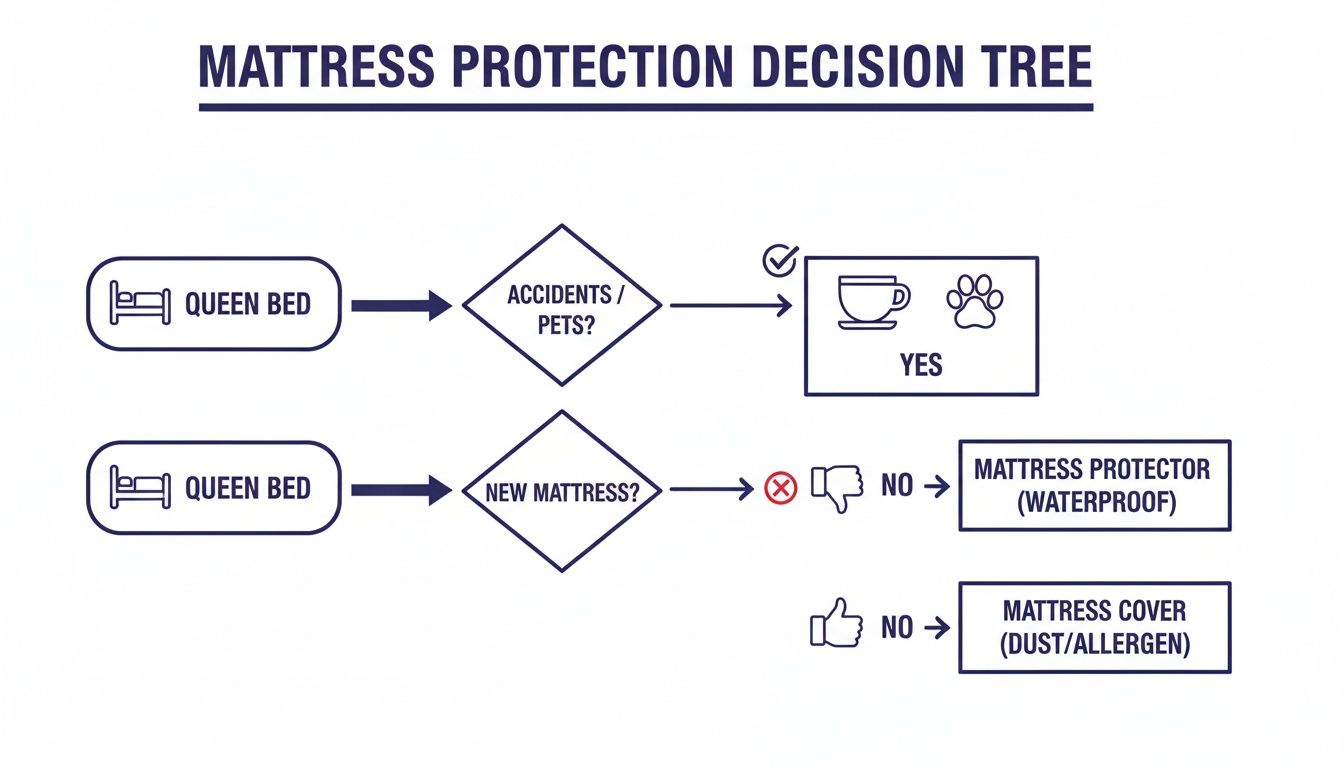
As you can see, for common risks, a fitted protector does the job. For total peace of mind against the nasties, an encasement is the clear winner.
And remember, these principles apply no matter what size your bed is. If you've got a bigger bed and are weighing up your options, you might find our guide on choosing a super king mattress protector helpful. The goal is the same: keeping every mattress in your home clean and protected.
Getting to Grips with Waterproof Materials
Think of a modern waterproof mattress cover like a quality raincoat. An old-school plastic poncho will keep the rain off, sure, but it's also noisy, stiff, and you’ll end up a sweaty mess. Today's protectors are much smarter. They use advanced materials that stop water in its tracks while letting air circulate freely, giving you silent, comfortable protection.
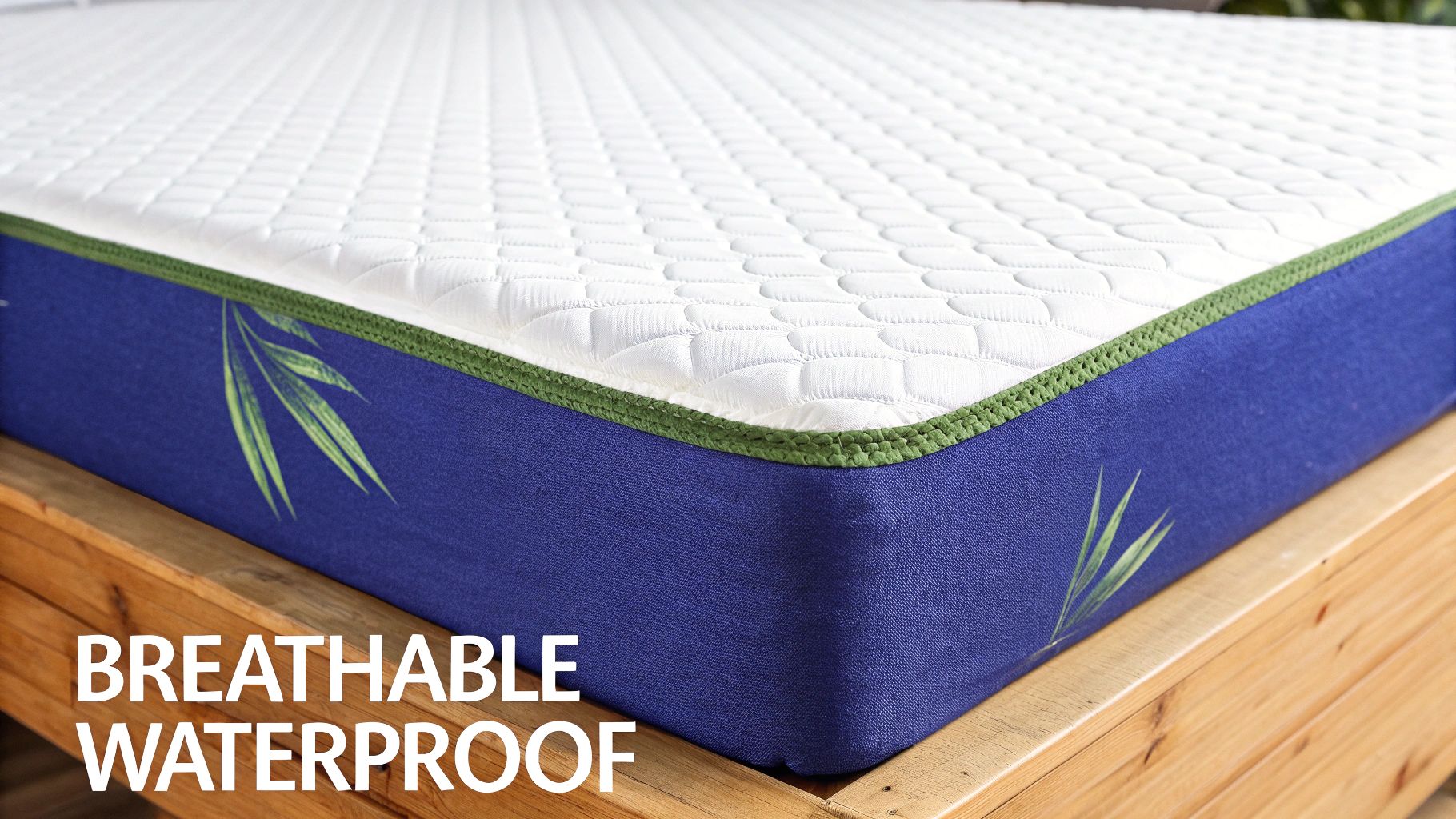
The secret weapon is a micro-thin layer of polyurethane bonded to the back of the fabric. This membrane is the real hero, forming an absolute barrier against liquids. But unlike the crunchy plastic protectors of the past, it’s engineered with microscopic pores. These pores are tiny—too small for water molecules to squeeze through, but just big enough to let air and water vapour (your body heat and sweat) escape.
This means spills, sweat, and accidents stay out, but heat and moisture don't get trapped with you in bed. This technology completely turns the old myths on their head. You no longer have to worry that a mattress cover waterproof queen will make you overheat or sound like you’re sleeping on a packet of crisps. You get total peace of mind, and you won’t even know it’s there.
The Comfort Layer: What You’ll Actually Feel
While the polyurethane does all the hard work behind the scenes, the fabric on top is what you actually feel through your sheets. This surface layer plays a massive role in how comfortable and cool your bed feels.
Here are the most common materials you’ll come across:
- Cotton Terry: A true classic for a reason. It’s soft, naturally absorbent, and has that familiar looped texture that feels cosy and durable under your sheets.
- Bamboo: If you tend to sleep hot, this is one to look for. Bamboo fabric has a silky-smooth feel and is brilliant at wicking moisture away from your body, helping you stay cool and dry.
- Tencel™: This is a premium, eco-friendly option made from eucalyptus trees. Tencel™ is incredibly soft, breathable, and a great choice for sensitive skin, offering a touch of luxury with excellent moisture control.
Here in New Zealand, where damp air can be a constant battle, these materials are a game-changer. It's no surprise that queen-size protectors now make up 55% of all protector sales. With 68% of Kiwi homes reporting issues with humidity and mould, having a breathable barrier for your mattress just makes sense. You can explore more data on the growing NZ mattress market to see the full picture.
The best waterproof protector doesn’t just shield your mattress—it complements it. By pairing a silent, breathable polyurethane membrane with a soft, high-quality surface fabric, you get the ultimate combination of invisible protection and enhanced sleep comfort.
Getting the Perfect Fit for Your Queen Mattress
There’s nothing worse than a mattress protector that doesn’t fit properly. It's like a raincoat that's two sizes too big – it’ll bunch up, slide around, and ultimately won't give you the protection you need. A snug, perfect fit is the secret to a protector that feels invisible, staying completely taut and silent under your sheets. And it all boils down to one crucial measurement.
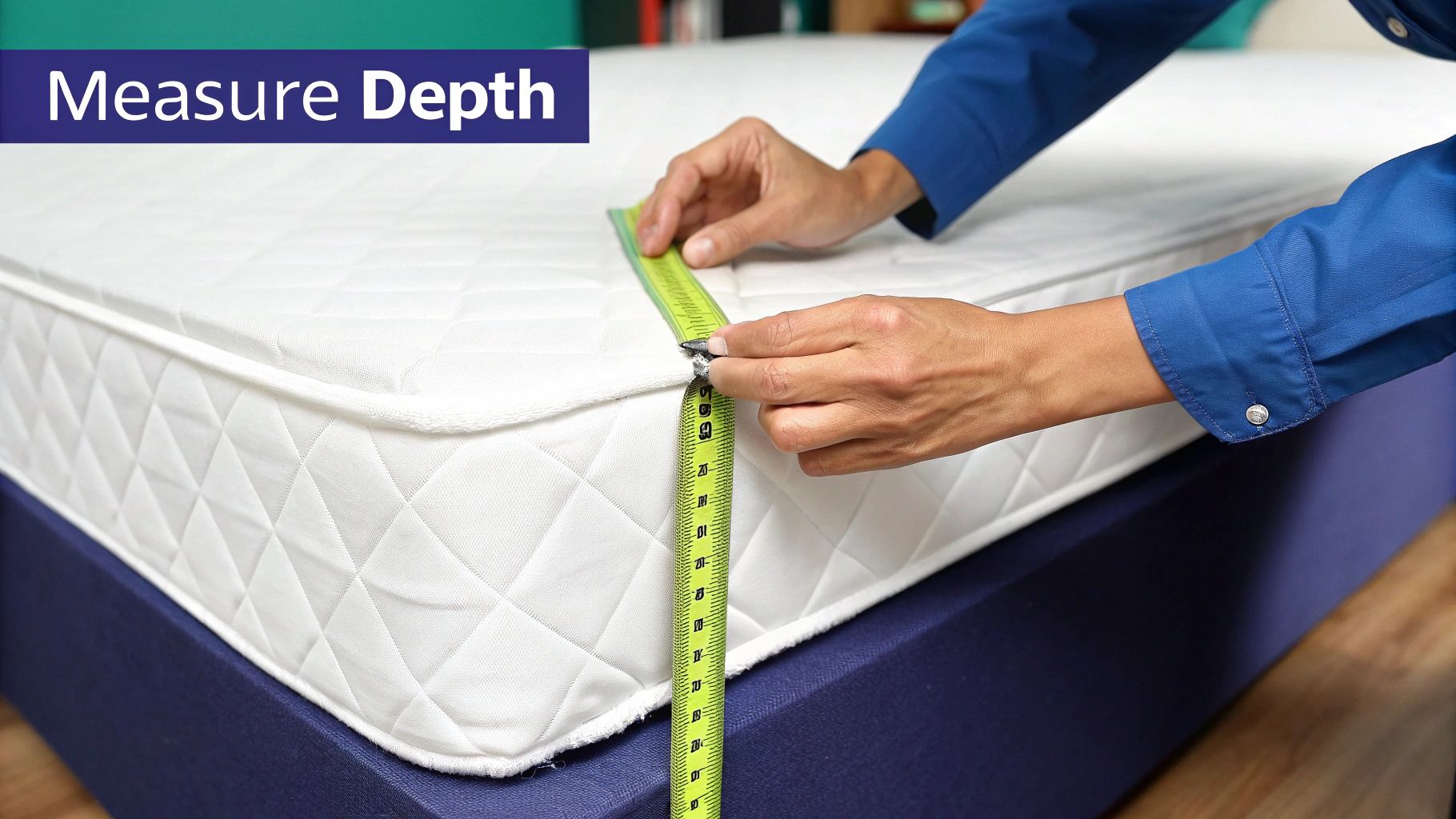
We all know the standard New Zealand queen mattress dimensions: 153cm wide by 203cm long. Most protectors are made to fit this length and width, so that’s the easy part. The real game-changer, and where so many people get tripped up, is the mattress depth – its height or thickness.
Why Mattress Depth Is Everything
These days, mattresses come in all sorts of profiles. You might have a sleek, firm model that’s only 20cm deep, or you could be sleeping on a luxurious pillow-top that towers over 35cm. If your protector's skirt (the side fabric) isn't deep enough, the corners will constantly ping off. If it’s too deep, you’ll be left with loose, baggy fabric that creates uncomfortable lumps under your sheets.
Getting this right is a big deal in New Zealand, where the queen size reigns supreme. Queen beds dominate the market with a massive 42% market share, making them the go-to for couples and families alike. With so many different queen mattress models on the market, you can't just assume a "one-size-fits-all" approach will work.
A Simple Guide to Measuring Your Mattress
Ready to find the perfect fit for your mattress cover waterproof queen? Just follow these quick steps. It'll only take a minute.
- Strip the bed: Take everything off, including your fitted sheet and any toppers. You need to measure the mattress itself, bare and true.
- Grab a proper tape measure: A retractable metal tape measure or a firm ruler is your best bet here. A soft, flimsy dressmaker's tape can sag and give you an inaccurate reading.
- Measure from bottom to top: Place the end of your tape on the bottom seam (or the corded edge) of the mattress and measure straight up to the top seam. Be gentle! Don't press down on the surface, especially with plush pillow-tops, or you’ll get a shorter, incorrect measurement.
- Add a little wiggle room: A good rule of thumb is to add an extra 2-5cm to your measurement. This gives the elastic skirt enough fabric to tuck securely underneath the mattress, preventing it from ever slipping off.
Pro Tip: Always look for the 'pocket depth' or 'skirt depth' in the product specs before you buy. If your mattress is 30cm deep, you'll want a protector with a pocket depth of at least 35cm to ensure a really secure, non-slip fit.
Taking a moment to get this measurement right guarantees your protector will hug your mattress perfectly, offering seamless, effective protection night after night. For more info, you can also check out our handy guide on the standard dimensions of a queen mattress in New Zealand.
Care and Maintenance to Maximise Longevity
Think of your mattress cover like a high-quality rain jacket. It’s a durable piece of gear, but a bit of proper care goes a long way in keeping its waterproof barrier working perfectly. Following a few simple rules will protect the delicate waterproof membrane, keeping your protector fresh and effective for years to come.
When it's time to wash your protector, the two most important words to remember are cool and gentle. High heat is the number one enemy of the polyurethane membrane. Hot water can cause that thin film to warp, blister, or even separate from the fabric, which completely ruins its ability to block liquids.
The same goes for the dryer. The intense heat can easily melt or damage the waterproof layer. Your safest bet is to tumble dry on a low setting. Even better, line drying in the shade is a fantastic, zero-cost way to ensure it lasts as long as possible.
Washing and Drying Do's and Don'ts
To make it easy, here’s a quick rundown on keeping your waterproof queen mattress cover in top shape.
- DO wash it on a gentle cycle with cool or warm water—never hot.
- DO use a mild, liquid detergent. Powdered versions can sometimes leave a residue that’s hard to rinse out.
- DO think about adding an extra rinse cycle to make sure all the soap is gone.
- DON’T ever use bleach. It’s too harsh and can break down the waterproof membrane and fabric fibres.
- DON’T use fabric softeners. They often leave a film that clogs the pores of the fabric, which can really affect its breathability.
- DON’T iron your protector. The direct heat will absolutely wreck the waterproof layer.
Following these care instructions is the single best way to protect your investment. A well-maintained cover not only shields your mattress but also ensures you get the maximum value and lifespan from the product itself.
Regular, correct cleaning keeps your sleeping environment hygienic without sacrificing the protector's main job. For a deeper dive into keeping your whole bed fresh, check out our guide on properly cleaning a mattress.
Your Smart Buying Checklist for NZ Shoppers
Once you’ve narrowed down the type of protector you need, there are a few final Kiwi-specific details to consider. Thinking about these points before you buy a mattress cover waterproof queen will save you headaches later on and ensure you’re getting real value for your money.
First up, take a close look at the product warranty. A solid warranty, often between 5 to 10 years, is a great indicator of quality. It shows the manufacturer is confident in their product and will stand by it if something goes wrong, like a seam coming undone or the waterproof layer failing. It’s your safety net against manufacturing faults.
And what about returns? Always check the retailer's return policy. It's easy to get measurements slightly wrong, especially with a deep pillow-top mattress. A good, clear return or exchange policy means you won't be stuck with a protector that doesn't fit properly.
Budgeting and Payment Options
We all know bedding can be a significant expense. If you need a bit of help, don't be afraid to ask the retailer if they can provide a WINZ quotation. This is a formal quote you can take to Work and Income, who may be able to help with a grant for essential items. It makes getting what you need that much more achievable.
Also, look into payment flexibility. Many retailers across New Zealand offer interest-free finance options. This lets you spread the cost of a higher-quality protector over a few months, making it much easier on the wallet without having to settle for a lesser product.
Making a smart purchase isn't just about the product itself; it's about the full package. A solid warranty, flexible returns, and accessible payment options from a trusted Kiwi retailer are just as crucial as the protector's waterproof capabilities.
Running through this final checklist means you’re not just buying a cover; you're making a sound investment in protecting your mattress for years to come. For more locally-focused advice, you can find out more about what to look for in a waterproof mattress protector in NZ.
Your Waterproof Cover Questions Answered
Even after you've narrowed down the options, a few last-minute questions can pop up. Let's run through some of the most common ones we hear about choosing a mattress cover waterproof queen so you can feel completely confident in your decision.
Will a Waterproof Mattress Cover Make Me Feel Hot?
This is probably the number one concern, and a fair one given how awful old-school plastic covers were! But modern waterproof protectors are in a completely different league. The best ones are engineered for breathability. They use a very thin, advanced polyurethane membrane bonded to a soft fabric like cotton or bamboo. This clever pairing stops liquids dead in their tracks but still allows air and moisture vapour to pass through, wicking away heat and sweat. You get serious protection without that clammy, hothouse feeling.
Can I Use a Waterproof Cover on an Adjustable Bed?
Yes, absolutely—and it’s a great idea. Most modern fitted-style protectors have plenty of stretch built into their side skirts, so they move seamlessly with the head and foot articulation of an adjustable base. The key is to look for one with deep pockets and a robust, all-around elastic band. This ensures it grips the mattress securely and won’t pop off at the corners or bunch up uncomfortably when you're adjusting your position.
How Often Should I Wash My Mattress Cover?
As a general rule, popping it in the wash every one to two months is a great way to keep things fresh. Of course, if there’s a spill or an accident, you’ll want to wash it straight away to stop stains or odours from setting in. Regular washing isn't just about spills—it’s a crucial step for getting rid of the dust mites, skin cells, and other allergens that build up over time. It’s one of the easiest ways to maintain a clean and healthy sleep space.
Does a Waterproof Protector Change How My Mattress Feels?
A good one shouldn't. The goal of a high-quality protector is to be virtually unnoticeable. They are designed to be thin, soft, and quiet, sitting discreetly under your fitted sheet. You won't get that stiff, crinkly plastic noise that you might remember from years ago. The whole idea is to safeguard the comfortable mattress you invested in, not alter its feel.
At New Zealand Bed Company, we reckon protecting your mattress should be simple and effective. Our range of waterproof queen protectors provides a silent, breathable, and rock-solid defence for your bed, keeping it pristine for years to come. See what we've got and find the perfect match for your mattress by exploring our collection at https://nzbeds.co.nz.